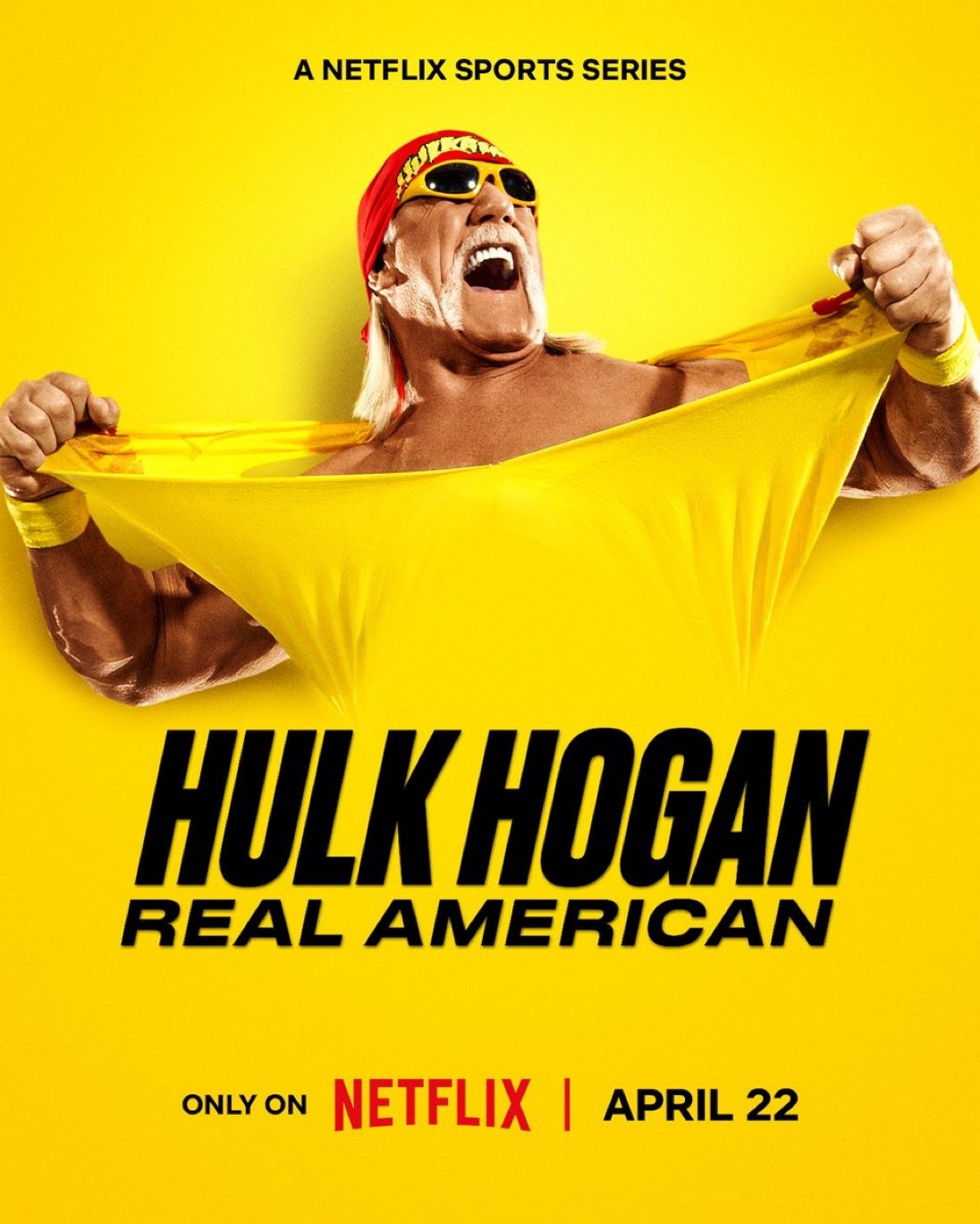
In life, Hulk Hogan was wrestling’s most recognizable figure—a symbol of excess, charisma, and mainstream breakthrough. In death, he may become something more complicated. Hulk Hogan: Real American, Netflix’s upcoming documentary series, is not merely a retrospective of an iconic career. It is, by design and circumstance, Hogan’s final attempt to define himself before history does it for him.
The project began well before Hogan’s passing in July 2025, developed through a partnership between Netflix, WWE, and Words + Pictures. Directed by Bryan Storkel, the series was built around more than 20 hours of newly recorded interviews with Hogan himself—material that now serves as the emotional and narrative backbone of the film. What was once intended as a definitive career documentary has since evolved into something more profound: a posthumous self-portrait shaped by Hogan’s own voice.
The series is set to premiere April 22 exclusively on Netflix, positioning it as a centerpiece release in the platform’s expanding slate of wrestling-focused content.
At its core, Real American traces the rise of Terry Bollea into the global phenomenon known as Hulk Hogan. From the explosion of Hulkamania in the 1980s to culture-defining moments like WrestleMania III and his generational clash with The Rock, the series positions Hogan as the central figure in wrestling’s transformation into mainstream entertainment. This is not revisionist history—it is widely accepted among credible industry historians and journalists that Hogan was the face of wrestling’s national expansion, the bridge between regional spectacle and global brand.
But the documentary’s real focus lies beneath the red and yellow mythology. As the title suggests, Real American is less about the character and more about the man behind it. Hogan’s interviews reportedly explore the tension between persona and identity—between the larger-than-life figure audiences embraced and the private individual navigating fame, pressure, and personal missteps. That duality forms the spine of the narrative: Hulk Hogan the myth, Terry Bollea the human, and the uneasy space between the two.
The series does not ignore the controversies that complicated Hogan’s later years. His public scandals, legal battles, and polarizing reputation are expected to be addressed within the framework of his own reflections. This is where the documentary walks its most delicate line. On one hand, it offers rare firsthand accountability from a figure who has often been scrutinized from the outside. On the other, it raises an unavoidable question: how much of this story is raw truth, and how much is carefully shaped legacy management?
That tension may ultimately define the project’s reception. Wrestling documentaries have entered a more serious, analytical era—one driven by audience demand for authenticity over nostalgia. In that landscape, Real American arrives with both credibility and skepticism. Its access is unmatched, its subject undeniable, but its perspective is inherently subjective. Hogan is not just the topic; he is the narrator.
Structurally, the series blends archival footage with present-day introspection, creating a layered narrative that moves between spectacle and reflection. The rise, the peak, the fall, and the reckoning are all present, but what elevates the documentary is its timing. Every word Hogan speaks is now framed by finality. Every answer feels like closure—whether it truly is or not.
That is the documentary’s true significance. This is not just the story of Hulk Hogan. It is the story of how Hulk Hogan wants to be remembered.
In an industry built on performance, Hulk Hogan: Real American may be the most revealing performance of all—because it is the last one.
Make sure to subscribe to our Late Night Crew Wrestling YouTube Channel. Follow @yorkjavon, @kspowerwheels & @LateNightCrewYT on X.
I’m the quiet one until the bell rings then I’ve got takes. I live for WWE NXT and TNA, I want every promotion to succeed, and I will absolutely roast the bad decisions on sight (because someone has to). Anime taught me to respect long-term storytelling; wrestling taught me that sometimes the plan is “we panicked” and called it “unpredictable.” The Miz got me into all of this, so yeah I appreciate confidence, commitment, and the art of talking like you’re already the main event. Now I bring that same energy to the page as the main writer for Late Night Crew Wrestling because if you’re not here to be must-see and tell the truth, why are you here?!