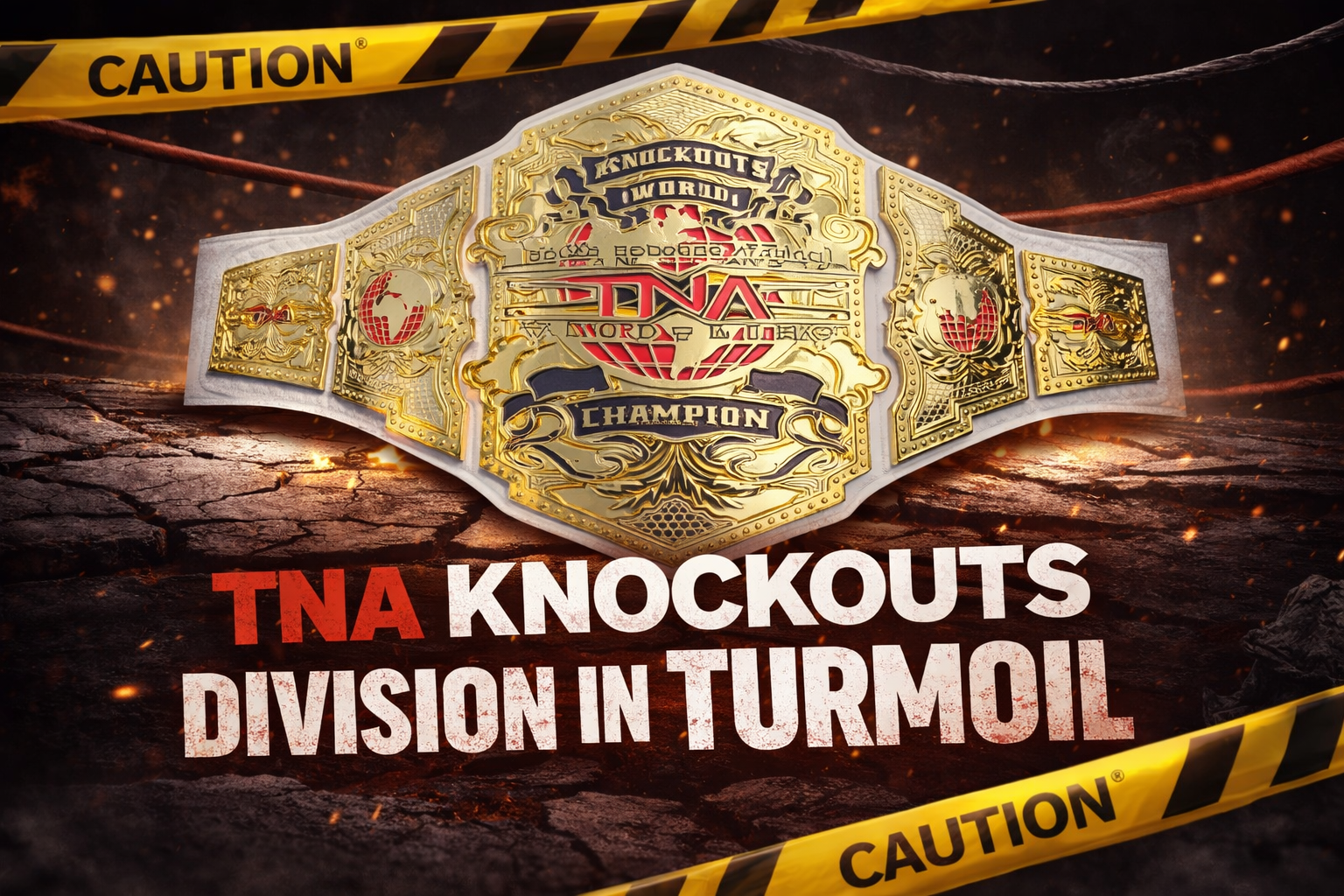
For a division that once felt like one of TNA’s defining strengths, the Knockouts scene now feels like it is running on reputation more than real momentum. That is the uncomfortable truth. The talent is not the issue. The issue is how unevenly that talent has been positioned, how often the booking has felt patched together instead of purposefully layered, and how much of the division’s recent identity has been tied to crossover optics instead of a strong, self-sustaining internal structure. Dani Luna reportedly requesting and being granted her release does not create those problems by itself, but it absolutely sharpens them.
What makes the Luna news hit harder is that she was not some forgotten name sitting in catering with no role. TNA had kept her active. She had already been re-established as a heel earlier this year, remained involved in the Knockouts mix, and was just part of the Knockouts World Title triple threat at Sacrifice against Arianna Grace and Léi Yǐng Lee. Even more telling, TNA’s own April 9 iMPACT preview still advertised Dani Luna vs. Jada Stone after the release reports surfaced. That makes this feel less like a routine roster move and more like a division losing one of its more flexible in-house pieces at a time when it can least afford to.
That gets to the bigger state of the division as a whole. Arianna Grace is the current Knockouts World Champion, and TNA has kept her title reign busy. She beat Léi Yǐng Lee for the championship at No Surrender, defended against Jody Threat on television, retained in the triple threat at Sacrifice, then retained again over Xia Brookside in the first Knockouts main event of the AMC era. On paper, that looks like activity and momentum. In practice, it has also fed the central criticism surrounding the division: the title scene has often felt more defined by interference, outside-brand connection, and the Stacks/Arianna act than by a strong Knockouts identity on its own.
That criticism about leaning too hard on NXT is not just random fan anger. It is visible in the booking trail. Arianna Grace came into TNA as the official liaison tied directly to the NXT relationship. Her rise, her title win, and much of her presentation have all been framed through that crossover dynamic. Léi Yǐng Lee is now set to challenge Arianna again at Rebellion, which keeps the title picture moving, but it also continues a stretch where the division has too often felt like it needs outside-brand energy to create interest instead of trusting the Knockouts to stand on their own. Cross-promotion can help when it enhances a healthy division. It becomes a crutch when the home division starts feeling secondary to the crossover itself.
And that is where the frustration from fans, wrestling sites, and journalists has come from. It is not that the division never produces good work. It is that the good work rarely feels like it is being built into something stable. Wrestling Inc. was openly critical of how Arianna Grace’s title win was presented, arguing it felt like an afterthought rather than a major division-defining moment. That kind of criticism matters because it reflects the same complaint fans have had for months: the booking too often undercuts the women instead of elevating them. The division can still deliver in flashes, but flashes are not enough for a division with this history.
To be fair, this is not a dead division. There are still pieces here. Jody Threat remains one of the more believable babyfaces TNA has, and her feud with Tessa Blanchard has had real bite to it, to the point that TNA escalated it into a Bunkhouse Match. Xia Brookside has stayed relevant around the title picture. Léi Yǐng Lee is still a credible challenger. Jada Stone feels like someone who should be getting even more attention. The problem is not that TNA has nothing. The problem is that the division rarely feels connected from top to bottom. The champion is active, but the title scene feels overproduced. The non-title feuds exist, but they often feel isolated. The tag picture is there, but it has not consistently felt like a deep, modern priority.
That is why the Luna departure lands as more than just a news item. She was exactly the kind of talent TNA should have been maximizing more carefully. She had name value within the division, prior tag title credibility, the ability to work heel or babyface, and enough upside to slot into multiple different roles depending on what the division needed. When a company is already being criticized for stop-start creative and questionable priorities in its women’s division, losing someone like that only makes the broader concern harder to dismiss.
The saddest part is that none of this feels unavoidable. The Knockouts division should still be one of TNA’s calling cards. The roster has enough talent to make that possible. But right now the division feels fragmented, overreliant on crossover framing, and too inconsistent in its week-to-week storytelling to feel like the pillar it once was. TNA keeps giving the division moments, but it has not given it enough structure. Moments can get attention. Structure is what builds a division people believe in.
Final thoughts
The current state of the Knockouts division is not hopeless, but it is undeniably underwhelming relative to its legacy. Dani Luna’s exit is not the whole story, but it is the latest and clearest reminder that something in this division is not clicking the way it should. TNA still has the talent to fix this. What it needs now is better long-term booking, more faith in its own roster, and far less dependence on crossover shortcutting. The Knockouts division used to feel like a destination. Right now, it feels like a missed opportunity trying to survive on its old name value.
Make sure to subscribe to our Late Night Crew Wrestling YouTube Channel. Follow @yorkjavon, @kspowerwheels & @LateNightCrewYT on X.
I’m the quiet one until the bell rings then I’ve got takes. I live for WWE NXT and TNA, I want every promotion to succeed, and I will absolutely roast the bad decisions on sight (because someone has to). Anime taught me to respect long-term storytelling; wrestling taught me that sometimes the plan is “we panicked” and called it “unpredictable.” The Miz got me into all of this, so yeah I appreciate confidence, commitment, and the art of talking like you’re already the main event. Now I bring that same energy to the page as the main writer for Late Night Crew Wrestling because if you’re not here to be must-see and tell the truth, why are you here?!