Lead: Tonight Matters — The Tournament Starts, and It’s Fitting
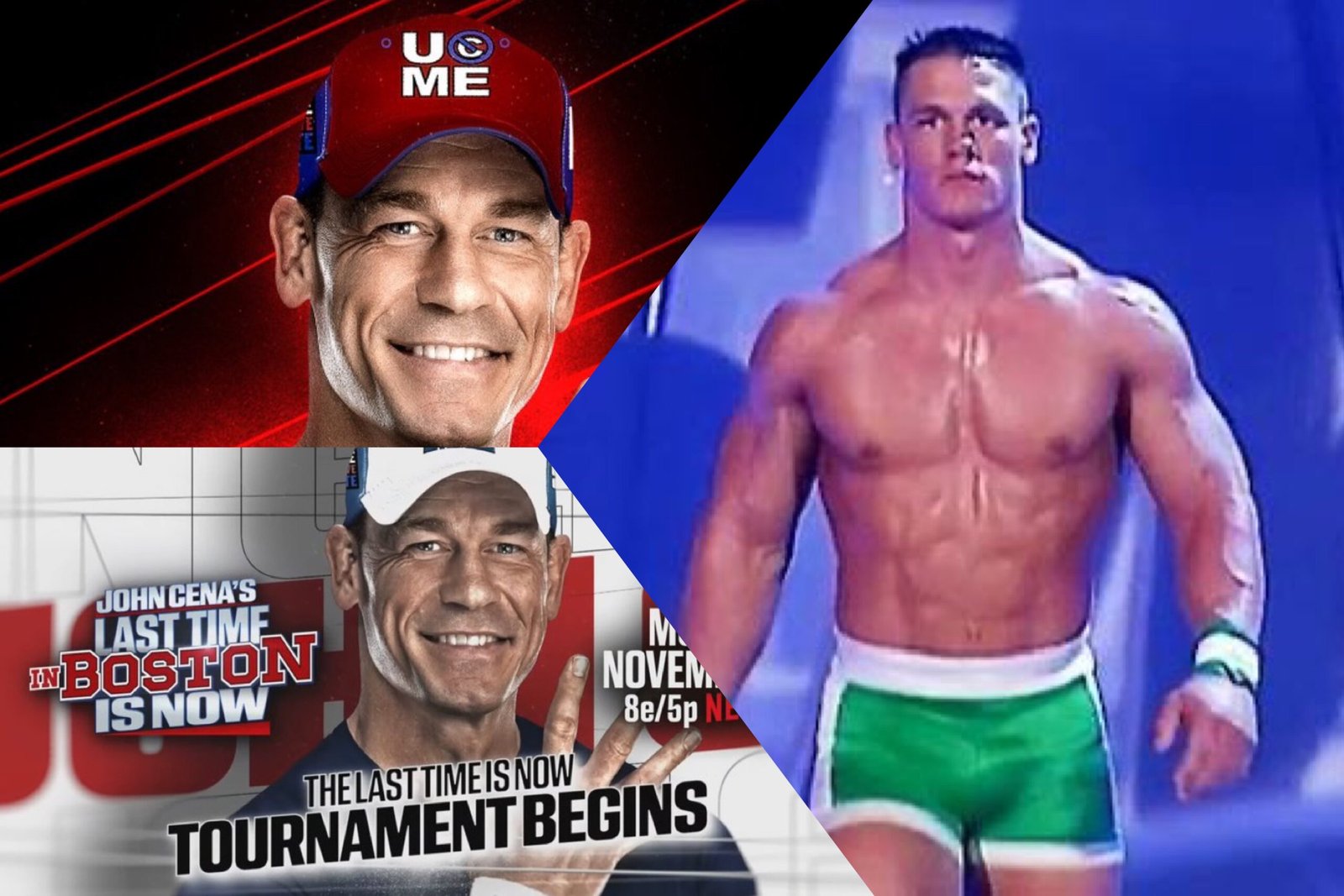
After a 23-year career that reshaped modern pro wrestling, John Cena — 17-time world champion, Hollywood actor, and one of WWE’s most visible public figures — will wrestle his final match on Saturday, December 13, 2025, when he headlines Saturday Night’s Main Event at Capital One Arena in Washington, D.C. That date and venue were confirmed by WWE.
Rather than simply naming an opponent, WWE has created a different narrative device: a 16-man, single-elimination tournament — billed as the “Last Time Is Now” tournament — that will determine Cena’s final challenger. The bracket begins tonight on RAW in Boston, and the first round already contains a mix of hard-style veterans, modern main-event talent, and a mystery element that keeps the long-term outcome genuinely uncertain.
This first article in a weekly series — running each Monday through Cena’s final match — examines Cena’s origins, rise, signature accomplishments, cultural and philanthropic impact (notably his record Make-A-Wish work), and what tonight’s tournament kickoff could mean for WWE’s booking and storytelling through December.
Part I — From Prototype to “Doctor of Thuganomics” (2000–2004): Early Years and WWE Debut
John Cena’s path to WWE’s main roster was methodical and visible. After training and developing in independent promotions and Ohio Valley Wrestling (OVW), Cena debuted on WWE television in 2002. Early matches and vignettes showed a wrestler with uncommon charisma, clear mic timing, and a muscular, athletic prototype frame that set him apart. He initially wrestled as “The Prototype,” but his first significant TV turn came when he adopted the freestyle-rap persona “Doctor of Thuganomics.” That iteration allowed Cena to blend real-time mic work, crowd manipulation, and an on-camera attitude that felt contemporary and immediate — and it made him a polarizing draw almost immediately. (Primary coverage of Cena’s early persona and rise is extensively archived across WWE historical pages and longform profiles.)
Why it worked: the rap gimmick let Cena be loud, inventive and visceral. It gave him an identity distinct from other young heavyweights and connected him to younger fans in the post-Attitude Era wrestling landscape. It also forced Cena to sharpen two tools that would define his career: promo command and in-ring psychology.
Part II — Rapid Ascent and the First Big Victories (2003–2010)
Cena’s ascent was fast but durable. He transitioned from a mid-card standout into a main-event anchor within a few years, collecting United States and World title opportunities and booking memorable rivalries. Early program highlights included feuds with Kurt Angle, JBL and later, Edge and Randy Orton. By the late 2000s, Cena had become WWE’s de facto face of the company — he was installed as the draw who could carry pay-per-view-level matches and sell out arenas.
His ring style evolved: where the Thuganomics era highlighted charisma and promos, Cena matured into a credible in-ring performer able to shoulder 30–40 minute main event matches. More important than any single match was Cena’s brand reliability: he was the performer WWE leaned on to anchor TV and events, and that trust shaped decades of storytelling and booking decisions.
Part III — Championships, Records and the “Never Give Up” Ethos
Cena’s championship ledger reads like a who’s-who of modern WWE history. Throughout his career he’s been billed with 17 recognized world championship reigns — a cornerstone of his legacy noted by WWE and event promotions — and he’s been a multi-time United States champion and Royal Rumble winner. The “never give up” catchphrase became normative for his character and, more broadly, a marketing motif with crossover appeal into movies and TV.
What this meant for WWE: Cena’s multiple title runs and ability to carry top billing made him an anchor during transitions — whether rebuilding a roster, shifting television partners, or expanding WWE’s mainstream reach. He was both a ratings commodity and a narrative fulcrum.
Part IV — Big-Time Matches and Defining Moments
Cena’s résumé of marquee matches includes headlining multiple WrestleManias, marquee Summerslams, and long-form rivalries. Highlights that will be referenced and revisited in later articles in this series include:
- Cena vs. The Rock (two main-event WrestleManias) — a mainstream career crossroad and cultural moment.
- Cena vs. Randy Orton / Edge / Batista — long, story-driven rivalries that defined eras.
- TLC and Last Man Standing-type bouts — where Cena’s durability and character work were on full display.
These matches mattered because they were rarely isolated: each was embedded into a longterm narrative that amplified Cena’s persona (underdog, relentless face, or defiant heel when required), and collectively they built the “Cena legacy” that tonight’s tournament will frame and, ultimately, close.
Part V — Beyond the Ring: Make-A-Wish, Philanthropy, and Cultural Reach
John Cena’s work outside the ring is as consequential as his in-ring accomplishments. Most notably, Cena holds the Guinness World Record for granting the most wishes through the Make-A-Wish Foundation; Guinness and multiple mainstream outlets documented him reaching the milestone of 650 wishes granted — a record figure that far outpaces other celebrities and has been repeatedly highlighted in coverage of his charitable work. That consistent commitment — Cena has been a visible presence for Make-A-Wish since the early 2000s — is essential to understanding the man behind the persona.
Cena’s philanthropy and public service messages (including WWE’s “Be a Star” anti-bullying initiative) extend his cultural footprint beyond wrestling arenas into communities worldwide. In many ways, Cena’s celebrity is two-fold: star power for entertainment and a real-world impact through philanthropic action.
Part VI — The Tournament: Confirmed First-Round Matches & Immediate Analysis
WWE’s tournament to decide Cena’s final opponent was revealed in stages, with the first matches announced on RAW and additional names drawn on Friday Night SmackDown. As the bracket begins tonight in Boston, the confirmed first-round matches are:
- Sheamus vs. Shinsuke Nakamura (announced for RAW/Boston).
- Rusev vs. Damian Priest (announced for RAW/Boston).
- The Miz vs. Jey Uso (draw revealed on SmackDown).
- LA Knight vs. a mystery opponent (mystery entry revealed as part of the SmackDown draw).
Why these pairings matter:
- Stylistic variety. The bracket already mixes hard-striking veterans (Sheamus, Nakamura), modern dynamic talents (Priest, LA Knight), and household TV names (The Miz, Jey Uso). That variety allows WWE to craft week-to-week matchups that feel consequential.
- Credibility vs. surprise. The inclusion of proven names (Nakamura, Sheamus, The Miz, Jey) lends immediate legitimacy. The “mystery opponent” for LA Knight introduces the possibility of a returning veteran or an NXT call-up — a booking lever WWE can use to create a major social-media moment.
Booking implications to watch tonight and in early rounds:
- If WWE wants a safe, credible final opponent, it’s likely to protect a main-event caliber name through the bracket (careful wins, short defenses for favorites).
- If WWE wants a breakout moment, a surprise entrant or under-used talent could be carried to the final for a genuine “passing of the torch” aura.
- If WWE wants emotional storytelling, they’ll select a finalist with a narrative connection to Cena — personal grudge, past interactions, or ideological contrast — to give the final match genuine dramatic weight.
Part VII — Early Predictions & What to Watch Tonight (Boston RAW)
Short, evidence-based expectations (not hype):
- Damian Priest has booking momentum that makes him a plausible deep run candidate if WWE wants a modern, athletic contrast to Cena.
- Shinsuke Nakamura offers veteran credibility and fan interest for a classic in-ring encounter should WWE aim for an in-ring showcase.
- LA Knight is a ratings asset; if he’s protected and gets the mystery opponent in his orbit, WWE could set up a high-visibility final.
- The Miz vs. Jey Uso is the match with most immediate narrative potential — both are seasoned performers who can carry a bracket with personal heat.
Tonight’s RAW will reveal the first set of winners and set the emotional tone for the tournament’s arc. Watch for how WWE uses Cena’s presence on the show: as a passive figurehead, an active storyline participant, or a narrative anchor used to legitimize the bracket.
Part VIII — Why This Send-Off Matters to WWE and to Fans
This is not merely a retirement match; it is a legacy coda for a cultural figure who helped define WWE for a generation. The tournament format does three things simultaneously:
- It honors Cena’s competitive origins — he didn’t simply hand out opportunities; he earned them.
- It creates opportunity — allowing WWE to elevate new stars or re-establish veterans.
- It sells television — every episode matters now; the bracket creates weekly stakes.
For fans, the tournament is a promise: Cena’s final match will be earned, not handed out. For WWE, it’s a programming engine that can sustain momentum through December 13.
Make sure to subscribe to our Late Night Crew Wrestling YouTube Channel. Follow @yorkjavon, @kspowerwheels & @LateNightCrewYT on X.
I’m the quiet one until the bell rings then I’ve got takes. I live for WWE NXT and TNA, I want every promotion to succeed, and I will absolutely roast the bad decisions on sight (because someone has to). Anime taught me to respect long-term storytelling; wrestling taught me that sometimes the plan is “we panicked” and called it “unpredictable.” The Miz got me into all of this, so yeah I appreciate confidence, commitment, and the art of talking like you’re already the main event. Now I bring that same energy to the page as the main writer for Late Night Crew Wrestling because if you’re not here to be must-see and tell the truth, why are you here?!