
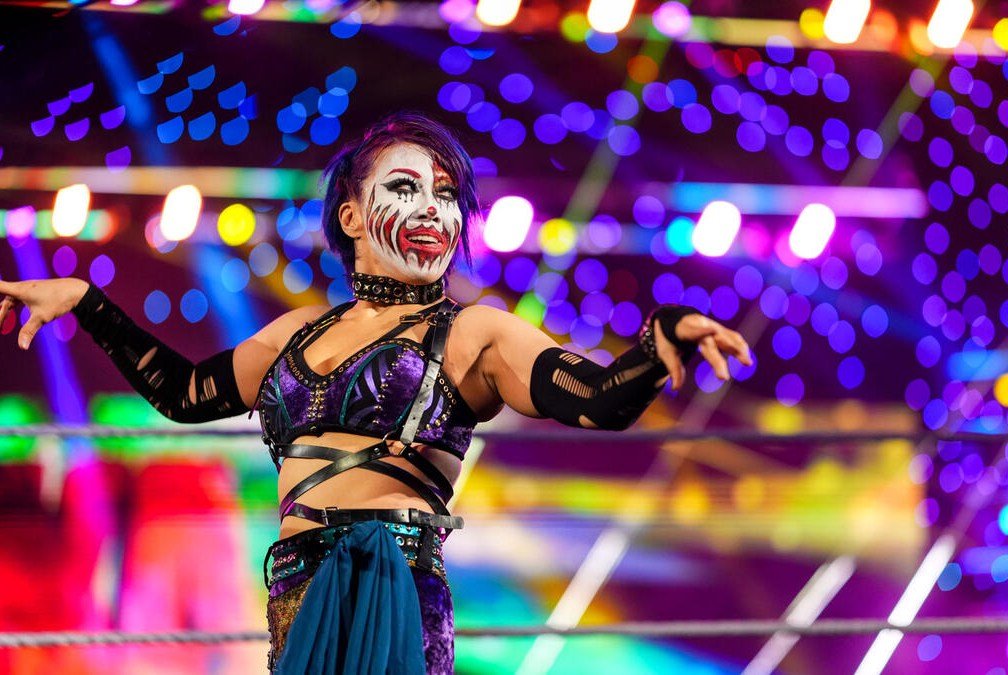
March is Women’s History Month, and Asuka is the kind of career that makes the whole point of the month feel obvious: women’s wrestling didn’t become “world class” because one company decided it should. It became world class because wrestlers like Asuka were already operating at that level—then brought the standard with them wherever they went.
Asuka’s legacy isn’t one lane. It’s range: Japan’s scene, WWE’s system, comedy beats, violence, character work, title matches, tags, singles—plus a real-life resume outside the ring that explains why she’s always felt like her own universe.
Before WWE: Kana was already a problem with receipts
Long before she was “The Empress of Tomorrow,” Kanako Urai was Kana—an independent-minded, freelance force in Japan who built her name across promotions instead of camping out in one place. That matters, because her whole vibe has always been self-directed: she came up with a chip on her shoulder, learned how to make any crowd react, and collected championships across multiple companies, including the JWP Openweight Championship and the SMASH Diva Championship.
And the detail people still underrate: she didn’t come into wrestling as a “lifer” with one skill set. She originally worked as a graphic designer, stepped away from wrestling due to health issues, and even opened her own graphic design agency during that break—so when she returned, she came back with the mindset of someone who knows how to rebuild.
That’s the first Women’s History Month lesson in her story: the great ones don’t just survive setbacks—they turn them into fuel.
NXT: the streak that made her feel like a legend in real time
When Asuka hit NXT in 2015, she didn’t arrive as a “project.” She arrived as a finished threat. Within a year, she beat Bayley at TakeOver: Dallas to win the NXT Women’s Championship, and that reign became the gold standard—510 days, the longest in that title’s history.
That entire NXT run had a specific kind of power: she didn’t just win, she defined the division’s pace. Matches felt tighter. Opponents wrestled more urgently. Everyone looked like they had to be sharper to survive her.
Main roster: history-maker, not just highlight-maker
Asuka’s WWE run is a stack of moments that still matter because they changed what women were allowed to do on big stages.
- 2018: she won the first-ever Women’s Royal Rumble, a career stamp that instantly put her in the “top tier” conversation.
- WrestleMania 34: Charlotte Flair handed Asuka her first WWE loss, ending the undefeated aura—an important turning point because it proved WWE saw her as the kind of star you book like a myth.
- TLC 2018: Asuka beat Becky Lynch and Charlotte Flair in the first women’s TLC match to win the SmackDown Women’s Championship—one of those nights where the division felt like it had fully arrived in the “big stipulation, big spotlight” era.
Then comes the 2020 stretch that really shows how much trust she earned:
- Asuka won Women’s Money in the Bank 2020, and the next night Becky Lynch revealed she was pregnant and that the briefcase win meant Asuka was the new Raw Women’s Champion. That wasn’t just a belt change—it was WWE choosing Asuka to stabilize the top of the division in a real-life pivot moment.
Add in her tag legacy—five Women’s Tag Team title reigns with different partners—and you get the clearest picture of her value: she’s one of the rare wrestlers WWE has trusted in basically every role a top woman can be asked to play.
The Kabuki Warriors: when character went full myth
The Kabuki Warriors run with Kairi Sane is a huge part of Asuka’s WWE identity because it brought Kana’s edge back into the mainstream—mist, menace, comedy, cruelty, all of it. Their women’s tag TLC main event at TLC 2019 is still a landmark moment for women’s tag wrestling in WWE’s modern era.
Outside the ring: Asuka was never “just” a wrestler
This is where Asuka’s career feels especially perfect for Women’s History Month, because she’s a reminder that women in wrestling have always been more multi-skilled than the industry gave them credit for.
She’s been a freelance graphic designer and video game journalist, had visible ties to gaming culture (including Microsoft/Xbox branding on gear in earlier years), and she’s built her own direct-to-fan lane with KanaChanTV, a YouTube channel that mixes gaming and lifestyle content—basically Asuka showing you she can control her own platform the same way she controls a ring.
Why Asuka is Women’s History Month essential
Asuka’s real legacy is that she helped normalize something the business used to resist: women being treated like world-class wrestlers without needing to be framed as an exception.
She didn’t just win championships. She exported a standard—Japan to WWE, NXT to WrestleMania stages, singles to tags—and made the people around her wrestle like it mattered. In a month that’s supposed to honor women’s wrestling history, Asuka stands out because she’s not only part of the story.
She’s one of the reasons the bar is so high now.
Make sure to subscribe to our Late Night Crew Wrestling YouTube Channel. Follow @yorkjavon, @kspowerwheels & @LateNightCrewYT on X.

I’m the quiet one until the bell rings then I’ve got takes. I live for WWE NXT and TNA, I want every promotion to succeed, and I will absolutely roast the bad decisions on sight (because someone has to). Anime taught me to respect long-term storytelling; wrestling taught me that sometimes the plan is “we panicked” and called it “unpredictable.” The Miz got me into all of this, so yeah I appreciate confidence, commitment, and the art of talking like you’re already the main event. Now I bring that same energy to the page as the main writer for Late Night Crew Wrestling because if you’re not here to be must-see and tell the truth, why are you here?!