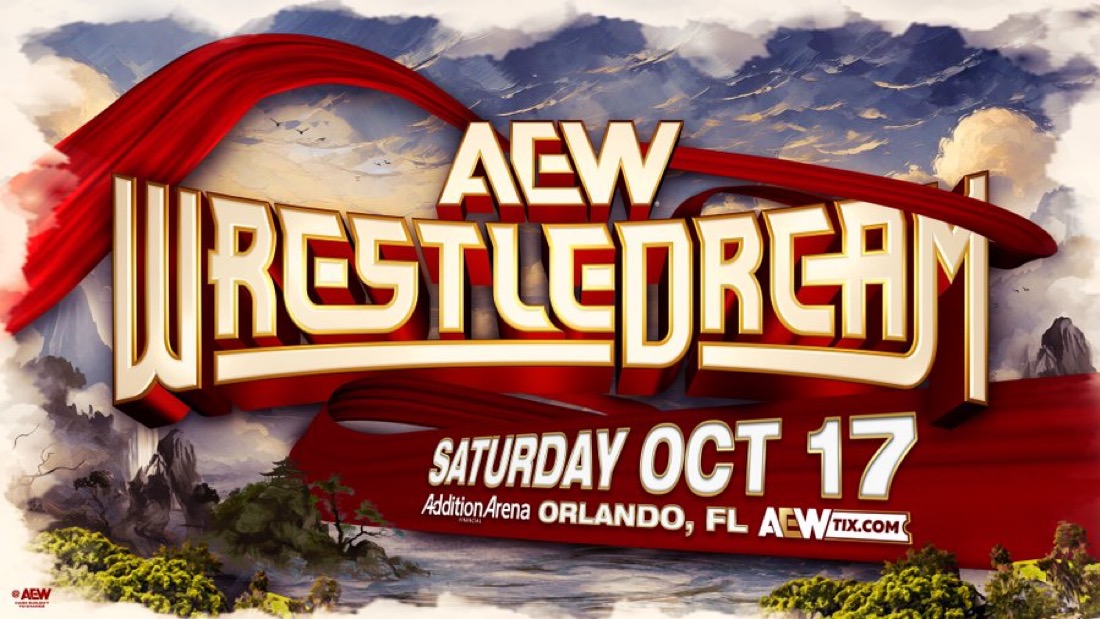
AEW WrestleDream 2026 Toronto will take place Sunday, October 18, at Scotiabank Arena, giving All Elite Wrestling another major opportunity to strengthen its presence in Canada while establishing Toronto as the next destination for one of the company’s most meaningful annual pay-per-views.
AEW officially confirmed the date and location after WrestleDream had previously been reported for Toronto. The announcement removes any remaining uncertainty and gives the company a recognizable arena, a proven professional wrestling market and more than two months to build anticipation following All In London and All Out.
This is not simply another city being added to AEW’s expanding pay-per-view schedule.
WrestleDream was created in 2023 as a tribute to New Japan Pro-Wrestling founder Antonio Inoki and has developed into one of AEW’s most distinct events. Its identity is tied to wrestling history, international influence and the idea of presenting matches that reflect Inoki’s ambitious vision for the industry.
Bringing that event to Toronto creates the possibility of combining WrestleDream’s international purpose with one of North America’s most passionate wrestling audiences.
AEW WrestleDream 2026 Toronto Becomes a Major Test of AEW’s Canadian Growth
AEW has consistently received strong reactions during its Canadian appearances, but running a pay-per-view inside Scotiabank Arena represents a different level of commitment.
Weekly television events can benefit from novelty and regional excitement. A pay-per-view asks fans to invest more money, attention and emotional interest. AEW must create a card that feels important enough to justify placing WrestleDream in one of Canada’s most prominent buildings.
Scotiabank Arena is not a secondary venue being used to minimize risk. It is one of Toronto’s signature sports and entertainment destinations. WWE has presented major events there for decades, including WrestleMania X8 when the building was still known as SkyDome’s smaller downtown counterpart, the Air Canada Centre.
AEW entering that environment places the company directly inside a market with deep wrestling history and high expectations.
Toronto fans are knowledgeable, vocal and willing to reject material that does not connect with them. That can create an outstanding atmosphere when the product delivers, but it can also expose weaknesses in a show that feels overly long, predictable or disconnected from meaningful stories.
AEW cannot approach WrestleDream as another collection of potentially great matches.
The company needs a compelling main event, clearly defined personal issues and several matches that feel exclusive to the pay-per-view. Toronto will provide the energy, but AEW must give the audience something worth responding to.
WrestleDream’s Move Beyond the United States Is Important
The first two WrestleDream events were held in Washington state before the 2025 edition moved to St. Louis. Taking the event to Toronto continues AEW’s effort to prevent its pay-per-view calendar from becoming overly dependent on the same American markets.
That expansion is necessary.
AEW has built a significant international audience, and the promotion cannot claim to be a global wrestling alternative while treating international markets as occasional novelties. All In at Wembley Stadium remains the company’s largest international commitment, but AEW needs additional events outside the United States to make its global ambitions feel consistent.
Canada is the most logical place to continue that process.
Travel is easier than running events in Europe, Australia or Japan. AEW already has Canadian talent with meaningful connections to the audience. The market has also supported professional wrestling across multiple generations.
AEW WrestleDream 2026 Toronto therefore becomes more than a one-night experiment. A successful event could encourage the company to bring additional pay-per-views to Montreal, Vancouver, Calgary or return to Toronto with an even larger annual tradition.
A disappointing turnout or weakly constructed card could have the opposite effect.
The stakes go beyond the immediate gate.
Toronto Gives AEW Several Natural Creative Possibilities
AEW does not need to force every Canadian wrestler onto the card simply because the show is taking place in Toronto. That type of booking can become predictable and occasionally patronizing.
However, ignoring the company’s Canadian talent would also waste an obvious advantage.
Kenny Omega remains AEW’s most important Canadian star and one of the central figures in the promotion’s history. His presence would immediately give WrestleDream additional importance, especially if he enters the event as AEW World Champion or remains involved in a major program following All In.
Christian Cage and Adam Copeland have even deeper connections to the Toronto area. Their history together, individual accomplishments and current position within AEW make them natural candidates for a prominent match.
Chris Jericho would bring another major Canadian name, although AEW must be careful not to rely exclusively on nostalgia. The goal should be to use regional connections to strengthen current stories rather than allowing the location to dictate the entire card.
Willow Nightingale, Mercedes Moné, Jon Moxley, Will Ospreay, Hangman Adam Page, Swerve Strickland, MJF, Kazuchika Okada and the rest of AEW’s upper card can still make WrestleDream feel significant regardless of nationality.
The strongest approach would be balancing Canadian star power with the most important stories coming out of All In and All Out.
October Placement Creates Both Opportunity and Pressure
The October 18 date places WrestleDream only weeks after All Out, which is scheduled for September 26.
That creates a condensed turnaround.
AEW has occasionally struggled when attempting to build consecutive pay-per-views within short windows. The company can produce excellent matches quickly, but strong matches are not automatically the same as strong pay-per-view programs.
WrestleDream must feel like the next essential chapter rather than an event AEW is rushing to fill because it already exists on the calendar.
The company’s post-All Out television will need to establish clear direction immediately. There will be little time for unfocused episodes, repetitive confrontations or matches announced without sufficient explanation.
That pressure can be productive.
AEW is often at its best when it commits to focused storytelling and gives its wrestlers specific motivations. A shorter build forces the promotion to identify which rivalries matter and which matches genuinely deserve pay-per-view placement.
The danger is that WrestleDream becomes overloaded with championship matches simply to create artificial importance. AEW has enough titles that nearly every pay-per-view can resemble an all-championship showcase, but championships lose value when every defense is presented with the same level of urgency.
Toronto deserves a card built around conflict, not just belts.
WrestleDream Must Continue Honoring Antonio Inoki
WrestleDream’s identity should remain connected to Antonio Inoki.
That does not mean every edition needs to become an AEW versus NJPW event. Forbidden Door already exists for that purpose. It also does not mean AEW should depend on ceremonial references without incorporating Inoki’s influence into the wrestling itself.
The tribute works best when WrestleDream presents ambitious matchups, contrasting wrestling styles and performers from different backgrounds.
An NJPW presence would make sense, particularly if AEW can secure talent whose involvement feels important rather than random. A major Japanese star facing one of AEW’s established names would fit the event’s purpose far better than adding several wrestlers to the card simply so the company can claim international representation.
Inoki’s career was built around spectacle, experimentation and the pursuit of matchups people believed might never happen.
WrestleDream should reflect that mentality.
The Toronto location strengthens the international character of the show. AEW now needs to ensure that the card matches the significance of the concept.
AEW Must Control the Length of the Event
One of AEW’s recurring pay-per-view problems has been excess.
The company frequently delivers strong matches, but some events become exhausting because too many bouts are included and nearly every contest is given significant time. By the final matches, the audience has already experienced several emotional peaks.
That approach can hurt the most important programs on the card.
Scotiabank Arena will likely provide a hot crowd, but no audience maintains the same energy indefinitely. AEW must structure WrestleDream with pacing in mind.
Not every major wrestler needs a match. Not every championship needs to be defended. Not every contest needs to last 20 minutes.
A focused eight-match main card would be more effective than a bloated event designed to include everyone. AEW should prioritize its strongest stories, use the Zero Hour presentation for developing programs and protect the audience’s energy for the final portion of the show.
The atmosphere inside Scotiabank Arena could become one of WrestleDream’s defining features. AEW should not drain that atmosphere through unnecessary excess.
Ticket Sales Will Reveal the Event’s True Momentum
The announcement will generate immediate excitement, but the real measure will be sustained ticket demand.
AEW’s challenge is not simply producing a strong first day of sales. The company must maintain momentum as the card takes shape and convince fans throughout Ontario and surrounding regions that WrestleDream is worth attending.
Scotiabank Arena provides prestige, but the building also creates visible pressure. Empty sections are more noticeable inside a major arena than they would be in a smaller venue selected specifically to guarantee a sellout.
AEW must promote WrestleDream aggressively across Dynamite, Collision, social media and its Canadian media partners. The company should treat the Toronto location as part of the event’s identity instead of mentioning it briefly while focusing exclusively on match announcements.
Local promotion matters.
Canadian fans should feel like AEW is bringing WrestleDream to Toronto because the city is important, not because the company needed another available arena.
WrestleDream Can Become One of AEW’s Most Important Annual Events
AEW’s pay-per-view calendar has become crowded.
Double or Nothing, All In, All Out, Revolution and Full Gear already have established positions. Forbidden Door offers a recognizable crossover concept. WrestleDream must continue proving why it deserves its own permanent place.
Toronto gives the event an opportunity to evolve.
A successful show could establish WrestleDream as AEW’s annual international wrestling celebration outside of the larger stadium spectacle attached to All In. The event can honor Inoki, feature talent from multiple promotions and still advance AEW’s most important internal stories.
That combination would give WrestleDream a purpose beyond simply being another October pay-per-view.
The location alone will not accomplish that.
AEW must follow the announcement with disciplined creative planning, meaningful promotion and a card that reflects the event’s history. Toronto is capable of creating an unforgettable wrestling atmosphere, but the company must provide the substance that makes that atmosphere matter.
AEW WrestleDream 2026 Toronto is a smart and ambitious move. Now AEW must prove it has a pay-per-view worthy of the city, the arena and the name WrestleDream.
Make sure to subscribe to our Late Night Crew Wrestling YouTube Channel. Follow @yorkjavon, @kspowerwheels & @LateNightCrewYT on X.
I’m the quiet one until the bell rings then I’ve got takes. I live for WWE NXT and TNA, I want every promotion to succeed, and I will absolutely roast the bad decisions on sight (because someone has to). Anime taught me to respect long-term storytelling; wrestling taught me that sometimes the plan is “we panicked” and called it “unpredictable.” The Miz got me into all of this, so yeah I appreciate confidence, commitment, and the art of talking like you’re already the main event. Now I bring that same energy to the page as the main writer for Late Night Crew Wrestling because if you’re not here to be must-see and tell the truth, why are you here?!