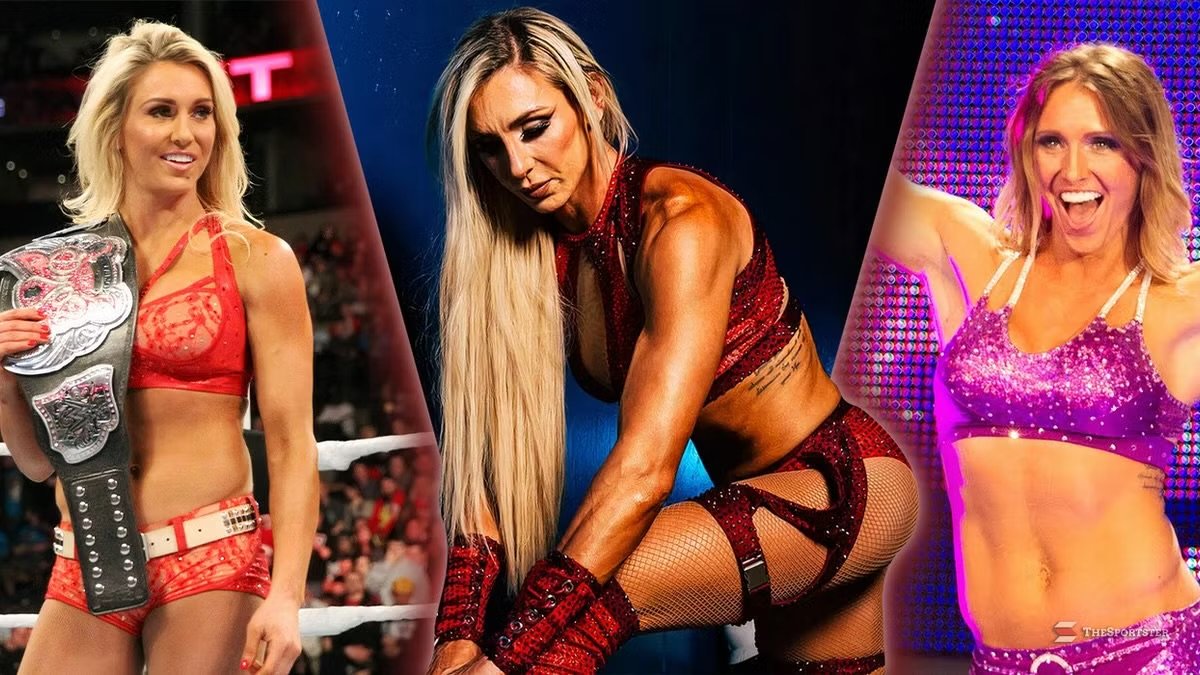
March is Women’s History Month, and Charlotte Flair is the easiest kind of career to respect and the hardest kind to summarize—because her legacy isn’t just “titles won.” It’s the way she helped normalize women being treated like main-event infrastructure. Not special attractions. Not once-a-year headliners. Weekly, year-round, “build the division around her” pillars.
Charlotte’s career is basically WWE’s modern women’s era in fast-forward: the NXT proof-of-concept, the main roster takeover, the big-match obsession, the “put her in the highest-pressure slot and let her live there” booking. And love her or critique her, the truth is the same: when WWE wants a women’s match to feel like a premium event, Charlotte is one of the first names they reach for.
That’s Queen energy—whether the crowd is cheering it or fighting it.
The NXT foundation: where “Charlotte” became
Charlotte Flair
Charlotte didn’t arrive in NXT as a finished product, but she did arrive with the one thing you can’t teach: presence. Then she stacked the work on top of it.
Her first defining NXT moment is still a career thesis statement: May 29, 2014—NXT TakeOver—Charlotte vs. Natalya in the tournament finals for the vacant NXT Women’s Championship. That match mattered because it wasn’t “good for the era.” It was one of the early matches that made people stop calling women’s wrestling an accessory and start treating it like a featured product.
From there, she held the belt, grew into the cadence, and by TakeOver: Rival 2015, she was defending the NXT Women’s Championship in a Fatal 4-Way against Bayley, Sasha Banks, and Becky Lynch—basically a snapshot of what the next decade would be built on.
That’s the first piece of her Women’s History Month case: Charlotte was there at the moment WWE’s women’s “future” became a real movement.
July 13, 2015: the main roster call-up that changed the ecosystem
Charlotte’s main roster arrival wasn’t presented like “here’s a new wrestler.” It was presented like a shift in the company’s direction. The Becky/Charlotte/Sasha call-up on Raw is still one of the clearest “we’re changing the women’s division now” moments WWE has ever had.
And Charlotte didn’t take long to turn that into hardware: Night of Champions 2015, she beats Nikki Bella to win the Divas Championship, ending Nikki’s record-setting reign and moving Charlotte from “promising” to “centerpiece.”
The Queen’s trophy case, without the fluff
Charlotte’s title resume is ridiculous, and it’s not just about quantity—it’s about how often WWE put her in the spot where the belt needed to feel important.
- 14-time women’s world champion (across WWE’s main roster women’s world titles)
- Two-time NXT Women’s Champion
- Two-time WWE Women’s Tag Team Champion (one reign with Asuka, one reign with Alexa Bliss)
You don’t rack up that kind of resume by being protected. You rack it up by being the wrestler WWE trusts to hold the “top of the mountain” sign when the camera zooms out.
The Four Horsewomen: rivalry as the engine of an era
Charlotte’s legacy is inseparable from Becky Lynch, Sasha Banks, and Bayley because those rivalries weren’t one-off classics—they became the backbone of a generation.
- With Sasha, it was volatility and escalation—two wrestlers who could wrestle big and make title matches feel like real sporting events.
- With Becky, it was identity clash—especially once Becky became “The Man” and Charlotte became the company’s definition of “The Queen,” the friction wasn’t just personal, it was philosophical.
- With Bayley, it was the constant contrast: heart vs. pedigree, underdog vs. inevitability.
That’s what made the Horsewomen era historic: they didn’t just elevate each other. They raised the baseline of what WWE expected women to do on big stages.
WrestleMania 35: the night women closed the biggest show
Women’s History Month doesn’t work without acknowledging the night that changed the language permanently: WrestleMania 35, the first-ever women’s main event in WrestleMania history—Becky Lynch vs. Ronda Rousey vs. Charlotte Flair in a Winner Take All match.
You can argue about the finish, the build, whatever… but the historical point is clean: Charlotte was part of the moment WWE chose to crown as the “women can close the biggest show” proof. And she belonged there because she’s one of the few women of her era who WWE consistently framed as “main event by default.”
Two-time Royal Rumble winner: the “inevitability” stat
Charlotte winning the Women’s Royal Rumble in 2020 was WWE saying, “This is the new standard.” Winning it again in 2025 made history—first woman to win it twice—and confirmed what WWE’s booking had already been telling you for years: Charlotte is one of the company’s most reliable “Road to WrestleMania” pillars.
That’s the Queen’s brand in one sentence: when WWE wants inevitability, they book Charlotte.
Alexa Bliss: the partnership, the history, and why it’s worked
Charlotte and Alexa have a long history as rivals—different styles, different presentations, different types of star power. That’s why their partnership has been interesting: it forces both of them to adjust.
When they teamed up in 2025, it wasn’t a throwaway odd couple pairing. They won the WWE Women’s Tag Team Championships and actually leaned into the contrast: Charlotte as the “Queen” who expects excellence, Alexa as the chaos-minded strategist who’s always two steps sideways. It gave Charlotte a different kind of spotlight—less “solo throne,” more “shared kingdom,” and it still fit because Charlotte’s character has always treated dominance like a lifestyle.
The recent character shift: less “perfect,” more real
Here’s the part that matters for where Charlotte is now: she’s openly talked about wanting her on-screen character to feel more authentic—less “always perfect, always untouchable,” more like the real person underneath the robe.
That’s a smart evolution because Charlotte’s career has always lived under a microscope. If she’s leaning into a more honest version of herself, it gives her something fresh that isn’t dependent on another title count. It’s the Queen acknowledging the pressure of the crown—and making that pressure part of the story instead of pretending it doesn’t exist.
The Women’s History Month takeaway
Charlotte Flair’s significance isn’t only championships. It’s that she helped normalize women being booked like the top of the card: long reigns, big stipulations, WrestleMania-level stakes, and main event expectations.
She’s the Queen because WWE booked her that way, sure. But she stayed the Queen because she kept delivering in the exact spots where the spotlight burns hottest.
And in Women’s History Month terms, that’s the legacy: Charlotte didn’t just live through the modern era of women’s wrestling—she helped define what that era looks like.
Make sure to subscribe to our Late Night Crew Wrestling YouTube Channel. Follow @yorkjavon, @kspowerwheels & @LateNightCrewYT on X.

I’m the quiet one until the bell rings then I’ve got takes. I live for WWE NXT and TNA, I want every promotion to succeed, and I will absolutely roast the bad decisions on sight (because someone has to). Anime taught me to respect long-term storytelling; wrestling taught me that sometimes the plan is “we panicked” and called it “unpredictable.” The Miz got me into all of this, so yeah I appreciate confidence, commitment, and the art of talking like you’re already the main event. Now I bring that same energy to the page as the main writer for Late Night Crew Wrestling because if you’re not here to be must-see and tell the truth, why are you here?!