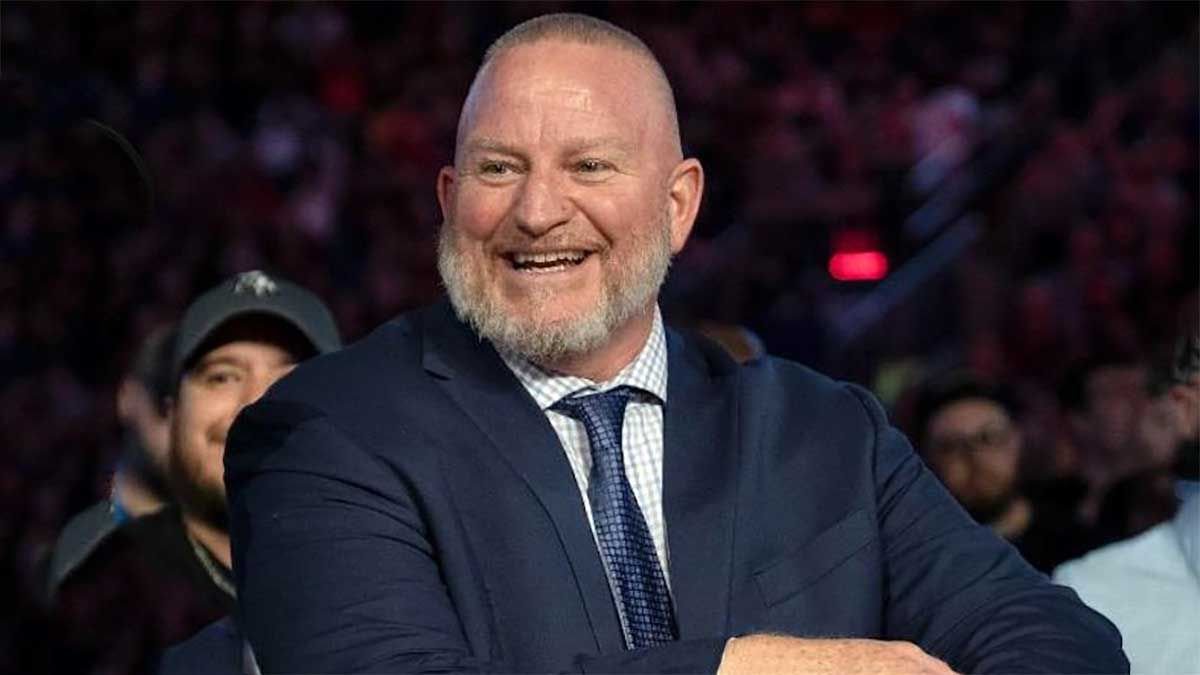
WWE’s creative machine just lost one of its most visible modern-era architects — and the timing is impossible to ignore. Multiple reports state WWE Hall of Famer Brian “Road Dogg” James has departed the company, ending a run that most recently saw him positioned as a co-lead writer for Friday Night SmackDown.
For months, SmackDown has carried an oddly familiar stink: angles that start hot and cool off without payoff, character motivations that flip week-to-week, and a show that too often feels like it’s stalling between premium live events rather than driving toward them. Then “WWE: Unreal” arrived, and suddenly the complaints weren’t just fan vibes — they had a narrative, a face, and a writers’ room snapshot that framed how ideas can be championed without the connective tissue that makes them work.
Now Road Dogg is gone, and the conversation isn’t just “who’s next?” It’s whether WWE finally admits SmackDown’s recent creative direction has needed a hard reset.
What’s being reported
Cory Hays of Bodyslam was first to report Road Dogg’s exit, and PWInsider subsequently backed up the story, with the news quickly echoing across the industry.
This matters because Road Dogg wasn’t just “a writer” in the modern WWE ecosystem — he was presented internally and publicly as part of the leadership layer shaping SmackDown’s weekly voice. Multiple outlets have noted his most recent role was tied directly to SmackDown’s creative leadership, following his return to WWE and eventual placement back into a top creative seat.
The “Unreal” problem: perception became storyline
“WWE: Unreal” didn’t need to declare anyone incompetent. It simply did something wrestling rarely allows: it showed process. And once you show process, audiences start judging decision-makers the same way they judge wrestlers — on execution, consistency, and whether there’s a plan beyond the pop.
Entertainment Weekly’s coverage of the series made it clear that the hook was access to WWE’s writers’ room and how stories get assembled.
That access is exactly why Road Dogg became a lightning rod. In the “Unreal” framing, he’s often positioned as someone advocating for directions that sound loud in the room but don’t always read as structurally complete — an energy that can be useful when it’s paired with an editor, a finisher, and someone mapping consequences. When it isn’t, it becomes the thing SmackDown’s been accused of lately: moments without architecture.
And even if you view “Unreal” as selective TV storytelling — because it is — the damage is real: fans now believe they’ve seen the blueprint for why SmackDown can feel like a set of ideas rather than a coherent season.
Why SmackDown’s creative has taken so many hits
SmackDown’s current critique cycle has been consistent:
- Heat without runway: segments that spike interest but don’t escalate logically the following week
- Characters used as tools, not people: motivations reshaped to fit the segment rather than the segment built around the character
- Angles that feel “written to get through the night”: a symptom of a room prioritizing short-term beats over long-term rhythm
And it hasn’t just been message-board noise. Coverage around WWE’s creative adjustments has pointed to dissatisfaction with SmackDown’s direction — including talk that WWE expanded the team to address the perception that the product needed fresh voices.
That’s where the Road Dogg discussion gets sharp: if you’re the co-lead writer (or positioned as creative leadership) on the brand fans are calling uneven, then you’re going to wear the critique — fair or not — because wrestling audiences always attach results to the person holding the pencil.
Road Dogg leaving isn’t just a personnel move — it’s a messaging move
If WWE wanted to quiet the “SmackDown is drifting” narrative, this is the cleanest way to do it without publicly admitting anything. Changing creative leadership gives WWE plausible momentum:
- It signals accountability without a press conference.
- It creates a scapegoat without naming one.
- It opens the door for a tonal change that can be framed as “new season” rather than “we were wrong.”
And crucially, it separates SmackDown’s next phase from the “Unreal” portrayal that made Road Dogg an avatar for incomplete vision.
What comes next for SmackDown
SmackDown doesn’t need “better ideas.” It needs better sequencing — stories that behave like they remember what happened last week. Whoever steers the ship next has to do three things immediately:
- Re-establish cause and effect: no more angles that reset because the next week needs a different beat.
- Pick pillars and protect them: two or three top programs that the show bends around, not a dozen mini-feuds that cannibalize time.
- Write consequences into the show’s DNA: every win and loss should change someone’s options, not just their mood.
If WWE nails that, Road Dogg’s exit becomes a footnote in a larger correction. If it doesn’t, then this is just another name swapped on the same machine — and “Unreal” will keep being the convenient explanation fans point to whenever SmackDown feels like it’s running in place.
Make sure to subscribe to our Late Night Crew Wrestling YouTube Channel. Follow @yorkjavon, @kspowerwheels & @LateNightCrewYT on X.
I’m the quiet one until the bell rings then I’ve got takes. I live for WWE NXT and TNA, I want every promotion to succeed, and I will absolutely roast the bad decisions on sight (because someone has to). Anime taught me to respect long-term storytelling; wrestling taught me that sometimes the plan is “we panicked” and called it “unpredictable.” The Miz got me into all of this, so yeah I appreciate confidence, commitment, and the art of talking like you’re already the main event. Now I bring that same energy to the page as the main writer for Late Night Crew Wrestling because if you’re not here to be must-see and tell the truth, why are you here?!