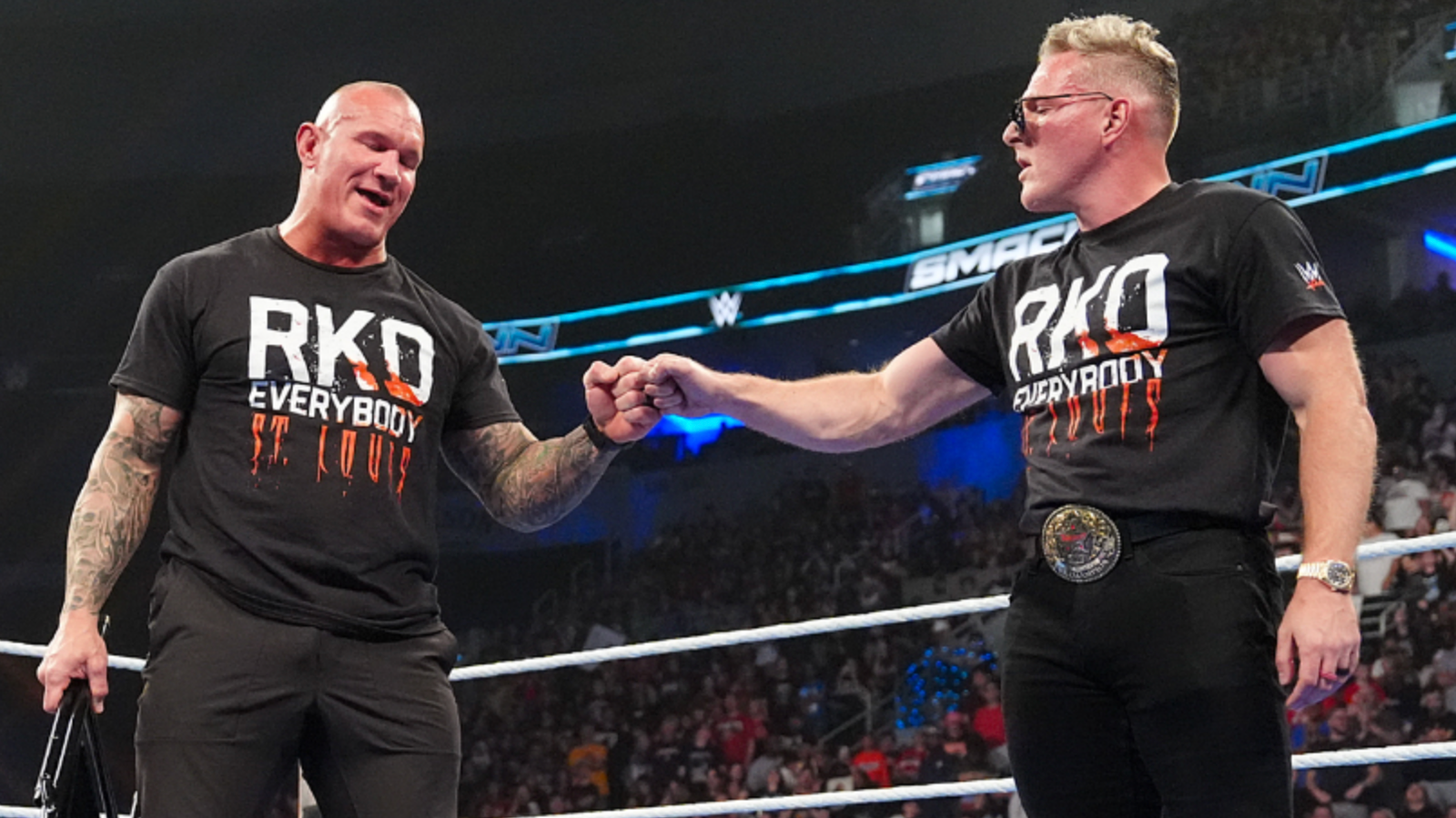
In a revelation that underscores the growing corporate influence over WWE’s on-screen product, sources close to the situation have indicated that Pat McAfee’s surprise appearance during Friday night’s episode of SmackDown (April 3, 2026) was not born from the WWE Creative writing room but stemmed directly from an executive-level directive issued by TKO Group Holdings brass.
According to detailed backstage notes published by Mike Johnson of PWInsider, the decision to integrate McAfee into the Cody Rhodes storyline was viewed internally as “an edict from TKO brass to WWE Creative, not a creative idea that originated in the WWE writing room and was approved by Paul Levesque.” One source even floated the possibility that the push originated as high as Endeavor/TKO CEO Ari Emanuel—who also represents McAfee as his agent—though this specific claim remains unconfirmed.
The strategic intent behind the mandate appears straightforward and business-oriented: to inject McAfee’s considerable mainstream profile and ESPN platform into the WrestleMania buildup, providing the network with fresh promotional material ahead of its first-ever broadcast of the event. McAfee’s established popularity as a host and personality on ESPN creates a natural crossover hook, giving the network’s audience an additional entry point into the Road to WrestleMania and potentially expanding WWE’s reach beyond traditional wrestling viewers.
Behind-the-Scenes Indicators of External Involvement
Several production details from Friday’s show support the notion of a late-stage or externally driven addition. Multiple sources reported that McAfee was kept hidden before the opening segment, with many inside the company seemingly unaware of his planned reveal. While veteran producer Michael Hayes and Bobby Roode oversaw the segment’s production (with writer Christian Scovell internally credited), the Cody Rhodes response promo that addressed the on-screen “attack” was notably absent from the planned internal rundown for the episode.
Some within the company have speculated that portions of Rhodes’ unscripted comments during that promo may have constituted a subtle “shoot”—real-world frustration directed at TKO’s decision to insert McAfee into an already-developing storyline. Whether intentional or not, the moment added an extra layer of intrigue for those paying close attention to backstage dynamics.
Strategic Rationale: Business Synergies in the TKO Era
From a corporate standpoint, the move aligns with TKO’s broader philosophy since the 2023 formation of the combined UFC-WWE entity under Endeavor’s umbrella. Professional wrestling has always balanced art and commerce, but the scale of parent-company involvement has intensified as TKO seeks to maximize synergies across its portfolio of live events, media rights, and talent.
McAfee occupies a rare position: a former WWE performer with deep in-ring credibility who has also become a major voice in mainstream sports media through his ESPN-adjacent programming. Inserting him into a high-profile feud creates immediate buzz that can be amplified across ESPN platforms—podcasts, digital content, highlight packages—driving awareness of WrestleMania among casual sports fans who might not otherwise tune in to weekly WWE programming.
This is not the first time corporate partnerships have shaped wrestling storylines, but the explicit framing as a “TKO mandate” highlights how media-rights deals and cross-promotional imperatives can now directly influence creative choices at the highest levels.
Implications for Creative Autonomy and Storytelling
The reported TKO involvement raises several important considerations about the evolving balance between business objectives and creative independence:
- Creative Control Dynamics: Paul “Triple H” Levesque has earned praise for restoring a degree of wrestler-friendly, long-term storytelling since assuming a larger creative role. A top-down mandate of this nature, especially one that bypassed normal planning processes, could signal that certain high-value promotional opportunities still require direct approval—or even origination—from TKO executive suites. This duality (day-to-day creative residing with WWE while major cross-platform decisions flow from the parent company) is likely to remain a point of discussion moving forward.
- Potential Tension with Talent and Writers: If elements of Rhodes’ promo were indeed improvised commentary on the situation, it could reflect quiet frustration among top stars when external forces alter carefully constructed narratives. Conversely, many performers recognize the value of mainstream exposure. The situation also places writers in a challenging position—credited internally yet aware that key beats originated outside their room.
- Storyline Integrity vs. Promotional Value: On the positive side, McAfee’s involvement brings immediate star power, nostalgia, and media attention that can elevate an entire WrestleMania card. However, rushed integrations can feel disjointed to dedicated viewers who have closely followed weekly character development. Edge cases include continuity questions (how does McAfee’s surprise role mesh with pre-existing plans?) and the possibility that over-reliance on external talent dilutes the focus on the full-time WWE roster.
- Fan and Industry Perception: Wrestling audiences have historically reacted strongly to perceived “corporate interference,” often viewing it through the lens of classic “evil authority figure” tropes. Online discourse will likely debate whether this enhances the product by bringing fresh eyes or detracts by prioritizing boardroom metrics over in-ring storytelling. Early indicators suggest the segment generated significant social media conversation—precisely the kind of engagement TKO and ESPN would want.
- Broader TKO Strategy and Future Precedent: This development fits a pattern of leveraging TKO’s diversified assets for mutual benefit. Similar future maneuvers could involve UFC crossovers, other Endeavor talent, or additional media partners. The effectiveness will ultimately be judged by whether the angle sustains viewer interest through WrestleMania and beyond, rather than serving as a one-off promotional stunt.
Corporate Priorities vs. the Soul of Wrestling Storytelling: A Growing Disconnect
Friday’s SmackDown was not an isolated case of external influence—it was a showcase for it. Alongside McAfee’s surprise reveal, the episode heavily featured country music star Jelly Roll, who has been woven into the Randy Orton/Cody Rhodes orbit for weeks. Jelly Roll recently competed in singles action (defeating Kit Wilson), confronted Orton on-screen, and was the victim of a targeted assault by “The Viper” on a prior episode, directly feeding into Cody’s response promo. Later in the show, rapper Lil Yachty made a surprise appearance with Trick Williams. Williams invited the Grammy-nominated artist to join him in his corner at WrestleMania 42 for his United States Championship match against Sami Zayn, hyped him up ringside during Sami’s title defense against Carmelo Hayes, and the duo was involved in a post-match attack on Zayn. Williams even explicitly referenced the night’s other celebrity guests—Jelly Roll and McAfee—as his rationale for bringing Yachty along.
These back-to-back-to-back celebrity integrations on a single card illustrate a clear and accelerating disconnect between TKO’s corporate-driven needs and the organic demands of professional wrestling storytelling. Since TKO Group Holdings took full control in 2023, WWE programming has leaned harder into mainstream crossovers: musicians, podcasters, athletes, and social media personalities are inserted not because they organically advance multi-month character arcs or in-ring rivalries, but because they check boxes for media partnerships, viral moments, demographic expansion, and short-term buzz.
The question is whether TKO truly understands professional wrestling from the perspective of its dedicated fanbase. Wrestling’s enduring power has always come from continuity, consequence, and emotional investment—the slow-burn rivalries, the payoff of years spent on the road, the catharsis of seeing full-time performers settle scores inside the ropes. When major story beats feel dictated by boardroom synergies (agent relationships, ESPN promotions, or the need to “give the network something extra”), the product can start to feel less like a self-contained sports-entertainment universe and more like a content vertical being optimized for quarterly metrics.
Over-reliance on celebrities risks diluting the very essence that makes WrestleMania the grandest stage: the triumph of the roster members who live and breathe the product week after week. Fans do not object to mainstream appeal in moderation—history is full of successful guest spots that enhanced rather than overshadowed the action—but the current volume and timing suggest a corporate philosophy that prioritizes “moments” over narrative cohesion. Jelly Roll’s involvement may generate country-music crossovers; Lil Yachty’s appearance may trend on hip-hop platforms; McAfee’s return may deliver ESPN headlines. Yet each insertion carries the subtle cost of reminding longtime viewers that the story they’ve invested in may be subordinate to external agendas.
In an era of record media-rights deals and diversified revenue streams, TKO’s approach is understandable from a business standpoint. Whether it respects the unique psychology of the wrestling audience—the same audience that has sustained the industry through booms, busts, and every era in between—remains an open and increasingly urgent question. As WrestleMania 42 approaches, the real test will not be how many new eyes these celebrity integrations attract, but whether the core storytelling still resonates once the spotlight dims and the casual fans move on.
