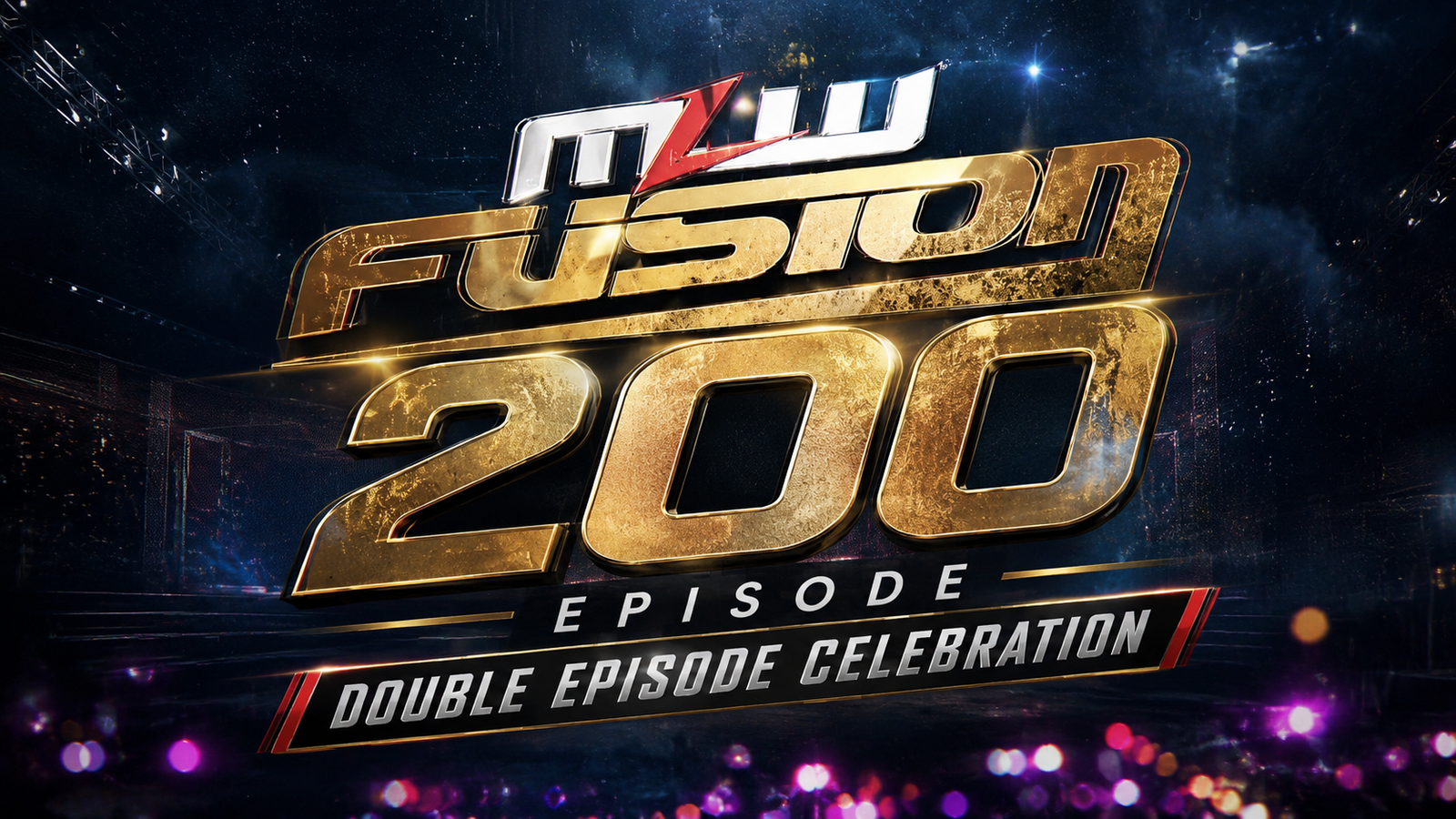
Major League Wrestling is turning one of the biggest milestones in company history into a full week of programming, announcing a special Fusion double-header capped by the 200th episode of its flagship series.
MLW Fusion 200, titled “Choose Violence,” will air as a special two-hour presentation on Saturday, June 20, featuring World Heavyweight Champion Killer Kross, Matt Riddle and Alex Hammerstone at the center of an increasingly volatile championship picture. Hammerstone will also face lucha libre legend Último Guerrero, while Místico battles Templario and Blue Panther challenges Austin Aries for the MLW National Openweight Championship.
The milestone episode will also feature the return of Mads Krule Krugger, the beginning of Shotzi’s “Monster Hunt” and the next chapter of CONTRA Unit’s war against MLW following its attack on company president Cesar Duran.
It is a loaded card, but Episode 200 carries considerably more meaning than the matches advertised.
Fusion has never enjoyed the uninterrupted stability of WWE television or the consistent national exposure available to larger wrestling companies. Its road to 200 has included changing networks, streaming platforms, production models, seasonal rebrands, pandemic shutdowns and an extended absence from MLW’s regular schedule.
Reaching this point is less about longevity in the conventional television sense and more about survival.
MLW was originally founded by Court Bauer in 2002, emerging during the vacuum created by the deaths of WCW and the original ECW. The company promoted what it called “hybrid wrestling,” combining heavyweight fights, technical wrestling, lucha libre, hardcore violence and international influences instead of restricting itself to one style.
Its original television series, Underground TV, featured names such as Terry Funk, Steve Corino, Satoshi Kojima, Mike Awesome, Raven and Shane Douglas. However, the first incarnation of MLW lasted only until 2004 before the promotion shut down as an active wrestling company.
The MLW name remained alive through its radio and podcast network before Bauer revived the promotion in 2017. One-Shot marked its return to live wrestling, but Fusion ultimately provided the weekly structure MLW needed to become more than a company running occasional independent shows.
Fusion premiered on beIN Sports on April 20, 2018, and quickly became the foundation of the revived promotion.
The early years featured a roster filled with talent who would later become far more prominent across the industry, including Shane Strickland, MJF, Matt Riddle, Pentagon Jr., Rey Fenix, Jeff Cobb, Brody King, Brian Pillman Jr. and Tom Lawlor.
MLW did not create all of those wrestlers, but Fusion gave several of them consistent television time before they moved on to larger stages. The show became a place where established names, international stars and emerging talent could exist in the same ecosystem without every match feeling like it had been built from the same formula.
That variety became Fusion’s strongest identity.
The Hart Foundation could occupy one part of the show, the Lucha Brothers could deliver something completely different and Lawlor could bring an MMA-influenced edge to the main-event scene. MJF developed the entitled personality that would later make him one of wrestling’s biggest stars, while Alexander Hammerstone evolved from a member of The Dynasty into one of MLW’s defining homegrown names.
Fusion’s most important era may have come through the rise of Jacob Fatu and CONTRA Unit.
Fatu’s dominant reign as MLW World Heavyweight Champion gave the program a central force around which everything else could revolve. CONTRA was presented as more than another heel faction. It was treated like an occupying army attempting to tear apart MLW from within.
That is why CONTRA’s current return to prominence feels appropriate heading into Episode 200. The group represents one of the few concepts created during the Fusion era that became inseparable from MLW itself.
Hammerstone eventually defeating Fatu was also one of the strongest examples of MLW committing to long-term storytelling. Hammerstone’s rise from arrogant powerhouse to company defender worked because Fusion had allowed both men to develop over an extended period.
The show’s history was not without major setbacks.
The COVID-19 pandemic halted live events and forced MLW to rely on archive programming, anthology episodes and closed-set tapings. When regular production returned, Fusion was repackaged through different formats, including Fusion: Alpha and MLW Azteca.
Those experiments kept content moving, but they also exposed one of MLW’s biggest problems: the promotion frequently made itself harder to follow than necessary.
Fusion, Fusion: Alpha, Azteca, Underground Wrestling and separately branded specials all existed within the same universe, but the constant changes weakened the idea of one dependable flagship program. Casual viewers could easily lose track of where major stories were happening or which show was supposed to matter most.
Fusion later disappeared from MLW’s weekly schedule altogether after its 2023 run, with the company shifting its attention toward event-based programming and streaming specials.
Its return on May 30, 2026, therefore represented more than another season premiere.
MLW restored Fusion as its weekly Saturday night series, airing free on YouTube at the traditional 6:05 p.m. Eastern time slot before an encore presentation on beIN Sports. The relaunch featured Killer Kross, Matt Riddle, Hammerstone, Shotzi, Místico, The Good Brothers, The Skyscrapers, Austin Aries and a wave of new or returning talent.
That comeback has quickly brought the show to Episode 200.
The current world-title picture gives the milestone an important connection to multiple generations of MLW. Kross is the reigning champion, Riddle was one of the central names involved in the company’s original 2017 revival and Hammerstone is a former world champion whose rise was built almost entirely through Fusion.
Their collision gives the episode a stronger foundation than a simple nostalgia celebration.
The CMLL presence is just as important.
Místico against Templario, Hammerstone against Último Guerrero and Blue Panther challenging Austin Aries represent the hybrid identity MLW has promoted since its original formation. Rather than attempting to imitate WWE or AEW, MLW is at its best when it uses its international partnerships to create matches other American promotions are not regularly offering.
Episode 200 will also become the first Fusion presentation available through NJPW World as part of MLW’s new distribution partnership with New Japan Pro-Wrestling. New weekly episodes are scheduled to join the service beginning June 22, expanding Fusion’s reach while keeping the program available through its existing platforms.
That makes the milestone both a celebration and an introduction.
For longtime viewers, it recognizes a television series that survived repeated disruptions and reinventions. For new viewers discovering MLW through NJPW World, Episode 200 will effectively serve as a showcase of what the promotion claims to represent in 2026.
The card includes heavyweight stars, lucha libre legends, international partnerships, championship stakes, faction warfare and a women’s division now centered around Shotzi. On paper, it is a broad snapshot of nearly everything MLW wants Fusion to be.
The real test will come after the celebration.
MLW has proven repeatedly that it can assemble strong cards, announce new partnerships and create excitement around major specials. Its problem has been maintaining that momentum without changing platforms, branding or presentation before viewers have time to develop a consistent watching habit.
Episode 200 matters because Fusion survived long enough to reach it. Episode 201 and everything that follows will determine whether this milestone marks the beginning of a stable new era or simply another temporary relaunch.
For all its imperfections, Fusion has remained the closest thing MLW has to a permanent identity. It connected the company’s revival to the rise of Jacob Fatu, Hammerstone, CONTRA Unit, The Dynasty and the Opera Cup. It provided a platform for wrestlers on the verge of becoming major stars and kept MLW visible through periods when its future was far from secure.
Two hundred episodes may not place Fusion among wrestling television’s longest-running institutions, but considering the road MLW took to get there, the milestone deserves more than a commemorative graphic.
It represents a company that closed, returned, survived a global shutdown, lost major talent, changed homes repeatedly and still found a way back onto the weekly wrestling calendar.
Now MLW must prove it can stay there.
Make sure to subscribe to our Late Night Crew Wrestling YouTube Channel. Follow @yorkjavon, @kspowerwheels & @LateNightCrewYT on X.
I’m the quiet one until the bell rings then I’ve got takes. I live for WWE NXT and TNA, I want every promotion to succeed, and I will absolutely roast the bad decisions on sight (because someone has to). Anime taught me to respect long-term storytelling; wrestling taught me that sometimes the plan is “we panicked” and called it “unpredictable.” The Miz got me into all of this, so yeah I appreciate confidence, commitment, and the art of talking like you’re already the main event. Now I bring that same energy to the page as the main writer for Late Night Crew Wrestling because if you’re not here to be must-see and tell the truth, why are you here?!