
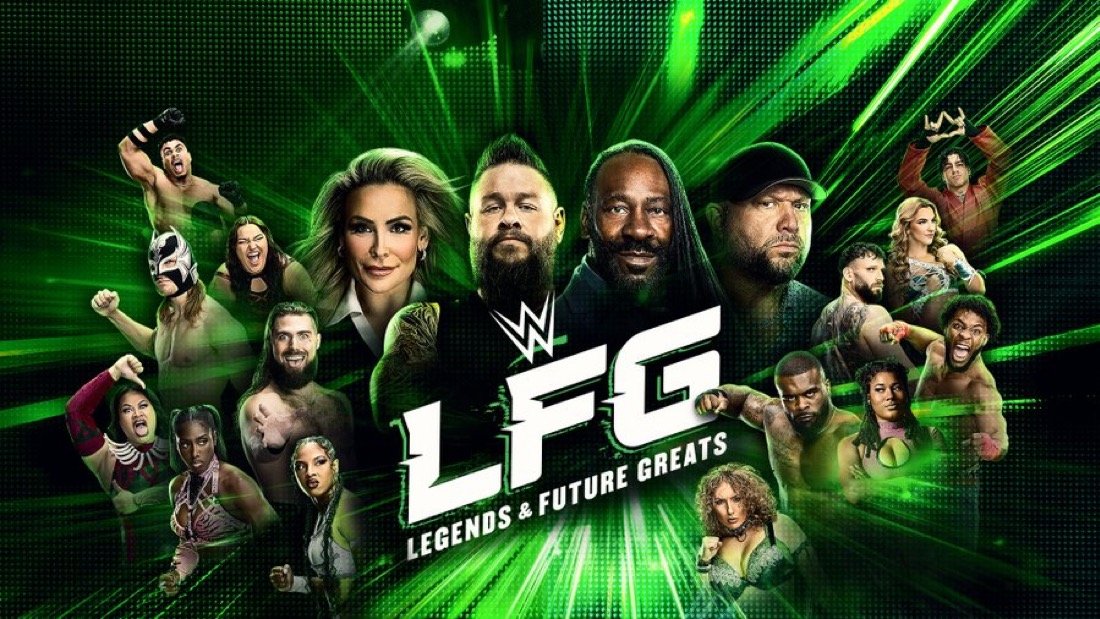
WWE LFG Season 3 has quietly become one of the more useful developmental shows WWE has produced because it stopped pretending to be a normal competition show and started acting like what it really is: a Performance Center evaluation room with cameras. Through the first nine episodes, the season has been built around coaching, live reps, real-time mistakes, and whether these “Future Greats” can turn raw tools into something WWE can actually use on NXT, Evolve, AAA or eventually the main roster. Kali Armstrong made the first real statement of the season by beating Nikkita Lyons. Kendal Grey was moved up to NXT after proving she was already operating above the LFG level. Drake Morreaux was told there was no NXT spot for him and was redirected to AAA, which was framed as both a wake-up call and an opportunity. Elio LeFleur stole the season with the best match LFG has had so far against Mike Derudder and immediately earned his NXT move. Keanu Carver got called up after making it clear he had outgrown the room. Elijah Holyfield rebuilt momentum after injury, especially through his Apollo Crews connection. Bayley Humphrey started to find her monster. Layla Diggs kept flashing elite athletic upside. Masyn Holiday, Zena Sterling, Braxton Cole, Harlem Lewis, Chris Island, PJ Vasa, Sirena Linton and others have all been tested in a format that exposes exactly who is ready, who is close, and who is still doing moves without fully understanding the fight. That is what led into last night’s episode, “Too Strong Armstrong,” a show built less around huge stakes and more around whether Kali Armstrong, Layla Diggs, Mike Derudder, Harley Riggins, Bayley Humphrey and Masyn Holiday could take specific coaching instructions and turn them into sharper, cleaner, more believable matches.
Here are the full results
- Mike Derudder def. Harley Riggins
- Bayley Humphrey def. Masyn Holiday by pinfall
- Kali Armstrong def. Layla Diggs by pinfall
Breakdowns & Reactions
Season 3 Through Nine Episodes: The New LFG Actually Feels Like Developmental TV
The biggest improvement with Season 3 is the removal of the old team-and-points structure. No teams. No forced scoreboard. No fake suspense over who has the most points after a five-minute match. Instead, Matt Bloom assigns matches, the legends coach the talent, the wrestlers perform in front of a live crowd, and then everybody gets graded without the show needing to dress it up as reality TV drama.
That change has helped the show breathe. Episode 1 established the new direction immediately with Kali Armstrong beating Nikkita Lyons and Kendal Grey defeating PJ Vasa before getting moved to NXT. Episode 2 put the pressure on Drake Morreaux and ended with him being sent toward AAA after WWE made it clear there was no immediate NXT lane for him. Episode 3 became the Kam Hendrix reset, with Anthony Luke returning under a new name but still needing to clean up the hokey parts of his presentation. Episode 4 brought Terry Taylor in and focused more heavily on psychology. Episode 5 gave Elijah Holyfield his return spotlight. Episode 6 delivered the season’s peak with Elio LeFleur vs. Mike Derudder, the first match this season that felt bigger than the format. Episode 7 pushed Keanu Carver out of LFG and into NXT while Apollo Crews tested Elijah. Episode 8 gave Chris Island a needed rebound and showed Mike Derudder still chasing the next level. Episode 9 built the Apollo-Elijah tag connection while continuing to expose the difference between athletic ability and match maturity.
That is why Episode 10 worked even without being a blow-away episode. It was not built to crown a winner. It was built to measure progress.
Grade: B+
What worked
- The first nine episodes created real individual arcs instead of a pointless standings race.
- The call-ups and moves made the format feel connected to WWE’s actual developmental system.
- Kali, Elio, Kendal, Keanu and Elijah have all been positioned like people WWE sees something in.
- The coaching feedback has been the best part of the season because it feels direct and useful.
What didn’t work
- Some of the season still feels awkward because LFG was taped months before where some of these people are now.
- Certain wrestlers have been on NXT or Evolve already, which makes the “Future Greats” framing a little messy.
- Drake Morreaux’s AAA move is interesting, but the follow-up has not been clear enough on television yet.
Is the Format Working? Yes, Because It Finally Knows What the Show Should Be
This format is working because it is not trying to be Tough Enough with a new coat of paint. WWE LFG is better when it is not about eliminations or a fake weekly leaderboard. It is better when Terry Taylor tells Mike Derudder he does not need to hit every big move he knows. It is better when Bubba Ray Dudley tells Bayley Humphrey to stop being afraid of her own size. It is better when Booker T tells Layla Diggs that athleticism is not the same thing as dominance. That is actual developmental content.
The best part is that the matches are short enough to expose the main lesson. Nobody can hide for 15 minutes. In five minutes, the coaches can see whether the wrestlers understand selling, spacing, character, camera awareness, crowd response, heat, comeback timing and finish structure. That is why the show works. It is not always great wrestling, but it is usually useful wrestling.
Grade: A-
What worked
- The show is cleaner without points and teams.
- The legends feel more like coaches than reality TV judges.
- The episodes have a stronger connection to NXT, Evolve and AAA movement.
- The format highlights what each wrestler actually needs to fix.
What didn’t work
- The short match times can cap how great the matches can be.
- Some episodes feel more like training tape than exciting television.
- The show still needs clearer follow-up when someone gets moved somewhere else.
Where Has Drake Morreaux Gone After Being Sent to AAA?
Drake Morreaux’s move to AAA remains one of the most interesting but underdeveloped story points of the season. The segment itself was strong because Shawn Michaels did not frame it like a celebration. He basically told Drake the truth: he had been in the system for almost three years, people spoke highly of him, but there was no place for him in NXT at that moment. Instead of cutting him loose from the story completely, WWE redirected him to AAA to work under The Undertaker’s orbit.
That is a fascinating move on paper. Drake has the size, look and physical presence that could make him stand out in AAA if presented correctly. But the issue is follow-through. As of the latest publicly confirmed updates, there has not been enough visible AAA payoff to make that moment feel complete yet. The angle made sense as a developmental reset, but until Drake is actually featured in a meaningful AAA role, it feels like a promise more than a finished chapter.
Grade: C+
What worked
- The segment gave Drake a realistic developmental fork in the road.
- AAA is a smart place for someone like Drake to learn a different pace, crowd rhythm and presentation style.
- The Undertaker connection gave the move more weight.
What didn’t work
- The follow-up has not been clear enough.
- The show made the AAA move feel major, but the television payoff has not matched it yet.
- Drake’s Season 3 story now feels paused instead of completed.
Opening Segment: Kam Hendrix Is Back, But Still Not There Yet
Last night’s episode opened with Kam Hendrix running the ropes inside the NXT arena, immediately flashing back to Matt Bloom pulling him from LFG for a few weeks. That was a smart way to remind viewers that Kam’s issue was never a lack of confidence. It was control. Bloom told him he was on the right path but had not fully found it yet, and the key note was that Kam needed to get heat by beating down a babyface without always playing to the crowd.
That is a small line, but it says everything. Kam Hendrix has presence. He has a name that sounds more polished than Anthony Luke. He has the body language of someone who believes he belongs. The problem is that he still wrestles and performs like he is trying to prove the gimmick instead of living inside it. A heel does not always need to tell the crowd he is a heel. Sometimes he just needs to punish the babyface and let the crowd hate him for the right reason.
Grade: B-
What worked
- The show did a good job reconnecting Kam’s arc to the larger season.
- Bloom’s feedback was direct and easy to understand.
- Kam still feels like someone with upside if the character clicks.
What didn’t work
- It was more of a check-in than a major progression.
- Kam still feels like a work in progress instead of someone ready to be trusted yet.
- The segment reminded viewers of the issue without fully showing the solution.
Jax Presley Injury Update and the Mike Derudder/Harley Riggins Setup
Before the first match, the show revealed that Jax Presley was injured in practice and expected to be out for months with a torn pec. That immediately changed the Harley Riggins story because Harley was now being evaluated away from his tag partner. That matters. Some wrestlers look more comfortable in a team because the team hides the gaps. This episode asked Harley to stand alone.
Terry Taylor coached Harley and Mike Derudder, and the lesson was simple: start slow, wrestle first, tell a story, and do not open the match like two guys trying to empty the clip. For Mike, that was especially important. His athletic ability is obvious, but his biggest problem is that he knows it. He wants to show everything. Terry’s point was that showing who you are and showing every move you can do are not the same thing.
Grade: B
What worked
- Jax’s injury made Harley’s singles performance more meaningful.
- Terry Taylor gave the match a clear assignment.
- Mike’s “less is more” story continued from previous episodes.
What didn’t work
- Jax’s injury is a rough blow because the tag act had room to grow.
- Harley still feels more defined as part of a team than as a singles wrestler.
- The setup was stronger than the match itself.
Mike Derudder vs. Harley Riggins
Mike Derudder and Harley Riggins opened the in-ring portion with a match that was more useful than exciting. They were supposed to work the mat early, and to their credit, they did try to stick to the plan. Mike grabbed the side headlock, Harley attacked the knee, and the match quickly became about whether Mike could sell and stay disciplined while Harley worked a body part.
Harley did some smart work targeting the knee. He sent Mike into the steps, stomped the leg and kept going back to the injury. That was the right match. The problem came when Harley drifted away from the assignment and tried a springboard dive that missed. That moment summed up the whole developmental issue: when the story is working, trust it. Do not abandon it just because you want to prove you can do something more exciting.
Mike’s selling was better than usual, but not perfect. He fought from underneath, punched feeling back into the knee, hit the slingshot suplex, and eventually rallied into the leaping knee, clothesline and sit-out powerbomb for the win. The finish looked good. The structure made sense. But this was not a breakout Mike Derudder performance. It was a needed correction.
Grade: C+
What worked
- Harley’s knee work gave the match a clear story.
- Mike showed more restraint than usual.
- The finish looked strong and decisive.
- Terry’s coaching was visible in the match.
What didn’t work
- Harley’s springboard miss pulled him out of the story.
- Mike still has moments where the selling becomes secondary to the next move.
- The match was solid, but it never fully caught fire.
Terry Taylor and Matt Bloom’s Feedback
The post-match feedback was better than the match. Terry said he did not want to like it, but he did, which is probably the perfect review. It was not special, but it was a step in the right direction. He credited them for actually wrestling early, while still making it clear he would have pulled Mike back even more.
Matt Bloom then hit the most important note: less is more. If Mike does the same spectacular stuff in every match, it becomes normal. That is the lesson he has to learn before he becomes something bigger than a good athlete. Bloom’s note to Harley was even more blunt: if your chops are bad and you hate throwing them, stop throwing them. Throw forearms. That is simple, real coaching.
Grade: B+
What worked
- The feedback was direct and practical.
- Mike got the exact note he needed.
- Harley’s chop criticism was the kind of honest correction this show needs.
- The segment explained why the match mattered developmentally.
What didn’t work
- The feedback made the flaws in the match stand out more.
- Mike still feels like someone WWE is waiting on to mature.
- Harley needs more identity outside the tag team.
Bayley Humphrey and Masyn Holiday Setup
Bubba Ray Dudley worked with Bayley Humphrey and Masyn Holiday, and the focus was size, power and presence. Bloom said Masyn was too concerned with pretty moves, while Bubba felt Bayley was afraid of hurting people. That is a strong setup because it gave both women something real to prove.
Masyn needed to show she could do more than look athletic. Bayley needed to show she could stop playing big and start being big. That is the difference. Bayley has the frame, the power and the finisher. Now she needs the voice, the confidence and the cruelty to make it all believable.
Grade: B-
What worked
- The coaching gave both women clear goals.
- Bubba’s step-by-step approach helped define the match.
- Bayley’s “find the monster” arc is easy to understand.
What didn’t work
- Masyn’s role felt less important than Bayley’s.
- The segment made it obvious Bayley was the priority.
- The match layout was a little too simple.
Bayley Humphrey vs. Masyn Holiday
Bayley Humphrey vs. Masyn Holiday was fine, but it was not the kind of match that changes anyone’s season. Bayley dominated most of it, which was the right call. She shoved Masyn around, ran through her with shoulder offense, tossed her across the ring and kept the match moving like someone who should be physically overwhelming.
Masyn had a brief comeback after blocking a suplex and hitting a DDT. She started to fire up, hit some offense and got Bayley moving. But the match took a weird turn when both women started trading punches from their knees. Bubba’s reaction said everything. That was not the match they were supposed to have. It made the action look smaller when the entire point was to make both women feel bigger.
Bayley eventually shut it down with her powerbomb-into-powerslam finish, which remains one of the better finishers in the LFG women’s group. It looks clean, impactful and believable. Bayley won the match, but the bigger takeaway was that she still has to let herself fully become the powerhouse WWE clearly wants her to be.
Grade: C+
What worked
- Bayley looked physically dominant for most of the match.
- Her finisher continues to stand out.
- Masyn’s crowd support gave the match some life.
- The match had a clear size-and-power idea.
What didn’t work
- The kneeling strike exchange hurt the layout.
- Masyn did not give enough back to the crowd.
- Bayley dominated, but still needs more vocal confidence and presence.
- The match was useful, not memorable.
Bubba Ray Dudley and Matt Bloom’s Feedback
The feedback after Bayley vs. Masyn was honest without burying either woman. Bubba told them they needed reps and that nothing should be small. That is the correct note for two women with size and athleticism. If they are going to be big, everything has to feel big: the fire-up, the strikes, the selling, the yelling, the body language, the comeback and the finish.
Bloom’s note to Masyn was especially important. The crowd chanted for her, and she did not give enough back. That is a big deal. Crowd support is not something you just receive. You have to feed it. You have to return it. You have to make fans feel like they are helping you fight. Masyn had the crowd, but she did not maximize the moment.
Grade: B
What worked
- Bubba gave both women a clear next step.
- Bloom’s note to Masyn was exactly what she needed.
- Bayley’s inner-animal direction is the right path.
- The feedback made the match feel more valuable.
What didn’t work
- The coaches had to explain the missing emotion that the match itself should have shown.
- Masyn still feels like she is waiting for everything to fully connect.
- Bayley still needs to be louder and meaner.
Booker T Coaches Kali Armstrong and Layla Diggs
The best setup of the episode belonged to Booker T coaching Kali Armstrong and Layla Diggs. The instruction was not about moves. Booker wanted them focused on the little things. That is the perfect note for two women whose athleticism is obvious. Kali has power, speed and presence. Layla has movement, explosiveness and flashes that instantly jump off the screen. But neither needed to prove they could move. They needed to prove they could command.
Bloom’s note about Layla was also telling. He sees pieces of Bianca Belair and Lash Legend in her, but he wants her to find herself. That is fair. Layla looks like a future WWE athlete, but she still has to become a complete WWE character. Kali, meanwhile, was called a stud for a reason. She already carries herself like someone who knows she belongs.
Grade: A-
What worked
- Booker’s coaching fit both women perfectly.
- The match had the strongest sense of purpose on the episode.
- Kali and Layla both felt like priority prospects.
- The setup made the main event feel earned.
What didn’t work
- Layla’s identity is still forming.
- Kali is clearly ahead, which made the result feel predictable.
- The show could have used a little more promo time from both before the match.
Kali Armstrong vs. Layla Diggs
Kali Armstrong vs. Layla Diggs was the best match of last night’s episode and the only one that felt like it could matter beyond the show. Kali controlled early with power and confidence. Layla used movement, counters and quickness to create openings. The match immediately had a better energy than the first two because both women looked like they understood the assignment: make the athleticism mean something.
Layla flashed early with smooth escapes, float-overs, an arm drag and armbar work. Kali adjusted, stopped biting on the same movement twice, and planted Layla face-first. That was one of the best small moments of the match because it showed Kali learning inside the match. From there, Kali hit shoulder tackles in the corner, a spear, a running boot, knees and trash talk. She worked like the more complete wrestler.
Layla’s comeback had the most electric athletic moment of the night. She avoided the spear, sent Kali into the post, fired back with a step-up enzuigiri, a high knee and later backflipped away from a clothesline before turning it into a head kick. That is the kind of sequence that makes people stop scrolling. Layla has that.
But Kali had the finish. Layla went up top, Kali caught her coming down with a powerslam, then hit the Kali Connection for the win. That was the right ending. Layla looked dangerous, but Kali looked polished. Layla showed upside, but Kali showed readiness. That is the difference.
Grade: B+
What worked
- Kali wrestled with control, confidence and identity.
- Layla’s athletic flashes looked big without taking over the whole match.
- The finish protected Layla while making Kali look decisive.
- This felt like the match with the clearest future value.
What didn’t work
- Layla still needs more dominance between the highlight moments.
- The match could have used another minute or two to fully peak.
- Kali winning was the correct call, but also the obvious call.
Post-Match Feedback and Shawn Michaels’ Handshake
After the match, Layla was shown with a gash on her forehead, and Shawn Michaels shook both women’s hands. That mattered. LFG can sometimes feel like a class assignment, but this felt like two prospects earning respect after the best match of the night.
Booker wanted Layla to find a more dominant position, which is the exact next step. Layla can move. Layla can flip. Layla can explode. Now she needs to look like she controls the ring, not just survives inside it. Kali got heavy praise from Booker and Bloom, and she earned it. Last night felt like another step toward the obvious conclusion: Kali Armstrong is one of the strongest prospects Season 3 has produced.
Grade: B+
What worked
- Shawn’s handshake made the match feel important.
- Booker gave Layla the right next assignment.
- Kali came out looking like the clear star of the episode.
- The feedback elevated the match instead of just repeating what happened.
What didn’t work
- Layla’s blood/gash added toughness, but the show did not linger long enough on what it meant.
- The feedback was strong, but Kali’s next destination still feels like the bigger unanswered question.
- Layla needs a showcase win soon if WWE wants the audience to see her as more than potential.
Where Everyone Has Been Moved or Called Up
- Kendal Grey: moved to NXT after her Episode 1 win over PJ Vasa.
- Drake Morreaux: redirected from the Performance Center/LFG path to AAA after Shawn Michaels told him there was no current NXT spot for him.
- Keanu Carver: moved up toward NXT after his Season 3 check-in with Shawn Michaels.
- Elio LeFleur: moved to NXT after defeating Mike Derudder in the best match of the season so far.
- Kali Armstrong: not officially moved during Episode 10, but clearly being positioned as one of the strongest remaining LFG prospects.
- Layla Diggs: still in the LFG/Evolve developmental mix, but Episode 10 made her feel closer to a bigger look.
- Elijah Holyfield: not called up yet, but his Apollo Crews story has made him one of the season’s most protected long-term projects.
- Mike Derudder: still chasing the next step after Elio’s call-up, with WWE clearly focused on refining his discipline.
- Bayley Humphrey: not called up yet, but WWE is clearly trying to unlock her as a powerhouse.
- Masyn Holiday: still developing, with the biggest note being that she needs to connect harder when the crowd gives her something.
- Kam Hendrix: still in reset mode after being pulled from LFG, with his main issue being character control and heel focus.
Final Thoughts
Last night’s WWE LFG was not the best episode of Season 3, but it was a good example of why the season works. Episode 6 still has the best match because Elio LeFleur vs. Mike Derudder felt like a true breakout. Episode 10 was more about evaluation than electricity. Mike Derudder showed more restraint, but still needs to make his selling and story matter as much as his big moves. Harley Riggins did his job, but did not leave feeling more important. Bayley Humphrey looked like a monster in flashes, but still has to fully believe she is one. Masyn Holiday had the crowd and did not squeeze enough out of it. Layla Diggs showed the kind of athletic upside WWE loves, but still needs a stronger identity between the spectacular moments.
Kali Armstrong was the clear winner of the night. Not just because she beat Layla, but because she looked the most complete. She moved with purpose, talked with confidence, hit hard, adjusted in the match and finished like someone who knows where she is going. Episode 10 did not need a shocking angle to be useful. It needed someone to separate from the pack, and Kali did exactly that.
Overall Show Grade: B
Make sure to subscribe to our Late Night Crew Wrestling YouTube Channel. Follow @yorkjavon, @kspowerwheels & @LateNightCrewYT on X.
I’m the quiet one until the bell rings then I’ve got takes. I live for WWE NXT and TNA, I want every promotion to succeed, and I will absolutely roast the bad decisions on sight (because someone has to). Anime taught me to respect long-term storytelling; wrestling taught me that sometimes the plan is “we panicked” and called it “unpredictable.” The Miz got me into all of this, so yeah I appreciate confidence, commitment, and the art of talking like you’re already the main event. Now I bring that same energy to the page as the main writer for Late Night Crew Wrestling because if you’re not here to be must-see and tell the truth, why are you here?!