AEW isn’t “too big to fail.” But it is getting too big to manage the way it used to.
That’s the part of this conversation that keeps getting dodged every time someone brings up the same two criticisms—“the roster is bloated” and “there are too many titles.” The easy rebuttal is that AEW has more programming now, more pay-per-views, and more platforms that need content. Tony Khan himself has basically framed the belt explosion as a byproduct of growth: more shows, more events, more reasons to crown champions.
The problem is that AEW’s growth has outpaced its weekly structure. When you’re running multiple weekly television hours with a roster that can realistically fill two companies, the current model turns into a constant traffic jam: big names rotating out of sight, titles competing for oxygen, and entire divisions getting pushed off the runway whenever the men’s main event scene heats up.
So here’s the solution that AEW fans argue about in circles but rarely map out with actual logic:
A brand split.
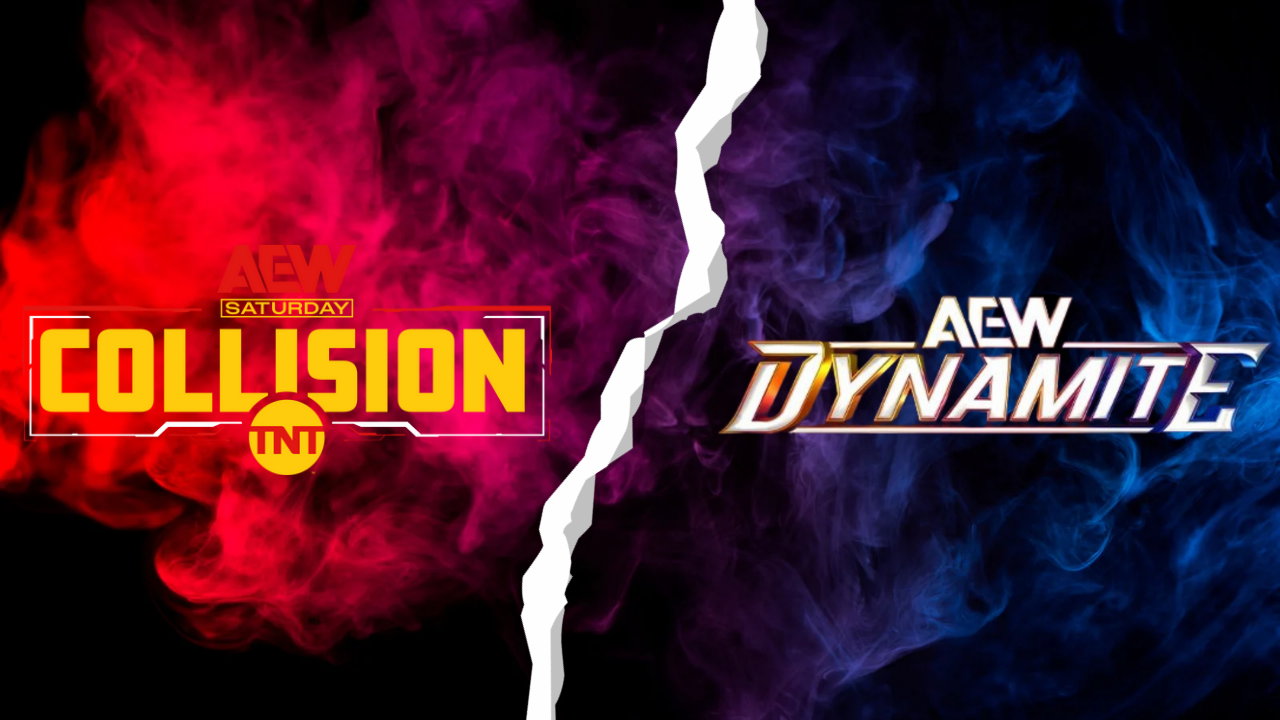
Not the WWE version where the brands act like separate planets. A more AEW-friendly split where Dynamite stays the flagship, Collision becomes a defined “B show” with its own identity, and the company finally builds a sustainable weekly ecosystem instead of trying to cram an entire universe into one night.
And yes—this idea works even better now because AEW is reportedly still expanding, including “additions to the women’s roster fairly soon,” with reports noting there are signed names who haven’t been announced publicly yet.
If you’re going to keep adding pieces, you need a bigger board. Or at least two boards that connect at the PPVs.
The Case for a Split Starts With One Look at AEW’s Current Reality
AEW’s official roster page tells you everything you need to know just by scrolling the champions section. AEW is currently presenting a lineup of champions that includes the World Champion, Women’s World Champion, TNT Champion, TBS Champion, International Champion, Continental Champion, National Champion, Tag Champions, Trios Champions, and Women’s Tag Champions all sitting under one roof.
That’s not even a debate anymore: the championship ecosystem is massive.
And it’s happening while the roster itself has reached a point where even sympathetic coverage acknowledges that limited TV time creates opportunity bottlenecks and frustration narratives.
This is the core tension of modern AEW: incredible talent depth, but a weekly format that can’t consistently service that depth without sacrificing coherence.
You can’t run a sprawling roster, multiple belts, multiple divisions, and multiple storylines on two primary shows unless the shows themselves have clearer lanes.
That’s what a brand split gives you: lanes.
The Blueprint: What Dynamite and Collision Would Actually Look Like
Dynamite: The Flagship With the Deepest Spotlight
Dynamite stays the center of gravity. Not because Collision can’t be great, but because AEW’s identity is still built around Dynamite being the headline act.
Dynamite-exclusive title
- TBS Championship (exclusive to Dynamite)
This is the correct move because the TBS title already reads like the “flagship network belt.” On a split roster, it becomes the weekly workhorse championship of Dynamite’s midcard—the title you can build television around every single week.
Dynamite’s weekly identity should be:
- Main event stories that feed the next PPV
- The deepest promo segments and faction arcs
- The most protected “A-tier” matches
- Women’s division presented as a consistent pillar, not a rotating feature
Dynamite’s job in the split is to make the big stuff feel big—and to create the sense that if you miss Dynamite, you missed a chapter of the main book.
Collision: The “B Show” That Stops Feeling Like a Secondary Thought
Collision doesn’t need to pretend it’s Dynamite. It needs to be Collision.
Collision-exclusive title
- TNT Championship (exclusive to Collision)
This is the cleanest brand-identity decision AEW can make. The TNT title becomes Collision’s heartbeat: a weekly championship with a clear contender ladder and a style that feels distinct from Dynamite’s pacing.
Collision’s weekly identity should be:
- More match-forward pacing
- Clear win/loss consequence storytelling
- Focused feuds that don’t require Dynamite to understand
- A consistent platform for talent that vanishes too often in the current system
If Dynamite is the flagship drama, Collision should feel like the fight night. Not lesser—different.
The Title Map: Cross-Branded vs Exclusive vs Floating
This is where a split either becomes brilliant or collapses into chaos. Titles are not just props. They’re the incentive structure of your universe.
Here’s the model that actually makes sense.
Cross-branded company championships
These are the titles that define AEW, and they should be able to main event either show when needed:
- AEW World Championship (cross-branded)
- AEW Women’s World Championship (cross-branded)
- AEW World Tag Team Championship (cross-branded)
- AEW World Trios Championship (cross-branded)
- AEW Women’s World Tag Team Championship (cross-branded)
These belts are the tentpoles. Keeping them cross-branded preserves the feeling that AEW is still one company with one top hierarchy—especially on PPV.
Exclusive TV championships
- TBS Championship = Dynamite exclusive
- TNT Championship = Collision exclusive
This is the simplest way to stop the weekly belt ecosystem from cannibalizing itself.
The Floating Championship: Continental Championship
Here’s the smartest tweak, and it’s based on exactly what you pointed out:
The Continental Championship should be the primary “floating” championship.
Why? Because the Continental title’s identity is already rooted in the Continental Classic and its tournament-driven prestige, and it doesn’t need to be defended every week to feel important. AEW’s own presentation still positions it as a top-tier prize, but it also naturally fits a seasonal structure.
So you let it travel.
How it works:
- The Continental Champion can appear on either show
- Defenses are “special attraction” level—TV main events, not weekly filler
- Outside the Continental Classic season, it becomes a prestige belt that elevates whichever brand it touches
- During the tournament season, it becomes the centerpiece of AEW’s sports-driven identity
That solves two problems at once: it keeps a major belt from overcrowding one show, and it gives AEW a yearly structural anchor.
Women’s Division: Why a Split Could Finally Make the Women’s Tag Titles Feel Essential
If AEW is truly adding women soon—as Fightful Select has reported—then the company has an opportunity to make the Women’s Tag Titles feel like a real engine of television storytelling instead of a belt that exists “when there’s time.”
And a split is how you protect that.
Because the biggest fear with women’s tag belts is the same trap WWE’s women’s tag titles have fallen into at times: they become a convenience title—used when it’s useful, ignored when the men’s side gets hot.
A cross-branded women’s tag division only works if both shows are structurally required to feed it.
In this split:
- Dynamite commits to a women’s singles lane and a women’s tag lane weekly
- Collision commits to the same
- PPVs become the convergence point where the best women’s singles stories and the best tag stories collide
That’s how you avoid “afterthought” booking: you build a system where the division can’t disappear.
The Positives: What AEW Gains If They Commit to This
1) A real solution to the roster traffic jam
When a roster is enormous, the problem isn’t “too much talent.” It’s that the show becomes a revolving door with no promise of narrative continuity for midcard and lower card acts. A split creates guaranteed lanes and reduces the “why did they vanish?” cycle.
2) Titles stop fighting each other for relevance
Tony Khan has defended the belt count as a growth byproduct, tied to increased programming.
A split is how you make that defense actually work in practice: if belts are assigned properly, they become identity markers, not clutter.
3) Collision stops being a second Dynamite
Collision needs its own pillars. Giving it the TNT title as its belt and building its own contender ecosystem makes the show feel necessary instead of optional.
4) Women’s expansion finally translates into prestige
If AEW is bringing in more women soon, the split is an opportunity to design consistent women’s screen time rather than hoping it naturally happens.
The Negatives: What Could Go Wrong (And Why Critics Would Be Loud)
1) Injuries and availability can wreck rigid planning
AEW already navigates frequent injury pivots. A strict split could get messy if half a brand’s main-event scene gets hurt in the same window. The answer is a “soft-hard split”: mostly separate rosters, with controlled crossovers.
2) The risk of devaluing Collision
If AEW doesn’t protect Collision’s identity, a split can accidentally reinforce the “B show” stigma. Collision needs its own top stories, not leftovers.
3) Belt criticism doesn’t disappear, it evolves
Critics will still argue AEW has too many championships. That criticism has been amplified in mainstream coverage, especially with newer titles being introduced into an already crowded ecosystem.
A split doesn’t magically reduce belts. It makes them easier to digest—if the company actually commits to structure.
4) Fans hate “rules” unless the rules create better TV
A split only works if the audience can feel the benefit: clearer stories, clearer stakes, clearer direction. If it’s just cosmetic, fans will call it a gimmick.
So Would AEW Be Better Off With a Brand Split?
Yes—if AEW is willing to do the hard part: commit to identity, commit to lanes, commit to consistency.
AEW is already operating like a company with multiple brands. The roster size and the title ecosystem make that obvious the moment you look at the champions list on their own site.
The difference is that AEW is still trying to present itself like one tight weekly system. And that’s where the friction lives.
If AEW is truly preparing to add more women and continue expanding, then the question isn’t whether a brand split is “too WWE.”
The real question is whether AEW can keep scaling without structure.
Because right now, the roster is massive, the belts are many, and the weekly calendar is crowded. AEW doesn’t need fewer wrestlers. It needs a cleaner universe.
Dynamite as the flagship.
Collision as the fight night.
World titles cross-branded.
TBS on Dynamite.
TNT on Collision.
Tags and Trios cross-branded.
Women’s tag belts cross-branded, protected by weekly time on both shows.
And the Continental Championship floating like a prestige satellite—rare, meaningful, and seasonally defined.
That’s not fantasy booking.
That’s product design.
And it might be the next logical step for the biggest roster AEW has ever had.
Make sure to subscribe to our Late Night Crew Wrestling YouTube Channel. Follow @yorkjavon, @kspowerwheels & @LateNightCrewYT on X.
I’m the quiet one until the bell rings then I’ve got takes. I live for WWE NXT and TNA, I want every promotion to succeed, and I will absolutely roast the bad decisions on sight (because someone has to). Anime taught me to respect long-term storytelling; wrestling taught me that sometimes the plan is “we panicked” and called it “unpredictable.” The Miz got me into all of this, so yeah I appreciate confidence, commitment, and the art of talking like you’re already the main event. Now I bring that same energy to the page as the main writer for Late Night Crew Wrestling because if you’re not here to be must-see and tell the truth, why are you here?!