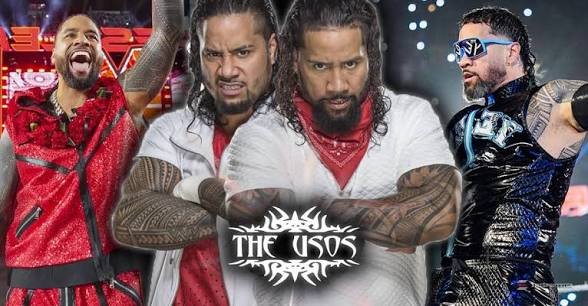
WWE hit a big red button on the Dec. 8, 2025 episode of Monday Night RAW: Jimmy Uso and Jey Uso stood together again, officially declaring they’re “back in the tag team division,” immediately confronting World Tag Team Champions AJ Styles & Dragon Lee and tangling with The New Day.
And in a vacuum, it’s easy to see why the decision landed with impact: The Usos are one of the most proven tag acts of their generation, and WWE’s RAW tag scene instantly feels hotter when they’re in it—especially with the company also moving straight into a marquee rivalry match (Usos vs. New Day) tonight.
But this wasn’t just “a reunion.” It was a swerve—because only a week earlier, WWE had positioned Jey Uso at a different crossroads entirely.
The road here: Jey’s tournament collapse, the “crash out,” and the fork in the story
The last major beat of Jey Uso’s singles momentum—on WWE television—was Dec. 1, when LA Knight defeated Jey in the semifinals of “The Last Time Is Now” tournament.
Immediately after that loss, WWE spotlighted Jey’s emotional spiral with an official highlight titled “Jey Uso crashes out after loss to LA Knight.”
That’s the key context: WWE didn’t present it as “another tough L.” They framed it like the beginning of something darker—Jey unraveling, Jey questioning himself, Jey teetering between main-event hunger and self-destruction.
And woven through the last few months is the other crucial ingredient: family—specifically the ongoing Bloodline-adjacent gravity of Roman Reigns and the idea that Jey’s true north (or true downfall) is tied to who he trusts. Even mainstream coverage has framed this dynamic as Roman “feeding” the darker side of Jey, laying groundwork for the next chapter of that saga.
So when Jimmy and Jey reunited on Dec. 8, WWE wasn’t merely refreshing a tag division. They were choosing which version of Jey they wanted on Monday nights right now.
The case for the reunion: why this could be the smartest booking decision for both men
1) RAW’s tag division needed instant oxygen—and The Usos are instant oxygen
The timing isn’t subtle. WWE promoted the reunion angle directly into a Usos vs. New Day match announcement for tonight —an iconic rivalry that doesn’t need weeks of reintroduction to feel important.
And because AJ Styles & Dragon Lee are the reigning World Tag Team Champions, The Usos re-entering the chase doesn’t just create “a match.” It immediately creates a title story fans already understand.
2) It gives Jey a “reset” without making him look like he failed as a singles star
Here’s the nuance: a tag run doesn’t have to mean “demotion.” It can mean regrouping—especially when the TV presentation just showed Jey cracking under pressure after that LA Knight loss.
In other words, WWE can sell this as: Jey didn’t quit the main event. Jey stabilized himself by leaning on family—then rebuilt.
And for the audience, that’s a believable human arc: a performer hits a wall, the pressure bursts out, the brother pulls him back from the edge.
3) The crowd response suggests WWE knew exactly what button it was pushing
Even outlets covering the segment emphasized the surprise and the reaction, noting the moment The Usos’ music hit and the promo landed as a “major surprise.”
That matters because booking is always two conversations: what WWE writes—and what the crowd is willing to accept. The reunion is one of those rare creative choices that reads as both a storyline beat and a business beat.
4) Jimmy, bluntly, benefits the most—because it restores his clearest value on the card
Jimmy has had key story moments and important run-ins on RAW this year (including stepping in to help Jey in high-chaos situations).
But as a week-to-week proposition, Jimmy’s strongest “always over” identity is still: one half of The Usos—the role WWE itself frames as historically great.
A reunion gives Jimmy consistent spotlight, consistent purpose, and consistent credibility—without needing WWE to gamble on a brand-new singles presentation for him in a crowded RAW ecosystem.
The case against the reunion: why this could undercut months of story and stunt both men
1) Jey’s “crash out” was character development… and this risks turning it into a footnote
When WWE publishes an official highlight specifically emphasizing a breakdown—“Jey crashes out”—it’s usually because they want you to remember it as a turning point, not a temporary mood.
Reuniting The Usos a week later can feel like WWE skipping the messy middle: the therapy, the temptation, the consequences—the slow burn that makes a main-event character feel real.
If the audience believed they were watching Jey evolve—possibly toward a darker edge, or a Roman-related arc—then snapping back to “tag team comfort food” can read like WWE blinking.
2) It’s the “safe” move… and safe moves can be creative ceilings
There’s a reason this reunion is divisive. Some fans immediately interpreted it as WWE closing the book on Jey’s singles push—an argument even echoed in opinion coverage that framed the reunion as a sign his singles trajectory has cooled.
That perception matters even if WWE doesn’t intend it, because perception becomes the story fans repeat online.
3) It could keep Jimmy in the exact box he’s been fighting to outgrow
You asked the hardest (and most honest) question: Was Jimmy always destined to be in his twin’s shadow?
The cruel version of the answer is: WWE booking often treats him that way—because Jey’s singles success and crowd connection have been the louder narrative over the past couple years.
Jimmy could have had a strong singles lane built around:
- being the sharper talker with more edge,
- being the “strategist” brother,
- or leaning into a grittier, less flashy identity than “Main Event Jey.”
But WWE would have needed to invest sustained TV minutes to make that real. The reunion, by design, shifts Jimmy back into the role where the audience already accepts him—excellent, but familiar.
4) It complicates RAW’s other major stories by eating oxygen
RAW is already juggling major arcs (top champions, faction power struggles, etc.), with multiple recaps highlighting how crowded the storytelling is week to week.
Dropping The Usos back into the tag title mix is exciting—but it also takes screen time that might have gone to newer teams or fresher tag narratives.
Fan and social reaction: why the discourse is split (and why that’s actually good)
The immediate online conversation has basically broken into two camps:
- Camp A: “Finally. The Usos make the tag division feel important again.”
- Camp B: “Wait—did WWE just hit pause on Jey’s singles story right when it got interesting?”
You can see WWE itself emphasizing both halves of that coin in what it chose to amplify: they spotlighted Jey’s emotional unraveling after LA Knight, and then spotlighted the reunion the following week.
That’s WWE inviting debate, not avoiding it—and debate is the lifeblood of wrestling fandom.
Even coverage of the Dec. 8 episode positioned the reunion as one of the headline developments of the night, right alongside major top-card angles—meaning it wasn’t treated like a side quest.
So… was it a good idea?
Yes—and also: it depends on what WWE does next.
It’s a good idea if WWE treats this as a chapter in Jey’s main-event climb—not the ending
The reunion can work beautifully if WWE frames it as:
- Jey rebuilding confidence through dominance,
- Jimmy helping sharpen Jey’s edge,
- and the tag run becoming the launchpad that catapults Jey back toward a world title story later—now tougher, now calmer, now more dangerous.
If they do that, then the “crash out” wasn’t wasted—it was the storm before the rebuild.
It’s a bad idea if the reunion is used as a quick patch to cover uncertainty
If WWE’s underlying reason was simply “we need a tag jolt,” and Jey’s singles journey gets quietly shelved, then fans will remember the LA Knight loss + crash out as a story that promised depth and delivered a shortcut.
The Jimmy question: could he have had a great singles run?
He could have—but it would have required WWE to commit to a defined singles identity for Jimmy that wasn’t “the other Uso.” WWE has shown it can spotlight Jimmy in major moments and make him feel essential (including saving Jey in high-stakes chaos earlier this year).
But a great singles run needs more than moments. It needs a lane.
Right now, the reunion is the more reliable booking choice for Jimmy because it guarantees:
- weekly relevance,
- immediate title proximity,
- and a role fans instinctively buy.
That doesn’t mean Jimmy is doomed to be in Jey’s shadow—it means WWE chose certainty over experimentation.
Final verdict
Reuniting The Usos is a strong booking move for RAW’s tag division and for Jimmy’s week-to-week value.
For Jey, it’s only a strong move if WWE keeps the “crash out” consequences alive and uses this run as evolution—not retreat.
If WWE threads that needle, this reunion won’t feel like a reset button. It’ll feel like the moment Jey stopped free-falling—and started climbing again, with his brother pulling rope beside him.
Make sure to subscribe to our Late Night Crew Wrestling YouTube Channel. Follow @yorkjavon, @kspowerwheels & @LateNightCrewYT on X.
I’m the quiet one until the bell rings then I’ve got takes. I live for WWE NXT and TNA, I want every promotion to succeed, and I will absolutely roast the bad decisions on sight (because someone has to). Anime taught me to respect long-term storytelling; wrestling taught me that sometimes the plan is “we panicked” and called it “unpredictable.” The Miz got me into all of this, so yeah I appreciate confidence, commitment, and the art of talking like you’re already the main event. Now I bring that same energy to the page as the main writer for Late Night Crew Wrestling because if you’re not here to be must-see and tell the truth, why are you here?!