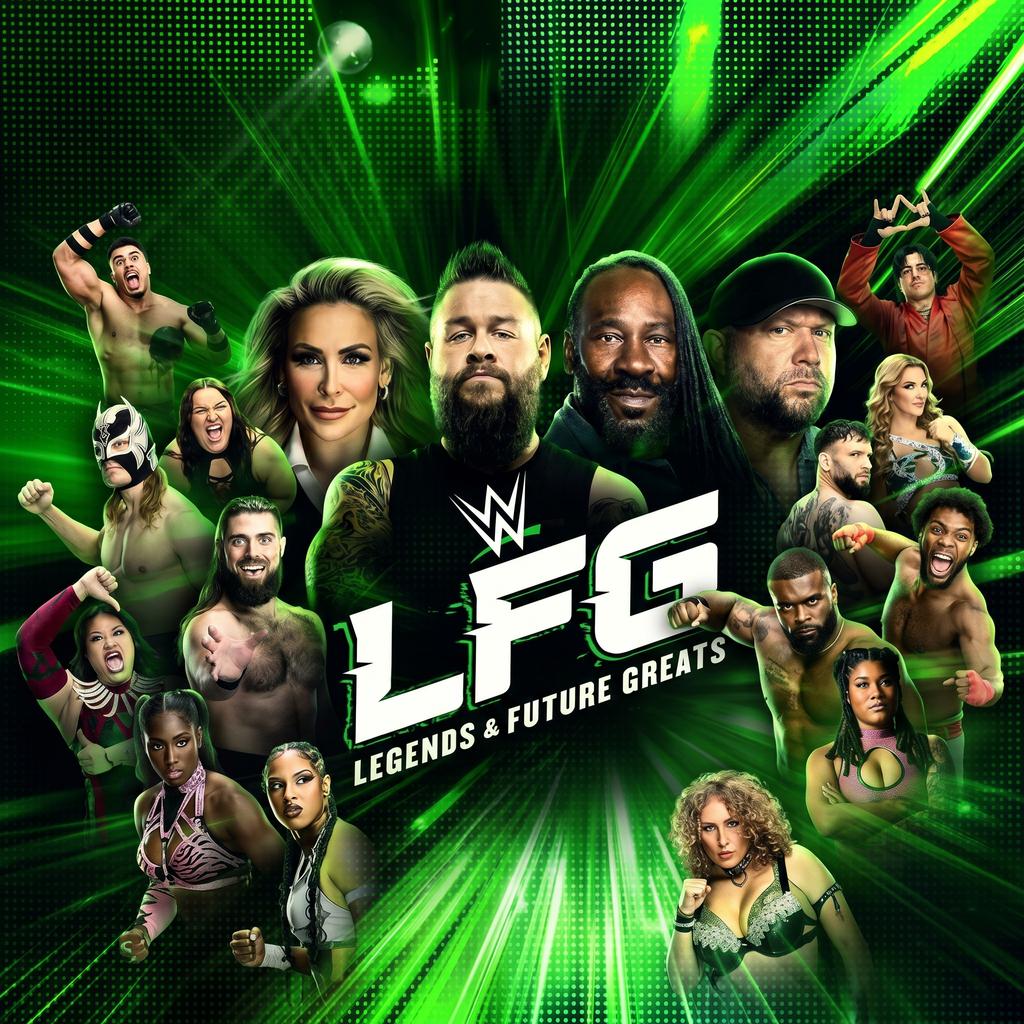
WWE LFG Season 3 Episode 13, “Who Dares Wins,” was built around wrestlers learning that taking control of their careers does not mean ignoring the process, and showing ambition does not excuse skipping the fundamentals.
Nathan Cranton entered last night’s episode ready to leave his real name behind and fully commit to a new wrestling identity. The only problem was that Nathan had already ordered new gear and placed the name on his sports car before WWE’s creative and legal departments had officially approved it. That bold decision could have made him look prepared, impatient or completely foolish depending on what WWE ultimately decided.
The timing made his main-event match against Jaime Garcia even more important. Nathan was not only trying to win. He was attempting to prove that the confidence, vanity and presentation surrounding his new identity could be supported by believable heel work inside the ring.
Jaime faced a different test. His athletic ability and natural charisma have never been difficult to see, but WWE LFG has repeatedly challenged him to slow down, sell damage and make his spectacular offense feel like the payoff to a struggle instead of a collection of impressive movements.
Elsewhere, Booker T stripped Tate Wilder and Harley Riggins’ match down to its simplest possible form after Harley proposed a comedy spot that would have distracted from their assignment. Nattie pushed Nikkita Lyons and Masyn Holiday to establish clear heel and babyface roles, produce offense with conviction and prove they had the conditioning to maintain their intensity.
The results were uneven, but revealing.
Tate and Harley delivered a short, straightforward match that proved both could create entertainment without overcomplicating the work. Nikkita and Masyn received one of the strongest crowd reactions of the episode, but their visible exhaustion exposed the difference between understanding a match and being physically prepared to execute it at the necessary pace.
Nathan and Jaime delivered the night’s best match because they took Bubba Ray Dudley’s coaching directly into the ring. Nathan attacked with purpose, Jaime sold with desperation and every major sequence connected to the central story of Nathan destroying Jaime’s arm.
By the time Nathan received the official approval to become Tristan Angels, the new name felt like more than a cosmetic change. He had already delivered the performance necessary to make the transformation matter.
Here are the full results
- Tate Wilder def. Harley Riggins
- Masyn Holiday def. Nikkita Lyons
- Nathan Cranton def. Jaime Garcia
Breakdowns & Reactions
Nathan Cranton Gambles on a New Wrestling Identity
The episode opened with Nathan Cranton meeting Johnny Russo, one of NXT’s lead writers, to discuss changing his ring name.
Nathan explained that he remained proud of the Cranton name. His father is his hero, and he comes from a long line of farmers. The desire for a change was not about rejecting his family or pretending his real life did not matter. Nathan simply believed his real name did not sound like the wrestler he wanted to become.
That is an important distinction.
WWE names are not always designed to replace the person underneath them. The right name can amplify a personality, clarify a presentation and give the audience an immediate idea of what kind of performer they are watching.
Russo encouraged Nathan to create separate lists of first and last names before mixing different combinations together. It was a standard creative exercise designed to produce options before WWE settled on anything permanent.
Nathan had already gone much further.
He informed Russo that he had selected a name, ordered wrestling trunks displaying it and placed it on the side of his sports car. He had made a complete financial and emotional commitment before WWE had approved the idea or determined whether the name could pass its legal process.
Russo laughed before reminding him that the company still had to like the name and legally clear it.
Nathan’s decision perfectly captured his strengths and weaknesses.
He showed initiative. He was not waiting for WWE to build his entire presentation. He had considered how the name would look on gear, how it would fit his personality and how it could become part of his life beyond the ring.
At the same time, Nathan had mistaken confidence for certainty.
Ordering custom gear did not guarantee that WWE would approve the name. Putting it on his car did not make it official. A ring name has to function as television branding, intellectual property, merchandise and a long-term identity across multiple WWE platforms.
Nathan had committed to the destination before WWE had even confirmed that he was allowed to take the road.
That made the storyline entertaining because there were legitimate consequences. If the name failed to receive approval, Nathan would be left with useless gear, an incorrectly branded car and another reminder that believing in an idea does not automatically make it workable.
It also made the main event more important. Nathan needed to prove he was not only good at building the appearance of a wrestler. He needed to demonstrate that there was a complete performer underneath the presentation.
Grade: A-
What worked
- Nathan’s pride in his family prevented the name change from feeling like a rejection of his real identity.
- Meeting with an NXT writer gave viewers a useful look at WWE’s naming process.
- Nathan showed initiative by developing the presentation himself.
- Ordering the gear and branding his car created a real consequence if WWE rejected the name.
- Russo’s reaction balanced Nathan’s confidence with the reality of WWE’s approval process.
- The segment gave the episode a story that could develop from the opening through the final scene.
- Nathan’s willingness to bet on himself fit his established arrogant personality.
What didn’t work
- The episode did not reveal the other names Nathan considered.
- WWE’s legal and creative approval process was only briefly explained.
- Nathan’s family history could have been connected more directly to the character he was attempting to create.
- His confidence occasionally came dangerously close to making the approval feel like a foregone conclusion.
- The new identity still needed an in-ring performance strong enough to justify the attention.
Matt Bloom Assigns the Matches
Matt Bloom was joined at the evaluation table by Booker T, Nattie and Bubba Ray Dudley. Kevin Owens was absent from the episode.
Booker received the opening match between Tate Wilder and Harley Riggins.
Tate’s athletic ability remains one of his greatest strengths, but it has also become one of his biggest developmental obstacles. Bloom described him as an adrenaline junkie because Tate can become so excited about creating a major moment that he forgets the smaller details connecting those moments together.
Tate does not need to prove that he can perform a moonsault. Everyone already knows he can perform it. He needs to show that the audience will care about everything leading to the moonsault.
Harley’s challenge was finding the correct balance between personality and credibility. He is naturally comfortable with comedy and obnoxious behavior, but every comedic idea does not belong in every match. He had to show he could be entertaining through aggression, timing and heel behavior rather than always searching for an obvious joke.
Nattie received Nikkita Lyons against Masyn Holiday.
Bloom acknowledged that Masyn had begun stepping forward but questioned whether she understood how to listen to a live crowd. Hearing the audience does not simply mean noticing noise. A wrestler has to recognize when the crowd is becoming invested, when it needs time to process a moment and when the match has to increase its energy.
Nikkita already carries herself like a star, but Bloom wanted her offense to have more equity. Her movements needed to feel damaging enough that the audience would believe an opponent had been changed by receiving them.
Nattie wanted both women to show greater conviction and stop appearing as though they were merely moving through planned material.
Bubba received the main event between Nathan and Jaime.
Nathan’s assignment was becoming a believable heel. His looks, confidence and vanity already gave him a character foundation, but Bubba wanted the aggression to match the attitude.
Jaime’s assignment was selling.
He has the athletic ability to create spectacular moments, but those moments lose value when he ignores the punishment that supposedly made them difficult. Jaime needed to show pain, desperation and vulnerability before beginning his comeback.
Every assignment dealt with the same underlying lesson.
Tate needed to stop depending on spectacular offense.
Harley needed to stop depending on comedy.
Masyn needed to stop mechanically moving through her comeback.
Nikkita needed to stop assuming that physical presence alone would give her offense weight.
Jaime needed to stop treating selling like the time between his moves.
Nathan needed to prove his character existed after the entrance ended.
Grade: A-
What worked
- Every match had a specific developmental purpose.
- Bloom identified problems that have been visible throughout the season.
- The coaches were assigned matches that fit their individual teaching styles.
- Booker was placed with two wrestlers who needed simplification.
- Nattie was given two women who needed more emotional and physical conviction.
- Bubba received two performers who needed help connecting character, selling and match psychology.
- The assignments told viewers exactly what to watch without completely revealing the match structures.
- Kevin Owens’ absence prevented the coaching table from feeling overcrowded.
What didn’t work
- Owens’ absence was not explained.
- Booker and Bubba dismissing Nattie’s attempt at an LFG cheer was amusing but made the interaction feel slightly disconnected from the serious assignments.
- The episode could have spent more time comparing the wrestlers’ current weaknesses to their previous matches.
- Harley’s developmental objective was less clearly explained than Tate’s.
- Bloom’s concerns about Masyn became more significant knowing she had already left WWE.
Booker T Rejects Harley Riggins’ Comedy and Demands Simplicity
Booker met with Tate and Harley before their match and immediately addressed the amount of material they wanted to perform.
The two wrestlers had between 15 and 20 minutes of ideas planned. Booker reminded them that television does not care how much material a wrestler wants to use. When a match receives seven minutes, the wrestlers have to identify the most important parts of their story and hit those marks within the allotted time.
That does not mean rushing through 15 minutes of material in seven minutes.
It means editing.
Wrestlers frequently become attached to moves and sequences because they have rehearsed them, imagined the reaction or want to demonstrate what they can do. Television forces them to decide which ideas actually serve the match.
Harley then proposed including a wet-willie spot.
Booker immediately rejected it and told both men that he wanted something more serious.
The decision was correct.
A wet willie could have generated laughter and fit Harley’s willingness to behave obnoxiously, but it would have weakened the developmental assignment. This was not a match about whether Harley could be funny. It was a match about whether he could become a believable heel while allowing Tate to work as a sympathetic babyface.
Comedy works best when it emerges naturally from character and does not erase the danger surrounding it. Nathan’s flirting with Bayley Humphrey’s mother during Episode 12 worked because Nathan returned to the match and maintained his aggression.
Harley’s idea would have directed attention away from Tate’s struggle and toward the joke itself.
Booker was teaching them that entertaining an audience is not the same as inserting every entertaining idea. A wrestler has to know what belongs, what can be saved and what should be removed completely.
The match eventually proved Booker’s point.
Neither Tate nor Harley needed the comedy spot. Their contrasting roles, Harley’s aggression and Tate’s athletic comeback created enough entertainment on their own.
Grade: A-
What worked
- Booker directly addressed the difference between preparation and television timing.
- The wrestlers were forced to edit instead of compressing too much material.
- Rejecting the wet-willie spot protected Harley’s credibility.
- Booker clarified the serious tone he expected before they entered the ring.
- The advice directly affected the final match.
- Harley later recognized that simplicity was more effective than unnecessary comedy.
- The segment showed why a coach has to challenge an idea even when the wrestler is excited about it.
What didn’t work
- The episode did not show which other planned sequences were removed.
- Harley’s comedy could have been discussed in greater detail as part of his overall character.
- Booker could have explained how comedy can work without taking over a match.
- The estimated match time discussed during preparation did not match the eventual runtime.
- Tate did not receive as much individual coaching during the segment as Harley.
Tate Wilder vs. Harley Riggins
Harley immediately established himself as the physical aggressor by controlling Tate with a side headlock and knocking him down with a running shoulder tackle.
Tate answered with an arm drag before applying a top wristlock.
The opening was intentionally basic, but it quickly established everything the audience needed to understand. Harley was larger, heavier and interested in controlling the pace. Tate was faster and capable of using movement to create openings.
Harley backed Tate into the corner and attacked him with repeated knees before delivering a kick to the spine for a two-count.
The spine kick was one of Harley’s strongest moments because it felt dismissive. He was not attempting to impress anyone. He was punishing Tate and expecting the audience to dislike him for it.
Harley missed two clotheslines but caught Tate during a crossbody attempt. That should have allowed Harley to continue his control, but he hesitated while deciding what to do next.
Tate recognized the delay and countered into a roll-up for two.
That moment exposed one of the difficulties of developmental wrestling. Harley successfully reached the correct position but briefly appeared to process the next step instead of reacting naturally. A believable wrestler should look as though every decision is instinctive, even when the sequence has been planned.
Tate recovered first and dropped Harley with a clothesline before connecting with a neckbreaker.
He climbed to the top rope, but Harley sprinted up the turnbuckles and pulled him down with a superplex. Harley covered Tate for two and immediately argued with the referee.
The superplex was the best move of the match because it developed from Tate’s established strength.
Tate wanted to reach the top rope. Harley understood that allowing him to jump would create danger. Instead of waiting underneath, Harley met him at the source and physically dragged him back into the ring.
Harley attempted a suplex, but Tate escaped and delivered a twisting suplex of his own. Tate climbed once again, connected with the moonsault and earned the victory at 3:43.
Tate’s moonsault remained the biggest move of the match, but it did not feel randomly inserted.
His first attempt had been stopped by Harley’s superplex. Tate survived the punishment, created another opening and finally reached the top rope when Harley could no longer prevent it.
That is the exact type of structure Tate needs.
The moonsault should not be removed from his presentation. It should become more valuable because the audience understands the difficulty involved in reaching it.
Harley also proved that he could work effectively without turning the match into comedy. His shoulder tackle, corner knees, spine kick, superplex and argument with the referee established him as a clear heel.
The match did not have enough time to become emotionally deep, but the roles were unmistakable and the finish connected to the conflict.
Grade: B-
What worked
- Harley and Tate established their roles immediately.
- Harley’s simple offense fit his physical heel presentation.
- The kick to Tate’s spine created personality without comedy.
- Tate’s speed contrasted effectively with Harley’s size.
- Harley catching the crossbody demonstrated his strength.
- The superplex prevented Tate from immediately reaching his signature offense.
- Tate’s second climb made the moonsault feel earned.
- The match followed Booker’s instruction to remain simple.
- Harley did not need the rejected comedy spot to receive a reaction.
- Tate’s victory continued his development as an emotional babyface.
What didn’t work
- The 3:43 runtime prevented the match from developing beyond its basic outline.
- Harley visibly hesitated after catching Tate’s crossbody.
- Tate’s selling between sequences needed more consistency.
- The comeback began before Harley had established a lengthy control period.
- Harley’s argument with the referee did not receive enough time to create a meaningful opening.
- The twisting suplex transition into the finish felt slightly sudden.
- Tate still relies heavily on the moonsault as the defining feature of his matches.
- Harley’s character remains clearer when he is wrestling than when he is speaking.
Booker T’s Post-Match Feedback
Booker told Tate and Harley that they were taking steps in the right direction.
Tate admitted that his selling could have been better, but he remained pleased with the performance and praised Harley as someone who was easy to work with.
That self-evaluation was accurate.
Tate completed the major structural requirements of the match. He allowed Harley to establish control, struggled to reach the top rope and completed his comeback. The missing detail was making the damage live between those moments.
Selling is not only falling after a move. It is allowing the punishment to affect how the wrestler stands, moves, breathes, attacks and reacts after the immediate moment has ended.
Harley reached the episode’s most important realization when he acknowledged that he did not have to act like a clown to beat someone up. He summarized the lesson by saying that simple works well.
That may sound obvious, but it represented meaningful progress.
Harley’s comedic instincts are useful. WWE needs performers who understand timing and are willing to look foolish when a story demands it. The problem begins when comedy becomes a shield preventing the wrestler from developing other emotional tones.
Harley demonstrated that he could be unpleasant, physical and entertaining without relying on a joke.
Booker’s assignment succeeded because neither wrestler left believing that simplicity meant doing nothing. They learned that simplicity means making each decision clearer.
Grade: B+
What worked
- Tate honestly recognized the weakness in his selling.
- Harley understood why the comedy spot was unnecessary.
- Both wrestlers appeared receptive to Booker’s feedback.
- Booker praised the progress without pretending the work was complete.
- Harley’s “simple works well” realization captured the episode’s central lesson.
- Tate showed that he can evaluate himself beyond whether the moonsault looked impressive.
- The feedback connected directly to what viewers had just watched.
What didn’t work
- Booker’s criticism could have been more specific.
- Tate’s selling issue deserved a concrete example from the match.
- Harley’s hesitation after the crossbody was not directly addressed.
- The feedback ended before Booker discussed how both could expand the same structure in a longer match.
- Tate and Harley appeared satisfied without deeply examining the weaker transitions.
Nattie Challenges Nikkita Lyons to Become an Unmistakable Heel
Nattie asked Nikkita whether she considered herself a babyface.
Nikkita identified herself as the villain, but Nattie admitted that she liked Nikkita so much that she instinctively viewed her as a babyface.
That exchange exposed a real presentation problem.
Nikkita possesses natural confidence, star presence and an explosive style. Those qualities can cause an audience to react positively even when she is attempting to work as the heel. Looking powerful and carrying oneself like a star does not automatically create dislike.
Nikkita therefore had to make her behavior unmistakable.
She could not depend on the audience to understand that she was the villain because of her internal intention. The aggression, disrespect, pacing and body language had to communicate it.
Nattie joined Nikkita and Masyn inside the ring while helping them construct the match. That coaching approach was valuable because the women could immediately test spacing, movement and reactions rather than only discussing the structure outside the ropes.
Nikkita entered the match as the reigning Evolve Women’s Champion, giving her another natural advantage. She had the championship, greater experience and the stronger physical presence.
Masyn’s job was making the audience believe she could survive long enough to create an upset.
Nikkita’s job was making the audience want to see that upset happen.
Grade: B+
What worked
- Nattie identified the potential confusion surrounding Nikkita’s alignment.
- Nikkita clearly understood that she was expected to work as the heel.
- The Evolve Women’s Championship strengthened Nikkita’s status.
- Working through the match inside the ring made the coaching feel practical.
- Masyn had a clear underdog role.
- Nattie focused on behavior rather than assuming the audience would understand the alignment.
- The conversation explained why natural popularity can complicate heel work.
What didn’t work
- The episode did not explore Nikkita’s “Big Cat” character in depth.
- Nattie’s personal affection for Nikkita made the alignment discussion slightly confusing.
- Masyn received less character development during the preparation.
- The segment focused more on the roles than the physical limitations that later affected the match.
- WWE could have connected the match more directly to Nikkita and Masyn’s existing Evolve history.
Nikkita Lyons vs. Masyn Holiday
Nikkita established the heel role immediately by roughing Masyn up during the opening lockup.
Nattie reacted positively because the physicality removed any confusion about who was supposed to control the match.
Masyn answered with a dropkick, forcing Nikkita to retreat to the floor. Nikkita slowed the pace and waited until Masyn moved close enough before striking her from outside the ring.
That was intelligent heel work.
Nikkita initially appeared to be retreating from Masyn’s offense, but she was actually creating a trap. Masyn’s eagerness allowed Nikkita to regain control without needing a complicated sequence.
Back inside, Nikkita delivered chops and drove repeated shoulder strikes into Masyn in the corner.
She then stood on Masyn and dropped her weight across her opponent.
Those were Nikkita’s best character moments. Neither action was complicated, but both communicated disrespect. Nikkita was not merely attempting to defeat Masyn. She wanted Masyn and the audience to understand that she viewed herself as physically superior.
Masyn escaped a headlock and transitioned into an ankle lock, briefly threatening Nikkita’s base. Nikkita kicked herself free and regained control with an abdominal stretch.
Nikkita missed a kick, allowing Masyn to hit a neckbreaker. Both women remained down.
They began exchanging strikes from their knees and gradually fought back to their feet. The crowd became increasingly invested as the physical exchange continued.
This was where the match had an opportunity to make Masyn’s comeback feel explosive.
The audience was ready. Nikkita had controlled the match and behaved like a heel. Masyn had survived enough punishment to create sympathy. The double-down gave the crowd time to anticipate the change.
Masyn’s comeback happened, but it did not completely erupt.
Nikkita missed a charge into the corner, and Masyn attempted a roll-up. Nattie immediately wanted greater explosiveness from her. Masyn needed to communicate that she had suddenly found the energy and desperation necessary to change the fight.
Instead, the match transitioned into several exchanged roll-ups and pinning combinations.
The crowd still responded strongly and began chanting “Fight Forever,” proving that the audience cared about the competitive struggle. Masyn eventually trapped Nikkita in a small package and scored the upset victory at 4:55.
The finish protected Nikkita.
Masyn did not overpower the Evolve Women’s Champion or decisively prove she was the superior wrestler. She survived, found an opening during a rapid exchange and held Nikkita down for three seconds.
That was the correct type of victory for the story.
The larger problem became visible during the final stretch. Both women were becoming exhausted. Their movements slowed, the intensity became inconsistent and the planned exchanges required more effort than they should have.
The audience remained engaged, but the performers were beginning to fight their own conditioning in addition to fighting each other.
Grade: C+
What worked
- Nikkita established herself as the heel immediately.
- The opening physicality gave Masyn a clear underdog role.
- Nikkita’s retreat to the floor became a trap rather than a passive pause.
- Standing on Masyn added disrespect to Nikkita’s offense.
- Nikkita’s abdominal stretch continued the physical control.
- The neckbreaker created a logical opening for Masyn.
- The strike exchange received a strong reaction.
- The audience became genuinely invested in Masyn’s comeback.
- The “Fight Forever” chant showed that the crowd cared about the competitive struggle.
- The small-package finish protected Nikkita while rewarding Masyn.
- Masyn received a meaningful victory over the Evolve Women’s Champion.
What didn’t work
- Masyn’s comeback lacked the explosiveness Nattie requested.
- Both women became visibly tired.
- The fatigue affected their timing and intensity.
- The roll-up sequence continued longer than their conditioning comfortably supported.
- Nikkita’s offense lost some of its force as the match continued.
- Masyn executed the comeback movements without fully transforming her emotional energy.
- The injured body parts and submission attempts did not remain central to the match.
- The short runtime made the level of exhaustion more concerning.
- The audience reaction was stronger than the technical execution.
- The match ended just before the conditioning issue could have become more dangerous.
Nikkita Lyons and Masyn Holiday Collapse Backstage
Nikkita and Masyn collapsed almost immediately after returning through the curtain.
Both women asked for water and acknowledged that they had become exhausted. They discussed how professional wrestling conditioning differs from other forms of physical training.
This was the most uncomfortable moment of the episode because the cameras did not allow the crowd reaction to disguise the problem.
Inside the ring, the audience had chanted and reacted to the pinning combinations. Backstage, the wrestlers could no longer maintain the performance. Their bodies revealed how close they had come to losing control of the match.
Wrestling conditioning is not simply the ability to run for several minutes.
A wrestler has to remember the planned structure, protect an opponent, maintain balance, project facial expressions, communicate verbally, hear the referee, react to the crowd and execute movements safely while becoming increasingly tired.
Fatigue damages every part of that process.
Footwork becomes less precise. Strikes lose force. Reactions arrive late. Selling becomes inconsistent. A wrestler may rush to the next sequence because stopping creates the fear that the body will not start again.
Nattie told the women that the structure was acceptable but repeated that she wanted greater fire from Masyn. She believed Masyn needed more repetitions, but the episode acknowledged that Masyn had moved on from WWE.
That made the criticism more complicated.
The solution Nattie identified was no longer available within WWE’s developmental system. Masyn had enough understanding to construct the match, but she would not receive the additional Performance Center repetitions necessary to determine whether she could transform that understanding into consistent execution.
Bloom addressed the conditioning directly.
He acknowledged that professional wrestling is difficult and expressed sympathy for the performers, but he also made it clear that they were responsible for maintaining the physical shape necessary to complete the work.
That was not an unnecessarily harsh statement.
WWE can provide coaches, rings, medical support, conditioning programs and performance opportunities. The wrestler still has to arrive capable of safely completing the assignment.
Nikkita explained that she had been rebuilding after two knee surgeries.
That context matters.
Returning from major knee injuries affects strength, confidence, movement patterns and cardiovascular conditioning. A wrestler may consciously or subconsciously protect the repaired joints. The process of becoming comfortable inside the ring can take far longer than receiving medical clearance.
However, context does not remove the problem.
Nikkita is being presented as the Evolve Women’s Champion and a featured performer. The expectation has to rise with the position. She cannot carry herself like the division’s dominant star if her conditioning prevents her from sustaining the performance.
The segment did not destroy either woman, but it revealed the greatest weakness on the episode.
Grade: A-
What worked
- The cameras honestly showed the physical aftermath.
- Both women admitted they had become exhausted.
- Nattie separated acceptable structure from insufficient emotional fire.
- Bloom acknowledged wrestling’s difficulty without lowering the standard.
- The segment explained how fatigue affects more than breathing.
- Nikkita provided important context regarding her two knee surgeries.
- Masyn’s need for additional repetitions became completely clear.
- The scene gave meaning to the visible slowdown during the match.
- The coaching remained specific rather than vaguely calling the performance disappointing.
What didn’t work
- Masyn’s WWE departure meant the developmental advice arrived too late to matter within the company.
- The episode did not explain when Masyn left or why.
- Nikkita’s conditioning remains concerning for someone carrying a championship.
- The coaches did not discuss whether the planned pace had been unrealistic.
- Neither wrestler received a detailed explanation of how to adjust the match once exhaustion became visible.
- The scene raised safety questions without exploring them.
- Nikkita’s injury recovery could have received more time and context.
- The match being under five minutes made the level of fatigue difficult to ignore.
Bubba Ray Dudley Teaches Jaime Garcia How to Sell With Desperation
Bubba met with Nathan and Jaime before the main event.
He first revisited Jaime’s previous match against Braxton Cole. Jaime admitted that the performance should have been considerably better.
That admission was important because Jaime did not attempt to defend the earlier match or hide behind his athletic ability. He understood that something had failed to connect.
Bubba established Nathan as the heel and Jaime as the babyface.
The physical story would revolve around Nathan attacking Jaime’s arm. Once that decision was made, every major action had to respect it.
Nathan needed to create damage with purpose.
Jaime needed to communicate the effects of that damage through his selling, movement and decision-making.
Bubba specifically warned Jaime not to absorb the punishment and immediately jump into a spectacular move. He used an exaggerated aerial combination to make the point that Jaime’s biggest athletic offense should be saved for the comeback.
This was the exact coaching Jaime needed.
His athleticism is not the problem. The problem is using athleticism before the audience has a reason to care about it.
A dive becomes more meaningful when the wrestler has spent several minutes struggling to stand.
A missile dropkick becomes more dramatic when climbing the ropes is difficult because one arm has been damaged.
A comeback becomes emotional when the babyface appears desperate rather than fully recovered.
Bubba was not telling Jaime to stop being Jaime. He was teaching him how to make the things he already does feel more valuable.
Nathan’s responsibility was equally important.
Targeting a body part cannot look like a checklist. He had to appear obsessed with damaging the arm. Every attack needed to feel like another deliberate step toward removing Jaime’s ability to fight back.
The coaching created the clearest match story of the night before either wrestler made an entrance.
Grade: A
What worked
- Bubba directly addressed Jaime’s previous disappointing performance.
- Jaime accepted that the earlier match should have been better.
- The heel and babyface roles were unmistakable.
- Attacking the arm gave the match a simple physical story.
- Bubba explained that selling had to continue beyond the immediate move.
- Jaime’s spectacular offense was positioned as the comeback payoff.
- Nathan received a clear strategy for becoming a believable heel.
- The coaching connected character, physical damage and match structure.
- Both wrestlers followed the instructions.
- Bubba’s advice produced the best match of the episode.
What didn’t work
- The discussion could have included more detail about Jaime’s previous selling mistakes.
- Nathan’s newly developing character was not connected to the arm strategy during the preparation.
- The episode did not show the wrestlers physically rehearsing the exposed-turnbuckle sequence.
- Bubba could have discussed how Jaime should continue selling during his own offense.
- The final move and finish were not examined before the match.
Nathan Cranton vs. Jaime Garcia
Jaime entered with his usual confidence and climbed the ropes to pose for the crowd.
Nathan immediately attacked him before the opening bell.
The decision established Nathan’s heel character within seconds.
He was not willing to stand in the ring and allow Jaime to complete his entrance. Nathan treated Jaime’s confidence and crowd connection like personal insults that needed to be stopped before the match officially began.
Nathan continued the beating while Jaime attempted to recover. The referee finally called for the bell once Jaime returned to his feet.
Jaime escaped a suplex attempt by flipping through and answered with a modified Claymore-style dropkick.
While the referee was distracted, Nathan removed the protective covering from part of the turnbuckle and exposed the steel connector underneath.
That was an important progression from Nathan’s performance against Tate during Episode 12.
Nathan was not only attacking before the bell. He was planning ahead. Exposing the steel gave him a weapon that could be connected directly to Bubba’s instruction about targeting the arm.
Nathan and Jaime fought on the apron. Nathan seized Jaime’s arm and violently dropped it across the exposed steel connector.
Jaime then took the biggest bump of the match by falling from the apron and crashing arm-and-rib first into the announce table.
The sequence immediately gave the match a sense of danger.
Jaime did not land cleanly on his feet and continue moving. His body collided with the edge of the table in a way that made Nathan’s strategy feel genuinely damaging.
Nathan allowed the referee’s count to rise while Jaime struggled outside the ring.
Jaime barely launched himself back inside at nine, producing one of the loudest crowd reactions of the episode.
The count-out tease worked because it had a clear cause.
Jaime was not outside stalling. Nathan had destroyed his arm and sent him into the table. Every second of the count represented Jaime fighting through the damage before his opportunity disappeared.
Nathan immediately continued the attack.
He dropped Jaime’s elbow across the top rope and drove a knee into the injured arm. He maintained control while ordering Jaime to stand and verbally dismissing his pain.
This was Nathan’s best heel work of the season.
The offense was simple, but every action had a purpose. The exposed connector injured the arm. The table collision increased the damage. The top-rope attack and knee drop continued the same strategy.
Nathan’s trash talk prevented the body-part work from becoming mechanical. He was not silently moving through a sequence. He was enjoying the control and treating Jaime’s struggle like proof of his superiority.
Jaime attempted to fight back but missed a dropkick, allowing Nathan to stop the comeback before it could begin.
Nathan ran the ropes, but Jaime found one desperate opening and caught him with a dropkick. Both men remained down.
That was an effective transition because Jaime did not suddenly recover.
He produced one move because he needed to stop Nathan’s momentum, but the accumulated punishment prevented him from immediately following up. The audience had time to recognize that the match was changing without pretending the damage had disappeared.
Jaime finally rose and delivered two clotheslines.
The wrestlers then blocked each other’s hip-toss attempts before Jaime completed the move and sent Nathan to the floor.
Jaime followed with a top-rope aerial attack to the outside, generating another strong reaction.
This was the correct point for Jaime to introduce the spectacular offense.
He had survived the pre-bell attack, the exposed steel, the announce-table collision, the count-out and Nathan’s concentrated arm work. The audience had watched him struggle long enough to become emotionally invested in seeing him finally take the risk.
Back inside, Jaime climbed once again and delivered a missile dropkick to Nathan’s back for a two-count.
Bubba visibly approved while watching from the coaching area, and the crowd treated the near fall like Jaime might have completed the comeback.
Jaime slowly attempted to climb the ropes one more time.
Nathan struck the ropes, causing Jaime to lose his balance and fall back into the ring. Nathan immediately drove Jaime’s head into the canvas with a knee strike and pinned him at 5:11.
The finish rewarded Nathan for remaining committed to his character.
He did not attempt to outfly Jaime or suddenly abandon the arm work for an unrelated sequence. He recognized Jaime’s vulnerable position, removed him from the ropes and capitalized before Jaime could recover.
Jaime’s slow climb also protected the established damage. He had enough energy to continue fighting, but the match had taken too much out of him to move quickly.
Nathan won, but Jaime delivered his best performance of the season.
He sold the attack, created sympathy, used desperation to begin his comeback and saved the larger athletic movements until the crowd was ready for them.
Nathan showed that his heel character could control an entire match instead of existing only through appearance, flirting and arrogance.
This was not merely the best match of the episode. It was one of the clearest examples of WWE LFG’s coaching directly improving both wrestlers.
Grade: A-
What worked
- Nathan’s pre-bell attack immediately established the roles.
- Attacking during Jaime’s entrance made the conflict feel personal.
- Nathan exposed the turnbuckle connector behind the referee’s back.
- The exposed steel connected directly to the arm strategy.
- Jaime’s announce-table bump created genuine danger.
- The count-out tease produced a strong crowd reaction.
- Jaime’s return at nine made his struggle feel desperate.
- Nathan remained focused on the damaged arm.
- Nathan’s trash talk added personality to the body-part work.
- Jaime’s missed dropkick allowed Nathan to stop the first comeback.
- The desperation dropkick created a believable transition.
- Both wrestlers remaining down protected the accumulated damage.
- Jaime saved the aerial offense until the correct stage.
- The dive to the floor felt earned.
- The missile dropkick created a convincing near fall.
- Nathan stopping the final climb fit his opportunistic heel character.
- The finish developed naturally from Jaime’s exhaustion and vulnerability.
- Nathan delivered his most complete heel performance.
- Jaime delivered his strongest selling performance.
- The crowd remained invested throughout the match.
- Both wrestlers followed Bubba’s coaching.
What didn’t work
- The match deserved more than 5:11.
- Jaime’s arm selling became less visible during parts of the comeback.
- The modified Claymore arrived quickly after the opening bell.
- Nathan could have attacked the arm during the finish to create a more direct payoff.
- Jaime used the damaged arm during some offensive movements without always reacting afterward.
- The referee distraction surrounding the exposed steel was brief.
- Nathan’s final knee strike needs a stronger name and presentation if it is becoming a regular finish.
- The match ended just as the crowd reached its highest level.
- Jaime’s repeated top-rope attempts became slightly predictable.
- Nathan’s new identity was not revealed until after the match, limiting how directly the performance could connect to the name.
Bubba Ray Dudley Praises Nathan and Jaime
Bubba told Nathan and Jaime that they had performed extremely well.
His strongest compliment came when he described Nathan as a “bastard heel.”
That was exactly the reaction Nathan needed.
His character has always had arrogance. He knows he is attractive, enjoys attention and carries himself like the room should revolve around him. The missing element had been danger.
A heel cannot survive entirely on vanity unless the vanity causes behavior the audience wants to see punished.
Nathan’s pre-bell attack, cheating, concentrated arm work and constant trash talk made the arrogance threatening. He was no longer simply a confident man wearing a scarf and admiring himself. He was someone willing to injure an opponent because he believed he was entitled to control the spotlight.
Jaime also deserved Bubba’s approval.
He did not completely eliminate every selling issue, but he showed meaningful improvement. His athleticism became part of a struggle rather than an excuse to ignore the struggle.
The handshake with Bubba felt earned because both wrestlers had listened, applied the coaching and produced a match that clearly exceeded their previous weaknesses.
The segment also demonstrated why direct coaching works better when the advice is specific.
Bubba did not simply tell Nathan to show more personality or tell Jaime to have a better match. He gave them a physical story, explained the emotional purpose and allowed them to execute it.
Grade: A
What worked
- Bubba’s praise reflected the quality of the performance.
- Calling Nathan a “bastard heel” confirmed that he completed the character assignment.
- Jaime received credit for improving his selling.
- Both wrestlers appeared grateful rather than defensive.
- The feedback connected directly to the pre-match coaching.
- Bubba recognized progress without overexplaining the moment.
- The wrestlers’ handshake with Bubba gave the match a satisfying conclusion.
- The segment reinforced the value of specific developmental coaching.
What didn’t work
- Bubba did not offer much constructive criticism after the praise.
- Jaime’s occasional loss of arm selling should have been mentioned.
- Nathan’s finish could have received feedback.
- The segment moved quickly into the ring-name reveal.
- The audience did not hear how Nathan and Jaime graded themselves.
Nathan Cranton Officially Becomes Tristan Angels
Johnny Russo handed Nathan a letter confirming that WWE had approved his new ring name.
Nathan later arrived at the Performance Center in his sports car, and the on-screen graphics officially identified him as Tristan Angels.
He declared that the name could headline WrestleMania.
The transformation completed the story established at the beginning of the episode.
Nathan had gambled by ordering gear and branding his car before receiving approval. In this case, the gamble worked. What could have become a monument to impatience instead became evidence that he had already visualized the next version of himself.
The name also creates an interesting contrast with Nathan’s heel character.
“Tristan Angels” sounds polished, elegant and almost heroic. Nathan had just delivered his most vicious performance of the season.
That contradiction can become useful.
A wrestler with an aspirational, glamorous name who behaves like an entitled opportunist has more depth than someone whose name simply announces that he is a villain. Tristan Angels can see himself as the beautiful, sophisticated hero of his own story while everyone else recognizes the cruelty underneath the presentation.
The most important development was not the name itself.
Nathan proved that he could support it.
A new name, expensive car, custom trunks and attractive appearance can gain attention, but none of those things will sustain a WWE career when the bell rings. Nathan’s performance against Jaime gave the transformation legitimacy.
He attacked before the bell.
He cheated with intelligence.
He targeted a body part.
He maintained his personality.
He created sympathy for his opponent.
He recognized the opening and won decisively.
Nathan Cranton did not become Tristan Angels when Russo handed him the letter. The transformation happened during the match when his character finally became visible through every decision he made.
The letter only made it official.
Grade: A
What worked
- The reveal paid off the opening segment.
- Nathan’s premature investment became a successful gamble.
- The sports car fit his vain, luxurious presentation.
- The name sounded different from the other wrestlers featured on LFG.
- Nathan’s main-event performance gave the change credibility.
- “Tristan Angels” creates an interesting contrast with his vicious heel behavior.
- Nathan’s WrestleMania declaration fit his confidence.
- The episode presented the transformation as something Nathan actively pursued.
- The new identity connects directly to his current Evolve presentation.
- The closing scene gave the episode a clear ending.
What didn’t work
- The episode did not explain the meaning behind “Tristan Angels.”
- Viewers never saw the full creative conversation leading to the approval.
- The name’s legal approval appeared to happen quickly.
- Nathan’s family history was not incorporated into the final identity.
- His WrestleMania declaration was ambitious without explaining what makes the character unique enough to reach that level.
- The episode could have shown the new gear more clearly.
- WWE now has to prove that the character can develop beyond luxury, vanity and arrogance.
- The spelling and presentation of the name need to remain consistent across WWE programming.
Where Everyone Stands After Episode 13
- Tate Wilder: Continued developing beyond being the wrestler with the moonsault. His athleticism remains impressive, but his own admission confirmed that selling is still the detail preventing his matches from reaching another level.
- Harley Riggins: Learned that he can create entertainment without relying on obvious comedy. His physical heel work was effective, but he still needs to eliminate moments of hesitation and develop a more complete identity.
- Nikkita Lyons: Established herself clearly as the heel and produced several effective moments of disrespect. However, the visible exhaustion remains a major concern for the reigning Evolve Women’s Champion, even with the understandable context of two knee surgeries.
- Masyn Holiday: Scored the episode’s biggest upset and received genuine support from the crowd. Her comeback needed greater fire, and her departure from WWE means the additional repetitions Nattie recommended will not happen inside the Performance Center.
- Jaime Garcia: Delivered his best LFG performance by treating selling as part of the match instead of an interruption. His athletic offense finally felt like the reward for surviving a struggle.
- Nathan Cranton: Completed his strongest heel performance and proved that his character can control a match from beginning to end. He officially leaves the Nathan Cranton identity behind after this episode.
- Tristan Angels: Enters WWE’s developmental future with a strong name, a clear presentation and real momentum. The next challenge is expanding the character beyond vanity and proving that the main-event performance was the beginning of consistent growth.
- Booker T: Correctly removed Harley’s unnecessary comedy idea and forced Tate and Harley to trust a simple structure.
- Nattie: Identified the emotional and physical problems in Nikkita and Masyn’s match. Her criticism of Masyn’s comeback was accurate, but the conditioning issue became the more serious concern.
- Bubba Ray Dudley: Delivered the best coaching of the episode. His instructions created a focused main event in which character, selling, body-part work and athleticism supported the same story.
- Matt Bloom: Refused to allow a strong crowd reaction to hide the conditioning problem. His standards remained fair because he acknowledged wrestling’s difficulty while still demanding professional preparation.
Best Match Of The Night
Nathan Cranton vs. Jaime Garcia
Nathan and Jaime delivered the most complete match on the episode because every major moment connected to the same story.
Nathan attacked before the bell, exposed the steel, damaged Jaime’s arm and continued targeting it. Jaime sold the punishment, barely survived the count-out and saved his aerial offense until the audience was ready for the comeback.
The crowd’s reactions grew naturally because the wrestlers gave each moment a reason to matter.
Nathan looked like a believable heel.
Jaime looked like a sympathetic babyface.
Bubba’s coaching remained visible without making the match feel like a rehearsal.
The 5:11 runtime was the only major limitation. Another two or three minutes could have transformed it from an excellent LFG match into something genuinely special.
Grade: A-
Best Performance Of The Night
Nathan Cranton
Nathan delivered the episode’s most complete combination of character, strategy and execution.
He attacked Jaime during the entrance, cheated without being caught, remained focused on the arm and continued talking throughout the match. His arrogance became dangerous instead of decorative.
Nathan also understood that being the heel meant giving Jaime room to create sympathy and receive the comeback reaction.
The victory and ring-name approval made it an important night for him, but the performance mattered more than either result.
Tristan Angels now has something real to build upon because Nathan Cranton finally showed what the character looks like inside the ring.
Grade: A
Biggest Winner Of The Night
Jaime Garcia
Jaime lost the main event, but he answered the most important criticism surrounding his development.
His athleticism has always been visible. Last night, he proved that he could use selling to make the athleticism matter more.
Jaime treated the arm damage seriously, created drama during the referee’s count and waited until the comeback before introducing the major aerial offense.
The performance was not flawless. His arm selling became less consistent during parts of the comeback. However, the match showed that he understood Bubba’s lesson and could apply it under pressure.
Nathan received the victory and the new name.
Jaime may have gained something equally valuable: proof that he can become more than a collection of impressive movements.
Grade: A-
Biggest Concern Coming Out Of The Episode
Nikkita Lyons and Masyn Holiday’s Conditioning
The crowd enjoyed the match.
The pinning exchanges received reactions.
Masyn’s upset mattered.
None of that erases what happened immediately after they returned backstage.
Both women collapsed and admitted they were exhausted after wrestling for less than five minutes. The fatigue had already become visible through their movement, timing and declining intensity.
Masyn has moved on from WWE, but the concern remains relevant to Nikkita because she is the reigning Evolve Women’s Champion and is being positioned as a featured performer.
Her two knee surgeries provide important context, but the championship position creates a higher standard.
Professional wrestling becomes significantly more dangerous when exhaustion prevents a wrestler from controlling movements, protecting an opponent or adjusting to unexpected problems.
Nikkita does not need to lose her physical style. She needs the conditioning necessary to make that style look powerful from the opening lockup through the finish.
Grade: C
Biggest Question Coming Out Of The Episode
Can Tristan Angels Become More Than a Name and Presentation?
The name is approved.
The trunks are ready.
The car is branded.
The attitude is obvious.
Nathan delivered the right match at the right time.
Now comes the difficult part.
Tristan Angels has to become a sustainable character rather than a collection of expensive-looking details. Vanity and arrogance can create an entertaining heel, but the character needs motivation, relationships and long-term direction.
Why does Tristan believe he deserves more than everyone else?
What does success represent to him?
How does he react when the appearance fails to produce the result?
Can he maintain the aggression when he is not controlling the match?
Can he become vulnerable without losing the confidence that makes him interesting?
The main event showed that the foundation exists.
The next several performances will determine whether Tristan Angels becomes an identity or remains Nathan Cranton wearing a newly approved name.
Grade: B+
Final Thoughts
Last night’s WWE LFG demonstrated why developmental wrestling is not only about identifying who can perform the most impressive moves.
Tate Wilder can perform a moonsault.
Harley Riggins can create comedy.
Nikkita Lyons has star presence.
Masyn Holiday understood the planned match structure.
Jaime Garcia can produce spectacular athletic offense.
Nathan Cranton knows how to present himself.
Every wrestler entered the episode with something valuable. The challenge was learning that a strength becomes a weakness when it is used without discipline.
Tate’s moonsault worked because Harley stopped the first attempt and forced him to earn another opportunity.
Harley became more effective when Booker removed the comedy and allowed him to concentrate on being physical and unpleasant.
Nikkita successfully established herself as the heel through simple actions. Standing on Masyn created more character than a complicated combination would have.
Masyn received the crowd’s support, but her comeback needed a sharper emotional change. The movements occurred without the full explosion Nattie wanted.
The women’s match also exposed the largest problem of the episode. Structure and crowd reactions cannot completely protect performers when conditioning begins affecting timing, intensity and safety.
Masyn’s departure from WWE makes her criticism feel like an ending rather than the beginning of a new developmental stage. Nikkita still has the opportunity to address the problem, but the expectation must remain high because she carries the Evolve Women’s Championship.
Nathan and Jaime proved what happens when wrestlers trust the assignment.
Nathan did not attempt to become a heel by shouting randomly or relying entirely on cheating. He attacked Jaime’s arm with purpose, connected every major action and made his arrogance feel threatening.
Jaime did not eliminate his athleticism. He delayed it.
That decision made the dive and missile dropkick more meaningful because the audience had already watched him survive the exposed steel, announce table, count-out and continued arm attack.
The match showed that selling does not make an athletic wrestler less impressive. Selling gives the athleticism context.
Jaime’s ability to fly was never in question. His ability to make the audience emotionally invest in the flight was the issue. Last night, he finally connected the two.
Nathan’s transformation into Tristan Angels provided the episode with its natural conclusion.
The new name is bold. The sports car and custom gear fit his personality. His declaration that Tristan Angels can headline WrestleMania captured the confidence that makes him interesting.
However, the main event mattered more than the letter.
Without the performance, the name reveal would have felt like another cosmetic attempt to manufacture a star. Nathan’s heel work gave the presentation substance.
He did not become Tristan Angels because WWE changed the graphic underneath his entrance.
He became Tristan Angels because he finally wrestled like the man he believes the name represents.
“Who Dares Wins” was not a perfect episode.
Tate and Harley needed more time. Nikkita and Masyn struggled with their conditioning. Kevin Owens was absent, and several post-match evaluations ended before the coaches could completely examine the weaknesses.
The episode still succeeded because the lessons were clear and the progress was visible.
Harley learned that simple does not mean boring.
Tate learned that the moonsault becomes stronger when everything before it matters.
Nikkita proved she can behave like a heel but has physical work left to complete.
Masyn showed enough crowd connection to make her WWE departure disappointing.
Jaime finally learned how selling can strengthen his athleticism.
Nathan proved that the character underneath the new name may be ready to become something real.
Tristan Angels took the biggest gamble of the episode.
Last night, he won.
Overall Show Grade: B+
Make sure to subscribe to our Late Night Crew Wrestling YouTube Channel. Follow @yorkjavon, @kspowerwheels & @LateNightCrewYT on X.
I’m the quiet one until the bell rings then I’ve got takes. I live for WWE NXT and TNA, I want every promotion to succeed, and I will absolutely roast the bad decisions on sight (because someone has to). Anime taught me to respect long-term storytelling; wrestling taught me that sometimes the plan is “we panicked” and called it “unpredictable.” The Miz got me into all of this, so yeah I appreciate confidence, commitment, and the art of talking like you’re already the main event. Now I bring that same energy to the page as the main writer for Late Night Crew Wrestling because if you’re not here to be must-see and tell the truth, why are you here?!