WWE LFG Season 3 continued with Episode 2, “All On The Line,” and this was the first episode of the season that really showed what the new format can be when it works. After last week’s Season 3 premiere reset the show with no more points, no more teams and no more obvious scoreboard-driven structure, Episode 2 leaned harder into what developmental wrestling actually is: pressure, feedback, character work, timing, presence and the uncomfortable truth that not everybody gets the same runway.
This episode was built around three major ideas. Carlee Bright and Layla Diggs were pushed to show more personality and aggression. The first tag match of the season exposed how much clarity still matters in basic wrestling storytelling. Drake Morreaux was put in a true make-or-break spot against newcomer Nathan Cranton, with his future at the Performance Center hanging over the entire match.
Here are the full results
- Carlee Bright def. Layla Diggs
- Jax Presley & Harley Riggins def. Harlem Lewis & Mike Derudder
- Drake Morreaux def. Nathan Cranton
The biggest difference with Season 3 is that WWE LFG no longer feels like it is trying so hard to be a reality competition. That is a good thing. The show works better when it lets the audience see what the Performance Center process actually looks like. These are not just people trying to win a contest. These are wrestlers trying to prove they can take coaching, apply it quickly and become something WWE can use on television.
That makes the show more interesting, but also more awkward. Some of these talents are already in the WWE system, and some real-life roster movement makes the season feel colder than the edit probably wants it to feel. Carlee Bright is the clearest example. Watching her be coached and featured while already knowing her WWE run did not continue gives her scenes more emotion, but it also makes the whole “future superstar” framing feel less clean.
The episode opened by connecting the past to the present, with Season 2 winner Shiloh Hill making his NXT debut and beating Lexis King. That was a smart way to remind viewers that LFG can actually lead somewhere. It gave the episode a quick proof-of-concept before moving into the tougher developmental stories.
The opener between Carlee Bright and Layla Diggs was the best overall match of the episode. Bright looked smooth, athletic and comfortable using her gymnastics background without letting it feel like a stunt routine. Her armdrags, head scissors and movement gave the match energy right away. Diggs had the harder job because she was trying to work heel while still figuring out how to make her athleticism fit that role.
That is where Kevin Owens’ coaching came through. Being a heel is not just moving slower, yelling louder or making faces. It is about timing, cutting off momentum, making the crowd want the comeback and reacting to what your opponent is doing. Diggs showed flashes of that, but she still looked like someone learning how to connect the character to the match.
Bright winning with the Overdrive was the right call. She felt more polished, more natural and more complete in the moment. The match was short, but it did what it needed to do. Both women came out of it with something useful. Bright showed she has real upside, and Diggs showed there is something there once the personality catches up to the athletic base.
The post-match coaching was one of the strongest parts of the episode. Owens praising Diggs’ heel work while reminding her not to ignore what happened during the match was exactly the kind of detail this show needs. Natalya pushing Bright to keep getting one percent better also worked because it sounded less like TV dialogue and more like real developmental feedback.
The tag match between Jax Presley & Harley Riggins and Harlem Lewis & Mike Derudder had energy, but it was also the weakest match from a structure standpoint. The physicality was there. The effort was there. The problem was that the match did not give the crowd a clean reason to care. In tag wrestling, that matters. Who are we supposed to rally behind? Who is cutting the ring off? Who needs the hot tag? Who is controlling the story?
That match never fully answered those questions.
Presley and Riggins winning was fine, but the match exposed how green the group still is when it comes to building emotion instead of just filling time. Derudder’s dive gave it a spark, and Harlem showed fire, but the whole thing felt more like a training exercise than a real match with a clear beginning, middle and end.
The most memorable moment came after the bell when Harley spit at Harlem, causing Harlem to slap him and flip him off. The reaction was understandable. Spitting on someone is nasty, disrespectful and the kind of thing that would set anybody off. At the same time, the coaches were right to point out that Harlem needed to handle it differently. Wrestling needs emotion, but it also needs control. There is a line between intensity and letting somebody drag you out of professionalism.
That moment was probably more valuable than the match itself because it showed a real lesson. The Performance Center is not just about learning moves. It is about learning how to manage yourself when something goes wrong, when somebody crosses a line, or when the moment gets hotter than expected.
The main event between Drake Morreaux and Nathan Cranton was the emotional center of the episode. It was not the best match bell-to-bell, but it was the most important part of the show. Drake has been at the Performance Center for three years, and the episode framed him as someone who had watched others move forward while still waiting for his own real chance.
That is a strong story because it is simple and real. At some point, potential has to become progress.
Cranton made a good first impression. He has size, presence and a character base that already feels easier to understand than some of the other newer names. There is still polish needed, but he did not look lost. That matters. You could see why the coaches were interested in him.
The match itself was fine, but the story around it was stronger than the actual execution. Cranton worked Drake’s knee, Drake powered through, and Drake eventually won with a discus lariat and chokeslam. The finish did its job, but it did not fully hit the dramatic level the episode was building toward. For a match framed around Drake’s future, it needed a little more urgency and a little more struggle.
The coaching afterward was the real payoff. Bubba Ray Dudley calling out Drake for dancing after his knee had been worked over was fair. If the leg is part of the match, it has to stay part of the match. You cannot sell it when it is convenient and forget it when it is time to pose. That is the type of detail that separates someone doing wrestling moves from someone actually telling a wrestling story.
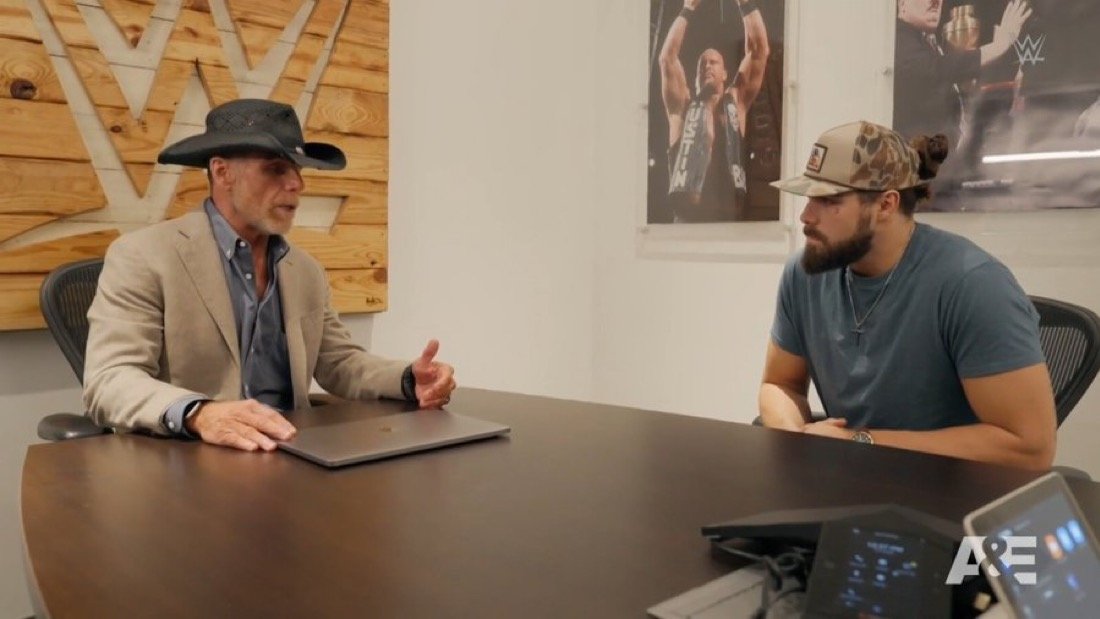
Then came the episode’s biggest turn: Shawn Michaels telling Drake his time at the Performance Center was over before revealing that WWE had an opportunity for him in AAA. That was a strong piece of television because it did not feel like a clean win or a complete failure. It felt like the reality of developmental. Drake was not being handed an NXT spot, but he was not being thrown away either. He was being moved into a different environment to see if something else could unlock him.
That matters because WWE’s developmental system is no longer just NXT. Evolve, AAA and other opportunities now give WWE more places to test talent. For Drake, that means the door is still open, but it is not the door he probably wanted. That made the ending feel more honest.
The best thing about Episode 2 was the coaching. Kevin Owens fits this show perfectly because he gives direct feedback without making it about himself. Natalya brings a calm, credible voice to the women’s side. Booker T is still strong at reading presence and character quickly. Bubba works when he is blunt and focused instead of overplaying the tough-love routine.
The biggest issue is that some of the matches are still too short to fully breathe. The show wants the audience to invest in these journeys, but the matches sometimes end right when they are starting to become interesting. The tag match especially needed more structure. Effort is not enough. A developmental match can be rough, but it still needs a point.
Still, Episode 2 was a step forward because it found stakes beyond a scoreboard. “All On The Line” was about who could take coaching, who could show personality, who could control emotion and who could survive being told that their current path was not working.
Final Thoughts
WWE LFG Season 3 Episode 2 was not perfect, but it was the strongest episode of the new season so far. Carlee Bright and Layla Diggs had the best match of the night, the tag match gave the coaches plenty to pick apart, and Drake Morreaux’s story gave the episode the emotional weight it needed.
The new format is already better because it feels less fake. It is not pretending every moment is some grand competition twist. It is showing the grind, the criticism, the small improvements and the hard conversations that come with trying to make it in WWE.
“All On The Line” worked because it showed the beauty and the cruelty of developmental at the same time. You can have size, athleticism, passion and potential, but eventually you still have to prove that all of it adds up to something. For Drake Morreaux, Episode 2 was not the end. It was a warning, a wake-up call and maybe the exact kind of reset he needed.
Make sure to subscribe to our Late Night Crew Wrestling YouTube Channel. Follow @yorkjavon, @kspowerwheels & @LateNightCrewYT on X.
I’m the quiet one until the bell rings then I’ve got takes. I live for WWE NXT and TNA, I want every promotion to succeed, and I will absolutely roast the bad decisions on sight (because someone has to). Anime taught me to respect long-term storytelling; wrestling taught me that sometimes the plan is “we panicked” and called it “unpredictable.” The Miz got me into all of this, so yeah I appreciate confidence, commitment, and the art of talking like you’re already the main event. Now I bring that same energy to the page as the main writer for Late Night Crew Wrestling because if you’re not here to be must-see and tell the truth, why are you here?!