
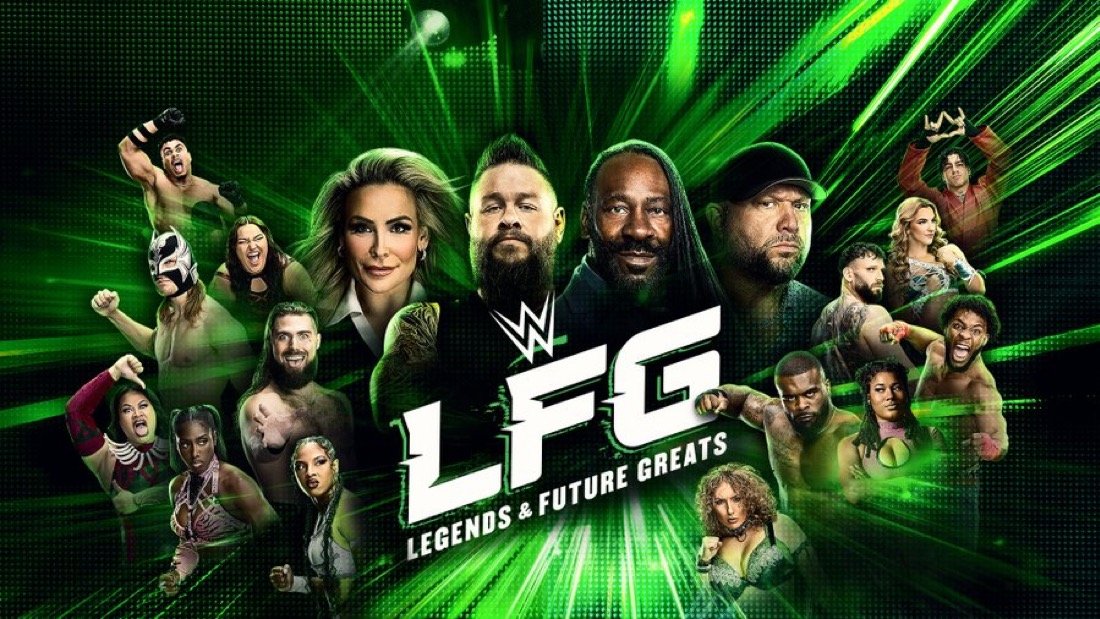
WWE LFG Season 3 Episode 12, “Not Taking My Spot,” was built around one of the most important lessons a developing wrestler can learn: athleticism may earn a reaction, but emotion, selling and character are what make an audience care.
Every match on last night’s episode tested a different part of that lesson. Bayley Humphrey had to abandon her naturally intimidating presence and prove she could work as a sympathetic babyface against Chantel Monroe. Nathan Cranton was challenged to turn his confidence and appearance into something more dangerous, while Tate Wilder had to show that his appeal extends beyond an impressive moonsault. Harlem Lewis and Mike Derudder were given the main event because both men already look physically capable of competing on a larger stage. Their challenge was making all of that athleticism mean something.
The results were encouraging, but not perfect.
Credit: WWE
Bayley and Chantel produced the cleanest piece of character work on the episode. Nathan and Tate delivered the best overall match by taking Bubba Ray Dudley’s coaching directly into the ring. Harlem and Mike had the most spectacular match, but their main event also created the night’s biggest concern when Mike’s inconsistent selling undermined the exact story Kevin Owens had helped them construct.
That made LFG Season 3 Episode 12 one of the more valuable developmental episodes of the season. It was not about one wrestler being declared ready or one massive call-up changing the show. It was about separating performers who can execute moves from performers who are beginning to understand why those moves matter.
Here are the full results
- Bayley Humphrey def. Chantel Monroe
- Tate Wilder def. Nathan Cranton
- Harlem Lewis def. Mike Derudder
Breakdowns & Reactions
Harlem Lewis and Mike Derudder Train Together Before Becoming Opponents
The episode opened away from the Performance Center as Harlem Lewis and Mike Derudder trained together at Harlem’s home gym, which they called the Iron Temple.
It immediately established the theme behind “Not Taking My Spot.”
Harlem and Mike are friends, former tag-team partners and two physically imposing prospects who push each other during training. That friendship does not remove the competition between them. It makes the competition more personal. Both men understand that WWE has limited opportunities and that being friends does not mean stepping aside when the other person is chasing the same position.
Their workout showed why both men have received so much attention. They are explosive, intense and willing to push beyond a normal training pace. Mike explained that Harlem is one of the few people capable of pushing him physically, while both acknowledged that neither man intended to allow the other to take his spot.
That was a strong foundation for the main event because the match did not need a manufactured personal issue. The conflict was simple: two friends believe they belong at the next level, but only so many spots are available.
The segment also helped Harlem. His presentation has developed significantly since his earlier LFG appearances. He no longer comes across as only a large athlete trying to overpower everyone. He appears more comfortable speaking, carrying himself like a featured performer and explaining what motivates him.
Mike has undeniable confidence, but LFG Season 3 episode 12 eventually showed the danger of confidence becoming resistance when coaches identify a flaw.
Grade: B+
What worked
- The training footage established Harlem and Mike’s friendship without weakening their competitive tension.
- The Iron Temple setting gave the opening a different look from the usual Performance Center footage.
- Both men came across as serious athletes.
- The episode title grew naturally out of their competition for limited opportunities.
- Harlem displayed more personality than he has in several previous appearances.
What didn’t work
- The episode could have spent slightly more time explaining their history as a team.
- Mike’s comments about learning and improving became less convincing after his reaction to the main-event criticism.
- Their physical rivalry was clearer than their individual character identities.
Matt Bloom Assigns the Matches
Matt Bloom assigned Booker T to Bayley Humphrey against Chantel Monroe, Bubba Ray Dudley to Nathan Cranton against Tate Wilder and Kevin Owens to the main event between Harlem Lewis and Mike Derudder.
Each assignment had a specific purpose.
Booker wanted Bayley to work as the babyface and prove she could control her timing instead of rushing through her moments. Chantel, returning from a fractured nose, was responsible for establishing herself as the heel and giving the crowd a reason to rally behind a much larger opponent.
Bubba wanted Nathan and Tate to stop thinking primarily about moves. Nathan needed more aggression. Tate needed to fight from underneath, sell the punishment and build his comeback through emotion rather than immediately jumping to his athletic offense.
Owens was given two performers who already possessed plenty of ideas. His responsibility was not creating the match for them. It was making sure their ideas connected and that the physical story remained consistent.
That distinction mattered. Booker was teaching character alignment. Bubba was teaching emotional escalation. Owens was teaching story discipline.
Grade: A-
What worked
- Every match had a clearly defined developmental assignment.
- The coaching styles felt different rather than repetitive.
- The episode told viewers exactly what to watch for without exposing every detail of the matches.
- The assignments made the post-match feedback more meaningful.
What didn’t work
- Natalya had virtually no role in the episode.
- The one-hour format left little time for deeper follow-up after the final match.
- The episode moved away from some performers quickly after delivering important criticism.
Nathan Cranton and Bayley Humphrey’s Performance Center Romance Story
Before Bayley’s match, the episode revealed an entertaining character experiment involving Bayley and Nathan.
Bloom and NXT creative director Ryan Katz had asked Nathan whether he would be interested in participating in a romantic storyline with Bayley during an internal Performance Center live event. Nathan immediately understood the entertainment value and leaned fully into the role of an overly confident pretty boy pursuing a dominant woman who wanted nothing to do with him.
The pairing works because they are complete opposites.
Bayley is physically imposing, serious and naturally intimidating. Nathan is vain, theatrical and convinced that his appearance can win over almost anyone. Instead of forcing two similar personalities together, WWE placed two contrasting characters in the same situation and allowed the conflict to create the entertainment.
Their internal performance reportedly received a standing ovation from the other wrestlers and coaches. More importantly, both performers showed that they could take a basic creative suggestion and expand it into something memorable.
That is a valuable skill. Not every WWE opportunity begins with a perfectly written storyline. Sometimes a wrestler is given a loose idea and has to discover the character, chemistry and entertainment inside it. Nathan immediately saw the possibilities. Bayley’s resistance gave him something to play against.
The segment also gave Nathan material that he later carried into his match by flirting with Bayley’s mother at ringside. That type of continuity made his character feel like part of the episode instead of something he switched on only during rehearsals.
Grade: A-
What worked
- Nathan and Bayley’s opposite personalities created natural chemistry.
- Nathan immediately understood the entertainment potential.
- Bayley’s seriousness made Nathan’s exaggerated confidence funnier.
- The story continued during Nathan’s match.
- Both showed they could expand a small creative idea into a complete character interaction.
What didn’t work
- Viewers only saw brief footage from the internal match.
- The story could easily become too comedic if Nathan’s wrestling does not retain a dangerous edge.
- Bayley still needs more opportunities to show personality outside her intimidating presentation.
Chantel Monroe Returns With a Broken Nose
Chantel entered the episode recovering from a fractured nose suffered during training. Medical personnel required her to wear a protective mask if she wanted to continue working in the ring.
Rather than treating the mask like an unwanted medical device, Chantel covered it in rhinestones and incorporated it into her “reflection of perfection” presentation.
That was a small but intelligent character choice. Wrestling frequently forces performers to adapt. Injuries, wardrobe problems and unexpected limitations can either damage a presentation or become part of it. Chantel took something that could have made her feel less glamorous and turned it into another expression of her character.
Her willingness to compete also strengthened her heel role. She was not returning as someone asking for sympathy. She was still arrogant, stylish and determined to make Bayley’s night miserable in front of her mother.
Grade: B+
What worked
- Chantel turned the protective mask into part of her presentation.
- Competing through the injury showed toughness.
- The mask visually separated her from Bayley.
- Her personality remained consistent despite the injury.
What didn’t work
- The mask limited some of Chantel’s facial expressions.
- The episode could have explained more about how the injury affected their preparation.
- Her “reflection of perfection” character still needs a stronger long-term motivation beyond vanity.
Bayley Humphrey vs. Chantel Monroe
Booker’s central challenge was making the audience understand immediately that Bayley was the babyface and Chantel was the heel.
That is more difficult than it sounds.
Bayley is considerably larger and naturally looks like the aggressor. Chantel is smaller, athletic and more outwardly expressive, traits audiences often associate with a babyface. The match therefore needed to establish its roles before Bayley began overpowering her opponent.
They accomplished that through patience.
Instead of rushing into Bayley’s strength spots, Chantel avoided the initial lockup and created frustration. When Bayley eventually caught her, Chantel escaped the gorilla press before turning her attention toward Bayley’s knee. That gave the match a simple structure: Chantel had to neutralize Bayley’s power, while Bayley had to survive from underneath before finding one opening.
Chantel’s best work came when she wrapped Bayley’s leg around the ring post and taunted Bayley’s mother, Cynthia. That was the moment the heel-babyface alignment became completely clear. Chantel was no longer simply targeting a body part. She was enjoying hurting Bayley in front of her family.
She followed with a top-rope splash, a step-over toe hold, a dropkick to the knee and a superkick. Bayley sold enough of the leg damage to make Chantel’s strategy credible before using her upper-body strength to change the match.
Bayley caught Chantel, drove her down with a belly-to-back suplex and finished her with a powerbomb transitioned into a powerslam at 3:45.
The match was short, but it completed the assignment better than several longer LFG matches. The audience understood the roles. Chantel had a strategy. Bayley worked from underneath. The finish came through Bayley’s established strength rather than a sudden move that had nothing to do with the story.
Bayley still has room to become a more emotionally expressive babyface. Her natural physical presence makes her easier to understand as a dominant heel. However, this was a meaningful step because she proved she could temporarily surrender control without losing credibility.
Chantel also deserves credit. Working through a fractured nose while taking power offense required trust, and she maintained her character throughout the match.
Grade: B
What worked
- The heel and babyface roles were established clearly.
- Chantel’s attack on the knee gave the short match a coherent story.
- Taunting Bayley’s mother created genuine heel heat.
- Bayley worked from underneath without appearing weak.
- The finish protected Chantel while emphasizing Bayley’s power.
- Both followed Booker’s instructions.
What didn’t work
- The 3:45 runtime limited the emotional depth.
- Bayley could have sold the knee more after the finish.
- Chantel’s control section ended just as the match was beginning to build.
- Bayley’s babyface presentation still needs more visible vulnerability.
Booker T Gives Bayley and Chantel an A+
Booker was ecstatic when Bayley and Chantel returned backstage.
He praised their structure, Bayley’s willingness to work from underneath and the clarity of the roles before giving both women an A+. Chantel credited Bayley for helping her through the match, while Bayley shared an emotional moment with her mother.
Booker’s enthusiasm was justified because the match followed the assignment almost exactly. Neither wrestler tried to steal the episode with unnecessary offense. They concentrated on alignment, timing and structure.
The personal moment with Bayley’s mother also helped soften Bayley outside the ring. Cynthia explained that it was different watching her daughter wrestle as a babyface, but expressed pride in Bayley’s growth. That humanized Bayley more effectively than forcing her to suddenly become cheerful or overly friendly.
Grade: A-
Bubba Ray Dudley Demands Emotion From Nathan Cranton and Tate Wilder
Bubba delivered the best pre-match coaching of the episode.
He told Nathan to attack with visible intent and make every movement communicate that he wanted to hurt Tate. Nathan has the appearance, confidence and verbal ability to become an entertaining heel, but those qualities can make him feel more like a beauty-pageant character than a credible threat.
Nathan understood the issue. He described himself as “pretty and deadly” and acknowledged that the prettiness had to be balanced by aggression.
Tate’s assignment was the opposite. Bubba wanted him to absorb the punishment, show anguish and then transform that pain into fire. He specifically warned Tate that wrestling was not about performing as many moves as possible. The best wrestlers can generate the strongest emotional response with the fewest moves.
That was the exact lesson Tate needed. His moonsault is impressive, but a moonsault alone cannot become his entire identity. The move becomes more valuable when the audience is emotionally invested in seeing him reach the top rope and complete it.
Grade: A
What worked
- Bubba gave both men clear and practical instructions.
- Nathan’s “pretty and deadly” line strengthened his character.
- Tate’s assignment directly addressed his dependence on athletic moves.
- Bubba explained the difference between movement and emotional investment.
- Both wrestlers incorporated the coaching into the match.
What didn’t work
- Tate still needs more personality outside the comeback structure.
- Nathan’s character can easily become too comedic without sustained aggression.
- The segment provided stronger character direction for Nathan than Tate.
Nathan Cranton vs. Tate Wilder
Nathan followed Bubba’s instructions immediately by attacking Tate before the opening bell and powerbombing him off the ropes.
It was the best opening sequence of the episode because it established everything within seconds. Nathan was the arrogant aggressor. Tate was already fighting from underneath. The audience had a reason to support Tate before the match officially started.
Once the bell rang, Nathan remained in control. He dropped Tate throat-first across the top rope, delivered a boot to the head and followed with a snap suplex. His offense was not overly complicated, but his body language made the punishment feel more important.
Nathan also found time to continue his character work by approaching Bayley’s mother, giving her his scarf and attempting to charm her. It was funny, but it also fit the established story involving Bayley. More importantly, Nathan returned to the match without allowing the comedy to erase his aggression.
Tate’s comeback was built exactly as Bubba instructed. He pounded the mat, allowed the audience to rise with him and then attacked with lariats and a leaping shoulder tackle. The moves were basic, but the reaction came from Tate’s emotion rather than their difficulty.
Nathan cut him off with a hard elbow, but Tate eventually pulled him from the top rope with a powerbomb, creating a direct callback to Nathan’s pre-match attack. Tate then hit his top-rope moonsault for the victory at 3:58.
That callback elevated the finish. Tate did not simply survive and hit his signature move. He returned the powerbomb that started the fight and then completed the moonsault after earning the opportunity.
This was Tate’s strongest LFG performance because the moonsault felt like the conclusion of the story rather than the entire story.
Nathan may have lost, but he arguably improved his position more than anyone else. His character was clear, his aggression increased and his ringside interaction showed that he can create entertainment without abandoning the match.
Grade: B+
What worked
- Nathan’s pre-bell attack immediately created the match’s roles.
- Nathan showed the aggression Bubba requested.
- Tate’s selling gave his comeback purpose.
- The crowd responded to Tate’s emotional buildup.
- The powerbomb callback gave the finish structure.
- Nathan’s interaction with Bayley’s mother continued an earlier storyline.
- Tate’s moonsault felt earned instead of inserted.
What didn’t work
- The match could have benefited from another two or three minutes.
- Nathan should have controlled Tate longer before the bell officially rang.
- Tate still needs a stronger character hook beyond being the fired-up cowboy.
- Nathan’s ringside flirting briefly distracted from Tate’s struggle.
- Tate’s comeback was effective but still somewhat predictable.
Bubba Ray Dudley’s Post-Match Feedback
Bubba asked both men to grade themselves. Nathan and Tate called the performance “very good,” and Bubba agreed.
His main criticism was that Nathan should have extended the pre-match beating. The referee could have repeatedly pulled Nathan away, only for Nathan to return and continue the attack. That would have created more sympathy for Tate and made Nathan look even more vicious.
The criticism was correct. The opening worked, but it could have been given more room to breathe.
The more important takeaway was that both men understood the assignment. Nathan became more dangerous. Tate created emotion with straightforward offense. Neither relied exclusively on complicated sequences.
Grade: A-
Kevin Owens Lets Harlem Lewis and Mike Derudder Build Their Own Match
Owens took a different approach with the main event.
Rather than telling Harlem and Mike how he would construct the match, he asked them to present their ideas. Owens did not want his status or experience to pressure them into wrestling his preferred style. He wanted to see what felt natural to them and then refine it.
That was smart coaching because Harlem and Mike are further along physically than many of the prospects featured this season. Their problem is not a lack of moves. Their problem is determining which ideas belong in the match and how those ideas connect.
The planned story involved Harlem attacking Mike’s leg before that damage played into the finish. Owens specifically advised Mike to combine his comeback with the leg selling so that each movement added weight to the injury.
The advice could not have been clearer.
Grade: A-
Harlem Lewis vs. Mike Derudder
Harlem and Mike delivered the most athletic match of the episode, but they did not completely deliver the best match.
The opening showed that both men could work beyond simple power wrestling. They exchanged holds before colliding in the center of the ring and attempting to intimidate each other. Mike then used his unusual agility, changing direction on a dive and hitting a hurricanrana to the floor.
Harlem responded by becoming more strategic.
Instead of attempting to match every spectacular move, he targeted Mike’s leg with a dragon screw and continued attacking the lower body. That represented meaningful growth for Harlem. Earlier versions of his character might have tried to win through strength alone. Here, he identified Mike’s athleticism as the danger and attacked the body part responsible for it.
Mike initially sold the damage. His leg gave out during a suplex attempt, creating an opening for Harlem. That should have become the match’s central obstacle.
Instead, Mike began performing increasingly difficult offense without consistently acknowledging the injury. He hit an Asai moonsault to the floor and landed on his feet. He later attempted to springboard into the ring on one leg before Harlem caught him with a clothesline.
The springboard counter worked because the damaged leg directly contributed to Mike being caught. The Asai moonsault did not work as well because landing cleanly on the injured leg weakened everything Harlem had done before it.
Mike still produced the match’s most visually impressive moment with a standing hurricanrana for a near fall. However, Harlem regained control, kicked the damaged knee and hit the Boomslang for the victory at 5:46.
The finish made sense. Harlem attacked the leg, Mike took a risk using that leg, Harlem exploited it and then finished him.
The problem was the journey between those points.
This is the frustrating part of evaluating Mike. His athletic ability is obvious. A wrestler of his size should not move the way he does. The audience reacts because the movements are spectacular. But athleticism becomes less impressive when it contradicts the story.
The leg selling did not need to prevent Mike from completing the moonsault. He could have landed, collapsed, grabbed the knee and struggled to follow up. That would have made the move more dramatic while protecting Harlem’s offense. Instead, the injury seemed to disappear whenever Mike wanted to perform something explosive.
Harlem was the more complete wrestler because his decisions remained tied to the story. Mike was the more spectacular wrestler, but spectacular is not automatically better.
Grade: B
What worked
- Harlem and Mike wrestled with believable physical intensity.
- Mike’s agility created several memorable moments.
- Harlem displayed more strategy than in previous seasons.
- The leg attack provided a clear match story.
- The one-legged springboard counter was an effective payoff.
- The Boomslang finish connected to Harlem’s earlier work.
- The crowd treated the match like a true main event.
What didn’t work
- Mike’s leg selling was inconsistent.
- Landing on his feet after the Asai moonsault damaged the match’s central story.
- Some sequences felt designed for a reaction rather than a purpose.
- Mike’s athleticism occasionally overshadowed his character.
- The short runtime prevented the match from fully developing into the heavyweight fight promised by the episode.
- Harlem and Mike still need more clearly separated personalities.
Matt Bloom and Kevin Owens Challenge Mike Derudder
The post-match feedback was the most important part of the episode.
Bloom called the match a “fabulous routine,” but warned that routines eventually stop receiving reactions. A crowd may respond the first time it sees an impressive series of flips and athletic counters, but those movements will lose value if the audience does not love or hate the person performing them.
Bloom specifically called out Mike’s failure to sell the leg during his comeback. Harlem had attacked it throughout the match, but Mike landed on his feet after the Asai moonsault and continued moving without showing enough damage.
Mike attempted to explain that he had sold the leg slightly on the apron. That response appeared to concern Owens.
Owens acknowledged Mike’s talent, conditioning and athletic ability, but questioned whether Mike might struggle to accept feedback because he already knows how gifted he is. That was a serious observation.
The issue is not whether the audience reacted. It did. The crowd chanted for Mike and responded enthusiastically to the match. The issue is whether Mike can separate an immediate reaction from long-term connection.
Mike and Harlem appeared satisfied because the crowd enjoyed the fight. Harlem said they had beaten each other up, had fun and received a strong response. On one level, he was right. Wrestling is performed for an audience, and the audience reacted.
But Bloom and Owens were evaluating something deeper. WWE is not searching for someone who can receive one loud reaction inside the Performance Center. It is searching for performers who can maintain emotional investment through weekly television, repeated matches and long-term stories.
Mike does not need more moves. He needs more discipline.
Grade: A
What worked
- Bloom clearly explained why athletic routines eventually lose value.
- The leg-selling criticism was specific and undeniable.
- Owens identified a potential teachability issue instead of avoiding an uncomfortable subject.
- The feedback explained the difference between receiving a reaction and creating lasting investment.
- Mike’s central developmental weakness is now completely clear.
What didn’t work
- The episode ended before Mike could meaningfully process the criticism.
- Mike’s immediate defense reinforced Owens’ concern.
- Harlem also seemed too quick to use the crowd reaction as proof that everything worked.
- The episode needed a stronger closing statement from Owens or Bloom.
Where Everyone Stands After Episode 12
- Bayley Humphrey: Proved she can work from underneath and function as a babyface without losing her physical credibility. Her next challenge is showing more vulnerability through facial expressions and selling.
- Chantel Monroe: Returned from a fractured nose, maintained her character and gave Bayley a clear heel opponent. She remains one of the more polished personalities in the group.
- Nathan Cranton: Had his best episode as a complete character. The confidence, aggression, comedy and continuity with Bayley’s storyline all worked together. He lost the match but gained momentum.
- Tate Wilder: Took an important step beyond being the wrestler with the impressive moonsault. His comeback connected because he allowed the audience to experience the struggle before the athletic finish.
- Harlem Lewis: Looked like the most complete wrestler in the main event. He combined physicality with strategy and remained committed to the match’s body-part story.
- Mike Derudder: Remains one of the most physically gifted prospects on the show, but his selling and response to criticism are becoming major concerns. The athletic ability is ready. The discipline is not.
- Booker T: Successfully guided Bayley and Chantel through a difficult heel-babyface assignment.
- Bubba Ray Dudley: Delivered the best coaching of the episode by teaching Nathan and Tate how emotion can make basic offense more valuable.
- Kevin Owens: Continued to be the show’s most honest evaluator. His concern about Mike’s ability to accept feedback may become more important than anything that happened during the main event.
- Matt Bloom: Delivered the night’s central lesson: a collection of impressive moves is still only a routine until the audience becomes emotionally invested in the wrestler performing them.
Best Match Of The Night
Nathan Cranton vs. Tate Wilder
Harlem Lewis vs. Mike Derudder had bigger moves, but Nathan and Tate had the cleaner story.
The pre-bell attack established the roles. Nathan showed aggression. Tate fought from underneath. The crowd followed Tate’s comeback, and the powerbomb callback gave the finish a beginning-to-end connection.
It was short, direct and successful.
Grade: B+
Best Performance Of The Night
Nathan Cranton
Nathan lost, but he demonstrated the most complete combination of character and in-ring development.
His “pretty and deadly” presentation finally started feeling like more than a catchphrase. He attacked Tate with aggression, carried his arrogance into the match, continued the Bayley storyline with her mother and still gave Tate the space needed to complete the comeback.
Grade: A-
Biggest Winner Of The Night
Tate Wilder
Tate received the victory, a strong crowd response and praise for showing more emotion. Most importantly, the episode reframed his moonsault as a payoff instead of his entire presentation.
That is meaningful progress.
Grade: B+
Biggest Question Coming Out Of The Episode
Can Mike Derudder Accept Coaching That Challenges His Strengths?
Mike’s talent is not in question. His athleticism is not in question. His conditioning is not in question.
His willingness to sacrifice an impressive movement for the sake of the story is now the question.
A wrestler who knows he is gifted can either use that confidence as fuel or allow it to become resistance. Mike’s next performance needs to show that he heard the criticism rather than simply defending the reaction he received.
Grade: B-
Final Thoughts
Last night’s WWE LFG was one of the clearest examples of why Season 3’s developmental format works.
Bayley Humphrey and Chantel Monroe were not asked to have the longest or most spectacular match. They were asked to establish unmistakable heel and babyface roles. They did it.
Nathan Cranton and Tate Wilder were not asked to fill four minutes with as many moves as possible. Nathan was asked to become more vicious. Tate was asked to turn pain into emotion. They did it.
Harlem Lewis and Mike Derudder were given more freedom because both already possessed the physical tools to create a memorable main event. They produced the biggest athletic display of the episode, but they also showed why freedom requires discipline.
Harlem remained connected to the story. He attacked the leg, adjusted his strategy and used the damage to create the finish. Mike produced the louder individual moments, but his inconsistent selling disconnected those moments from the match around them.
That does not mean Mike had a bad performance. It means his talent has reached the point where the standard must become higher. Nobody needs to be convinced that he can jump, flip, hit hard or move like someone much smaller. Now he has to prove that he can make the audience care when he cannot do those things.
Nathan Cranton may have made the most progress. His character finally feels like it has multiple layers. He can be funny without becoming harmless, arrogant without becoming passive and aggressive without abandoning his personality.
Tate also took an important step. His moonsault remains impressive, but the real improvement came before the move. The audience reacted because Tate sold, struggled, fired up and created anticipation. That is the difference between performing a move and earning a moment.
LFG Season 3 Episode 12 was not a perfect hour. The matches were extremely short, Natalya was barely involved and the main event failed to maintain its most important selling detail. However, the episode succeeded because every strength and weakness became visible.
Bayley can be more than a dominant heel. Chantel can adapt through adversity. Nathan has a real character. Tate is learning to create emotion. Harlem is becoming a smarter wrestler. Mike has extraordinary tools but must learn when not to use all of them.
That is developmental television doing its job.
Overall Show Grade: B
Make sure to subscribe to our Late Night Crew Wrestling YouTube Channel. Follow @yorkjavon, @kspowerwheels & @LateNightCrewYT on X.
I’m the quiet one until the bell rings then I’ve got takes. I live for WWE NXT and TNA, I want every promotion to succeed, and I will absolutely roast the bad decisions on sight (because someone has to). Anime taught me to respect long-term storytelling; wrestling taught me that sometimes the plan is “we panicked” and called it “unpredictable.” The Miz got me into all of this, so yeah I appreciate confidence, commitment, and the art of talking like you’re already the main event. Now I bring that same energy to the page as the main writer for Late Night Crew Wrestling because if you’re not here to be must-see and tell the truth, why are you here?!