
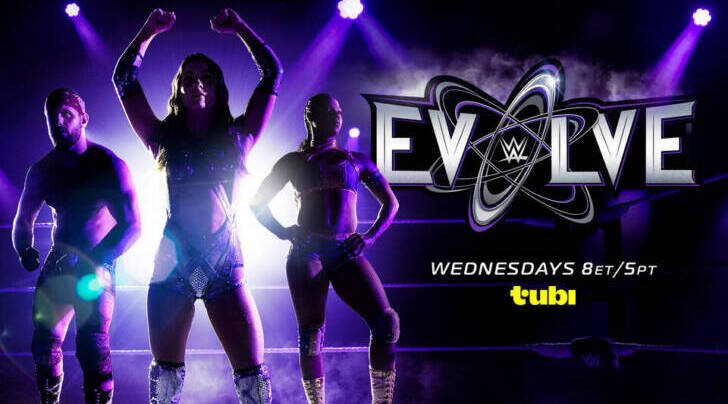
EVOLVE has a simple mission on paper: take raw prospects, hungry standouts, and the next wave from WWE’s developmental ecosystem, then turn them into wrestlers with identity, urgency, and a reason to believe they’re rising. When it works, it feels like a league with rules—wins matter, titles matter, and stories move with purpose. When it doesn’t, it starts to feel like a playlist: good matches, flashes of potential… and not much glue holding the entire brand together.
Right now, EVOLVE is stuck in that uncomfortable middle ground. The talent is there. In key places—especially the women’s side—the show still delivers. But the overall presentation has been missing the one ingredient that makes any developmental brand feel legitimate:
A clear on-screen authority figure who defines the structure and owns the matchmaking.
That’s why the Bodyslam+ report about Timothy Thatcher potentially becoming the next EVOLVE General Manager isn’t just a casting note—it’s a potential course correction for a brand that has been operating like it lost its steering wheel.
EVOLVE’s Identity Shift After Stevie Turner
Stevie Turner was installed as EVOLVE’s on-screen leader on March 26, 2025, and the “Prime Minister” framing did more than give the brand a character—it gave it a hierarchy. Announcements carried weight. Matchmaking felt intentional. The show had a consistent voice that could explain why opportunities were being handed out (or withheld).
Turner was released in October 2025, and because of taping, her final EVOLVE episode aired on November 5, 2025. In practical terms, that put her “Prime Minister” run at roughly seven months from her appointment to her final televised appearance.
EVOLVE didn’t just lose a personality when she exited. It lost a storytelling mechanism.
The Core Issues: Control Angles Without a Controller
The most glaring structural problem is the disconnect between what EVOLVE suggests on-screen and what it clearly establishes.
The show leaned into a Team PC vs WWE ID framework, with the men’s division frequently orbiting that conflict as a defining spine. The idea escalated into a “control of the show” vibe—suggesting that one side can influence the night’s direction. The problem is that EVOLVE hasn’t consistently provided the missing piece that makes that angle function:
- Who has the actual authority to book matches?
- What rules allow that authority to be exercised?
- What consequences exist when that authority is abused?
- Who has the power to stop it?
When “control” is treated as a theme rather than a defined power structure, it creates a logic gap that undermines everything the brand is trying to sell: competition, progression, and earned opportunity. A developmental show especially can’t afford that gap, because its entire appeal is the sense that performers are climbing something real.
Why the Men’s Side Can Feel One-Note
The PC vs ID umbrella is useful, but it can also flatten characters if it becomes the primary identity driver. If wrestlers are mostly presented as representatives of a side rather than people with distinct motivations, the division risks becoming repetitive:
- fewer personal stakes,
- fewer rivalries that feel like they exist outside the “brand war,”
- and fewer clear pathways to title contention that aren’t framed through the same lens.
That’s how a division can start to feel like it’s spinning instead of progressing.
The Women’s Division Remains EVOLVE’s Strongest Proof of Concept
The women’s side has often felt like the brand’s most complete expression: match quality paired with character definition and storyline progression, and title matches framed like meaningful steps rather than exhibition peaks. That’s the model EVOLVE needs across the board—because it demonstrates the show still understands how to build momentum when the structure is clear and the stakes are protected.
Bodyslam+ has reported that WWE is planning to introduce Timothy Thatcher as EVOLVE’s new on-screen General Manager. Other outlets have echoed the report while crediting Bodyslam+ as the origin, and the idea fits EVOLVE’s needs at the most basic functional level: restoring a matchmaker to the product.
Thatcher isn’t just “a name” or a nostalgia play. As an on-screen authority figure, he represents a philosophy that naturally aligns with EVOLVE’s mission:
- standards,
- accountability,
- consequences,
- and a world where opportunity is earned, not declared.
Most importantly, a Thatcher-led EVOLVE answers the question the show has been ducking for months:
Matches happen because someone with defined authority and a defined worldview is making them happen.
So Who’s Right for the Job?
If EVOLVE’s goal is to feel like a league again—rather than a rotating showcase with occasional angles—then the right General Manager is the one who can reintroduce coherence.
That means:
- Establishing the rules of EVOLVE’s ecosystem (rankings, evaluations, eligibility, consequences).
- Turning PC vs ID from a single umbrella into multiple personal stories with distinct motivations and payoffs.
- Protecting what’s working by keeping the women’s division’s progression-first approach as the brand standard.
- Making “control of the show” angles feel logical—because power is defined, challenged, and enforced.
That’s why the reports matters. It suggests WWE recognizes the real issue: EVOLVE doesn’t need louder angles. It needs a spine.
If Succession II and EVOLVE’s next season are meant to feel like a statement, the statement has to start with structure—someone in charge, rules that matter, and a weekly logic the audience can trust.
EVOLVE doesn’t just need a new nameplate in the office — it needs what that role is supposed to represent: leadership, clarity, and a brand that finally makes sense again.
Make sure to subscribe to our Late Night Crew Wrestling YouTube Channel. Follow @yorkjavon, @kspowerwheels & @LateNightCrewYT on X.
I’m the quiet one until the bell rings then I’ve got takes. I live for WWE NXT and TNA, I want every promotion to succeed, and I will absolutely roast the bad decisions on sight (because someone has to). Anime taught me to respect long-term storytelling; wrestling taught me that sometimes the plan is “we panicked” and called it “unpredictable.” The Miz got me into all of this, so yeah I appreciate confidence, commitment, and the art of talking like you’re already the main event. Now I bring that same energy to the page as the main writer for Late Night Crew Wrestling because if you’re not here to be must-see and tell the truth, why are you here?!