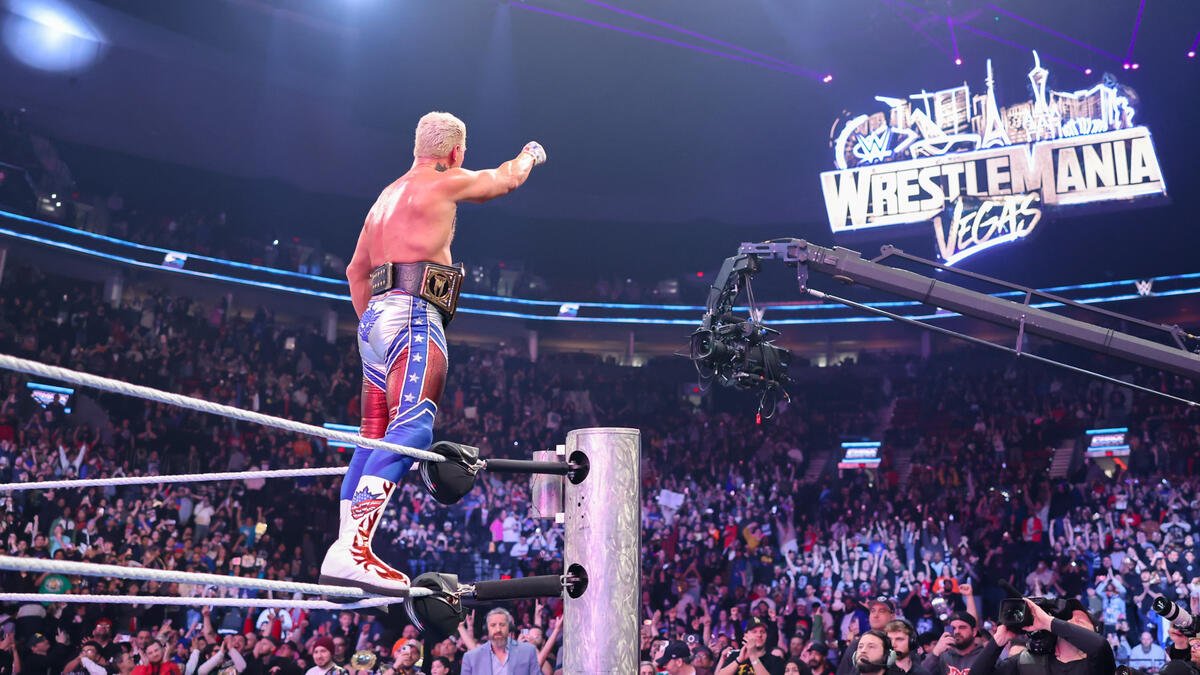
Less than seven weeks before WrestleMania 42, WWE had a chance on Friday night to make SmackDown feel urgent, focused, and impossible to ignore. Instead, the March 6 episode felt like a show torn between big headline developments and deeply frustrating creative habits. On paper, this was a monumental night: Cody Rhodes regained the Undisputed WWE Championship, Randy Orton formally framed this year as his long-awaited return to the WrestleMania main event, new No. 1 contenders were crowned in both tag divisions, and several of the blue brand’s biggest names were pushed further into place for Las Vegas. But the larger reaction coming out of the show was not simply excitement. It was frustration over how WWE got there. The company delivered movement, but not always momentum. The main event changed the WrestleMania board in a major way, yet much of the rest of the show felt like familiar WWE shorthand: long promos, open challenges, makeshift tag teams, and storyline beats that created noise without always creating emotional investment. That contradiction is the story of this SmackDown. It was a consequential show, but not always a satisfying one.
Here are the full results
- Randy Orton opened the show and delivered a promo centered on his WrestleMania résumé, saying that after 20 WrestleMania appearances and only two main events, this year would mark his third. Trick Williams interrupted and was dropped with an RKO.
- Carmelo Hayes (c) def. El Hijo de Dr. Wagner Jr. (United States Championship)
- Charlotte Flair & Alexa Bliss def. Giulia & Kiana James to become No. 1 contenders for the WWE Women’s Tag Team Championship.
- Damian Priest & R-Truth won the Tag Team Turmoil Match to become No. 1 contenders to the WWE Tag Team Championship
- Rhea Ripley and Jade Cargill went face-to-face ahead of their WrestleMania title clash.
- Oba Femi def. Johnny Gargano
- Cody Rhodes def. Drew McIntyre (c) (Undisputed WWE Championship)
The biggest story leaving Portland was obvious: WWE finally made the match it has been orbiting for years. Cody Rhodes winning the Undisputed WWE Championship sets up Cody Rhodes vs. Randy Orton at WrestleMania 42, and that is the kind of headline match WWE has clearly wanted in its back pocket for a long time. Randy winning the Elimination Chamber and Cody regaining the championship on the first SmackDown after the event completed the board in one stroke. That is the clean version of the story. The messier version is that a lot of fans and critics were not frustrated by the destination so much as the route. Drew McIntyre’s reign was abruptly cut off just as his WrestleMania path as champion appeared to be crystallizing, and for many viewers it felt less like organic chaos and more like a visible late-stage correction to force the title onto Cody in time for Orton. Some praised the main event and gave the show a favorable overall grade, while others were more mixed, complimenting the match quality but questioning parts of the show’s structure and momentum. While many recaps emphasized the enormity of Cody’s title win, but the fan conversation was much more divided than a simple celebratory headline would suggest.
That split in reaction is important, because it gets at your larger criticism of the show. SmackDown was not a total disaster in-ring. In fact, most coverage agreed that the main event delivered as a television match, and Carmelo Hayes’ title defense was one of the stronger bell-to-bell efforts on the card. But what frustrated fans was the creative philosophy underneath the episode. The show often felt like it was filling in boxes rather than deepening rivalries. WWE advanced multiple WrestleMania programs, but too many of those advances came through devices the audience has seen repeatedly: a long legacy promo to tell you why a veteran matters, another open challenge to give a champion something to do without committing to a feud, another Tag Team Turmoil to manufacture contenders, and another “big” face-to-face that leaned on star power more than substance. That is why the show landed as polarizing rather than unanimously praised. It was busy, but not always rich.
Randy Orton’s opening segment probably best captured that divide. WWE framed it as a statement moment for a legend who has been to 20 WrestleManias but only main evented two, and the company used that personal history to emphasize how much this year’s main event opportunity means to him. In isolation, that works. Orton has enough history and enough credibility to make that feel significant. The problem was what came next. Trick Williams, one of WWE’s hottest rising names, interrupted only to get flattened with an RKO. Some treated the segment as a crowd-pleasing Orton moment, and WWE obviously saw it as a clean exclamation point for a veteran star. But for many fans, especially online, it felt like a misuse of Trick. When a younger act with real upside is reduced to a cameo prop in a nostalgia-driven setup, the visual pop comes at the cost of long-term aura. Given Trick’s recent proximity to the main-event picture through Saturday Night’s Main Event and Elimination Chamber, the criticism that he should be kept out of this kind of disposable role is understandable. Rather than feeling elevated by sharing screen time with Orton, he felt borrowed for Orton’s moment.
The United States Championship picture is another area where your criticism lines up with the broader discourse. Carmelo Hayes beating El Hijo de Dr. Wagner Jr. was well received as a match. Hayes remains smooth, confident, and credible in the ring, and the open challenge format does give him regular opportunities to show that. But that same format is also the problem. A belt can survive on match quality for a while, but it becomes creatively thin when every defense feels interchangeable. 411Mania was positive on the quality of the wrestling, yet the larger complaint many fans keep circling back to is that WWE’s men’s midcard scene rarely gets layered storytelling unless someone higher on the card temporarily dips into it. Hayes is doing his part. The title itself is not. It feels maintained rather than meaningfully built. And with WrestleMania now close, that lack of a defined feud or emotionally grounded direction makes the belt feel smaller than it should at this point in the calendar.
The women’s tag contender match and the Tag Team Turmoil both fed into another long-running frustration: WWE often remembers divisions only when a contender slot needs to be filled. Charlotte Flair and Alexa Bliss defeating Giulia and Kiana James advanced the women’s tag title scene, but the segment itself was built from a very familiar template of champions celebrating, challengers interrupting, and management making a match on the spot. It moved the pieces, but it did not create much deeper attachment to the rivalry. On the men’s side, the tag division criticism was even louder. Damian Priest and R-Truth winning the turmoil over more established tandems like Fraxiom, Los Garza, Motor City Machine Guns, and The Wyatt Sicks fit a pattern that many fans have grown tired of: actual teams spend months trying to maintain division depth, only for a thrown-together act to leapfrog them because they have higher individual star visibility. Some reported the result straight and found entertainment value in Priest and Truth as a duo while others were less enthusiastic about the overall structure. The central criticism remained the same: if the champions are still feuding with The Wyatt Sicks, and multiple proper teams are available, then crowning a mismatched pair of singles stars as No. 1 contenders makes the division feel less like a division and more like a holding pen for whoever is not doing something else.
That criticism hits even harder because the talent in that match was not the issue. Fraxiom are one of the most exciting younger tandems WWE has, Motor City Machine Guns carry instant credibility, and Los Garza gave the turmoil much of its in-ring life. Yet the match ended up serving the old WWE instinct to privilege familiar singles names over dedicated team-building. That has become one of the defining complaints of the company’s tag booking, and Friday did little to quiet it. Even fans who enjoyed parts of the turmoil often came away talking less about the wrestling and more about the same old pattern.
The Jade Cargill and Rhea Ripley face-to-face was another case where the idea was bigger than the execution. On paper, this is one of WWE’s most visually impressive women’s WrestleMania pairings in years. Jade has star presentation and a true marquee aura. Rhea has already established herself as one of WWE’s defining women’s stars. The segment should have felt electric. Instead, much of the media and fan reaction treated it as underwhelming. Multiple recaps explicitly said it did not live up to the buzz social media had generated for the confrontation, and multiple reviews described the exchange as a staredown-plus-catchphrase segment rather than a deeply compelling promo battle. That was the issue: the segment was not a disaster, but it lacked the emotional architecture a true dream match needs. It told viewers the match is big. It did not fully show them why it should matter beyond the obvious. That is a major difference this close to WrestleMania.
Oba Femi squashing Johnny Gargano was one of the clearest “this worked, but now what?” moments on the episode. WWE presented it exactly as a showcase, with Gargano attempting to reset himself and instead getting obliterated. Reviews were largely positive about the segment in the immediate sense: Oba looked like a monster, the crowd was into him, and the segment accomplished its basic task. Some loved it while others said it was exactly what it needed to be, though it also noted that Oba may be reaching the point where he needs to move beyond simple squashes. That is the key critique. The segment succeeded in making Oba feel destructive, but it also reinforced how diminished Gargano currently feels, and it underlined that Oba’s next step needs to be something more layered than flattening overmatched opponents. Still, on a show where several segments felt overthought or undercooked, the blunt simplicity of Oba murdering someone and leaving at least gave the audience something clean and effective to react to.
The main event is where this show will ultimately be judged. Cody Rhodes vs. Drew McIntyre was not just another title defense; it was the match that redefined the WrestleMania main event picture. WWE built the rematch off Drew costing Cody in key recent moments, including the Royal Rumble and Elimination Chamber orbit, and then paid that off with a chaotic championship bout that featured interference-adjacent drama, referee issues, and Jacob Fatu blocking Drew’s attempted chair use before Cody hit the final sequence. The match itself drew praise from several corners. Top recap reports including WWE all treated the title change as the seismic development of the night. Busted Open’s immediate reaction focused on the scale of Cody reclaiming the championship and what it means for WrestleMania’s main event scene. But the criticism never really centered on whether Cody and Drew had a good match. It centered on repetition and direction. Fans across social spaces were split between those excited for Cody vs. Orton and those exhausted by Cody and Drew circling each other again while Drew’s championship reign ended just as it seemed to have real WrestleMania value. That is why your opinion that people do not want to see Cody and Drew wrestle each other again captures a very real slice of the conversation. Even for fans who still like Cody, there is growing sensitivity to the sense that he can never leave the title frame for long. When that perception sets in, every return to the same matchup feels less like epic persistence and more like overexposure.
There is also a bigger WrestleMania problem lurking beneath all of this. This SmackDown confirmed major matches and moved major players, but it also reinforced the feeling that WWE still does not have enough true WrestleMania-level stories locked into place considering the calendar. The company now has Cody vs. Orton as a centerpiece, Jade vs. Rhea has a title on it, and the tag divisions have fresh contenders, but a lot of the supporting material still feels provisional rather than inevitable. That is why so much of the critique online and among wrestling writers was not “nothing happened.” Clearly things happened. The critique was that too much of it felt improvised, mechanical, or light on emotional detail for early March. Friday’s SmackDown was significant because it changed the board. It was frustrating because changing the board is not the same as making the audience feel.
What was announced for next week’s show
- Cody Rhodes and Randy Orton contract signing for their WrestleMania 42 Undisputed WWE Championship match.
- Jade Cargill vs. Michin in singles action.
- Jelly Roll will appear live on SmackDown.
In the end, this was a consequential but uneven SmackDown. Cody Rhodes winning the WWE Championship is enormous. Randy Orton standing one step away from another WrestleMania main event is enormous. Oba Femi continued to look like a killer. Carmelo Hayes continued to look like a champion. But the show also amplified every creative anxiety fans have about WWE right now: the overreliance on open challenges, the shallow handling of the tag division, the tendency to use rising talent as scenery for established stars, and the habit of mistaking movement for depth. That is why the response to this episode was so divided. WWE gave fans a lot to talk about. It just did not give them enough to believe in.
Make sure to subscribe to our Late Night Crew Wrestling YouTube Channel. Follow @yorkjavon, @kspowerwheels & @LateNightCrewYT on X.
I’m the quiet one until the bell rings then I’ve got takes. I live for WWE NXT and TNA, I want every promotion to succeed, and I will absolutely roast the bad decisions on sight (because someone has to). Anime taught me to respect long-term storytelling; wrestling taught me that sometimes the plan is “we panicked” and called it “unpredictable.” The Miz got me into all of this, so yeah I appreciate confidence, commitment, and the art of talking like you’re already the main event. Now I bring that same energy to the page as the main writer for Late Night Crew Wrestling because if you’re not here to be must-see and tell the truth, why are you here?!