
WWE LFG has spent the first several weeks of its third season attempting to establish a new identity. Gone are the teams, the points system and the artificial feeling of watching coaches compete against one another for bragging rights. Season 3 has stripped the concept back to its most valuable purpose: evaluating talent, teaching the finer details of professional wrestling and determining who is truly ready to take the next step. The premiere made that mission statement clear when Shawn Michaels called for a return to basics and explained that opportunities could arrive at any moment. Episode 2 leaned further into that approach by focusing on Carlee Bright’s athleticism, Layla Diggs’ heel work, the first tag team match of the season and the pressure surrounding Drake Morreaux’s future. Episode 3 explored reinvention through Kam Hendrix, formerly Anthony Luke, while Tate Wilder continued to develop into one of the more naturally likable personalities on the show. Episode 4 brought Terry Taylor into the Performance Center for a WrestleMania-sized lesson in simplicity and crowd psychology, while Bayley Humphrey continued to build confidence as an imposing powerhouse. Episode 5 placed the spotlight back on Elijah Holyfield after a lengthy injury hiatus, gave Braxton Cole an opportunity to work with an experienced veteran in Andre Chase and allowed Kali Armstrong and Sirena Linton to tell a straightforward story built around urgency, physicality and the reality that roster spots are never guaranteed. Those first five episodes were not perfect, but they steadily built a foundation. Episode 6, titled “Perception Is Reality,” finally delivered the payoff. The first two matches continued the developmental work that has defined this season, but Elio LeFleur and Mike Derudder closed the show with something completely different: a main event that felt faster, sharper, louder and more complete than anything WWE LFG has presented this season. By the time Shawn Michaels immediately offered LeFleur a place on the NXT roster, the decision did not feel manufactured for reality television. It felt earned.
Here are the full results
- Bayley Humphrey def. Carlee Bright
- Elijah Holyfield def. Malik Blade
- Elio LeFleur def. Mike Derudder
Breakdowns & Reactions
A new face arrives with something to prove
Episode 6 opened with the introduction of Elio LeFleur, a masked high-flyer from Paris, France, who has spent approximately a decade working toward an opportunity in WWE. That opening presentation mattered because WWE LFG did not treat LeFleur like another anonymous prospect waiting for a developmental evaluation. From the beginning, the episode framed him as someone who already understood his identity.
LeFleur spoke about the difficult adjustment that came with arriving in WWE’s system after working across the independent scene. His goal was not merely to survive the Performance Center or demonstrate that he could execute moves cleanly. He wanted to show people something they had not seen before.
That is a simple statement, but it immediately separated him from several wrestlers who have appeared throughout the season. Too many prospects arrive on shows like this with athleticism, a respectable background and a vague desire to become a WWE Superstar. LeFleur arrived with a visual identity, a distinct in-ring style and enough confidence to communicate exactly what he wanted the audience to remember.
The episode also continued Kevin Owens’ increasingly valuable role in Season 3. Owens once again expressed interest in commentary after working in the booth during the previous episode. His presence has added something the show needed. Booker T and Bubba Ray Dudley provide old-school fundamentals. Natalya consistently focuses on the emotional connection between the performer and the audience. Matt Bloom remains the person responsible for cutting through excuses and identifying the details that separate an acceptable match from a television-ready performance. Owens brings a different perspective. He understands the modern WWE style, but he also knows how to make a segment feel natural rather than rehearsed.
That balance became important later in the episode when Owens worked directly with LeFleur ahead of the main event.
Bayley Humphrey def. Carlee Bright
The opening match was built around an easy story to understand. Bayley Humphrey is a physically intimidating powerhouse who has gradually become more comfortable embracing the traits that make her stand out. Carlee Bright is a smaller, athletic underdog whose gymnastics background allows her to create bursts of offense from positions where she appears to be overmatched.
Natalya wanted Bright to establish who she was as soon as the bell rang. Bloom wanted Humphrey to stop worrying so much about protecting her opponent and begin carrying herself like a dominant force. Oney Lorcan also worked with the women during their preparation, giving the segment another layer of credibility because both performers needed the match to feel physical without becoming reckless.
The crowd understood the assignment immediately. As Humphrey stalked Bright around the ring, the fans chanted that Bayley was going to kill her. Humphrey swung Bright around by the head, threw her into the corner and created the sense that Bright was in danger every time the larger wrestler got her hands on her.
Bright responded with the type of offense that fits her presentation. She blocked a charge with her knees, attacked the leg and connected with a basement dropkick. Later, she escaped a torture rack with elbows, threw strikes and landed a moonsault press from the ropes. Her standing moonsault was impressive, but the spot that mattered most came immediately afterward. Bright attempted another moonsault, only for Humphrey to pick her up from the cover, plant her with a backbreaker and remind everyone who controlled the match.
Humphrey finished Bright with a powerbomb into a powerslam.
The match accomplished its most important goal: Humphrey looked dangerous. WWE has spent years searching for women who can believably fill the monster role without moving like they are trapped in slow motion. Humphrey has the size, the facial expressions and the willingness to lean into the aggression that the role demands. Her scream before the finish added personality, and the powerbomb-to-powerslam combination looked like a move she could eventually use against almost anyone in the division.
Bright also deserves credit. She moved well, bumped with purpose and created believable hope spots without overwhelming the story. The criticism is not that she attempted too much. The criticism is that some of her offense still needs to land with more force and create a louder reaction. Bloom made that point afterward when he encouraged her to find a way to make her landings sound more impactful. He also wanted both women to embrace a less-is-more approach and make the match feel more like a fight than a rehearsed sequence of wrestling moves.
That is the correct feedback. Bright has the athletic ability. Humphrey has the presence. The next step for both women is learning that a match is not improved simply because more moves are added. The best developmental matches are the ones where every movement reinforces the story.
Elijah Holyfield def. Malik Blade
The second match brought Elijah Holyfield back into the spotlight one week after his successful return from injury.
Holyfield has become one of the most interesting long-term projects on WWE LFG because the upside is obvious. He has the name recognition, a legitimate athletic background, an impressive physique and a naturally explosive style. He also has the type of uppercut that can become an easily recognizable signature move. The question is not whether Holyfield has tools. The question is whether he can connect those tools together into a complete professional wrestling performance.
Malik Blade was a smart opponent for this stage of Holyfield’s development. Blade has been in WWE’s system for several years and has the athletic ability to make Holyfield’s offense look explosive without disappearing completely from the match. His profile segment also gave the matchup additional weight. Blade discussed his respect for Booker T and his desire to learn from someone he considers one of the greatest wrestlers of all time.
Booker’s advice was one of the best lines of the episode. He explained that the greatest feeling in wrestling comes when a performer becomes the puppet master and learns how to make the audience feel exactly what he wants them to feel.
That idea sits at the center of Season 3. Athleticism matters. Execution matters. A clean powerslam matters. None of it matters nearly as much as controlling the crowd.
Holyfield dominated most of the match. He shoved Blade into the ropes during the opening lockup, dropped him with a hard clothesline and drove him into the corner with a shoulder tackle. His explosiveness also caused one of the match’s rougher moments when he launched himself shoulder-first into the turnbuckles after Blade moved out of the way.
Blade briefly took control with a half nelson and a dropkick that showed off his vertical leap. Holyfield answered with a Samoan drop, a series of shoulder tackles and a powerslam before finishing the match with his uppercut.
The match was short and heavily tilted in Holyfield’s favor. That was not necessarily a mistake. WWE clearly wanted Holyfield to feel like a rising prospect with momentum, and the presentation accomplished that goal. However, the match also exposed the next area of development for him. His offense looks impressive in isolation, but there are moments when he appears to be waiting for the next spot instead of naturally fighting his way toward it.
Booker identified that problem after the match when he criticized Holyfield for waiting on the powerslam rather than working toward the moment. Holyfield acknowledged that his spacing and footwork still need improvement.
That is why the coaching format works better than the competition format from the first two seasons. The goal is not to pretend that every wrestler is one dramatic elimination away from losing a reality-show contest. The goal is to identify the exact details keeping a prospect from being ready for weekly television.
Apollo Crews also watched Holyfield closely and offered advice after the match. His involvement was not random. The next episode is set to feature Holyfield against his mentor in what should be a far more revealing test. Malik Blade gave Holyfield a showcase. Apollo Crews should force him to prove that he can build a deeper, more complete match.
Kevin Owens continues to shine in a different role
Kevin Owens has quietly become one of the strongest parts of WWE LFG Season 3.
His commentary work added personality to the first two matches without overpowering them. His ear-biting joke during Holyfield’s match was exactly the type of quick line that made the broadcast feel less sterile. More importantly, Owens has shown an ability to communicate with talent without turning every lesson into a lecture.
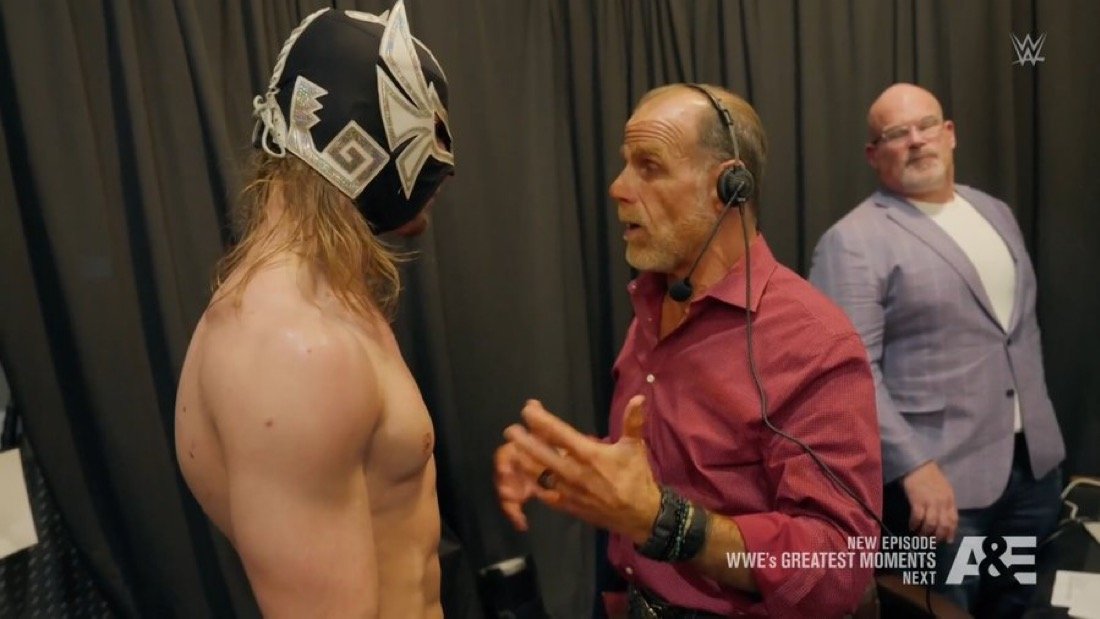
That became obvious when he met with LeFleur ahead of the main event.
LeFleur and Mike Derudder already knew one another from their time wrestling across Europe and Japan. They had chemistry, familiarity and an understanding of how to bring out the best in one another. Rather than forcing them into an overly rigid structure, Owens and Bubba Ray Dudley ultimately allowed them to work in the style they understood.
There was also a funny exchange when Derudder attempted to emphasize the size difference between the two men. Owens and Bubba pointed out that the visual difference was not nearly as dramatic as Derudder seemed to believe. When Derudder admitted his ego had been bruised and jokingly suggested taking off his shirt, Owens reassured him that he looked muscular and carried himself well.
The segment worked because it felt like wrestlers talking to wrestlers. Even the moment where Owens, LeFleur and Derudder spoke French while Bubba stood there completely lost made the interaction feel natural.
It also reinforced an important lesson. Perception is reality. Derudder may have been heavier. LeFleur may have been more explosive. The audience only reacts to the difference if the wrestlers make the difference feel meaningful.
Elio LeFleur def. Mike Derudder
The main event changed the entire complexion of the episode.
Mike Derudder, currently known as Dorian Van Dux on WWE Evolve, entered the match with a strong presentation. He explained that he did not simply want to become a professional wrestler. He wanted to become a WWE Superstar. Bubba immediately recognized the difference. Derudder was not content with being respected by people who understand the mechanics of wrestling. He wanted to develop the personality, presence and connection necessary to stand out in WWE.
LeFleur entered with the momentum of the episode behind him, but the match quickly became a showcase for both men.
Derudder used his strength early and threw LeFleur into the corner. LeFleur attempted to use his speed, but Derudder answered with a headscissors. LeFleur avoided a charge and sent Derudder to the floor with a headscissors from the second rope. When LeFleur attempted a flip dive, Derudder caught him in midair and dropped him face-first onto the ring apron.
That was the moment the match shifted from a developmental exhibition into something worth paying close attention to.
Derudder followed with a heavy forearm and a reverse chinlock, slowing the pace without killing the crowd. LeFleur fought back with strikes, a springboard splash and a moonsault from the ropes to the floor. Back inside the ring, LeFleur connected with a springboard knee to the jaw for a near fall.
The sequences became progressively more ambitious, but they never completely abandoned the structure of the match. When Derudder caught another springboard attempt, LeFleur countered into a hurricanrana for another near fall. Derudder responded with a violent clothesline and then surprised the audience by launching himself over the top rope with a dive of his own.
At that point, the crowd began chanting for WWE LFG.
That chant mattered. The audience was not merely reacting to an impressive move. The fans recognized that the match had exceeded the usual expectations of the show. This was the first time Season 3 produced a match that felt like it could have appeared on NXT television with only minor adjustments.
Derudder hit a diving splash for a near fall after LeFleur rolled halfway across the ring. The two men traded shots on the top rope until LeFleur knocked Derudder down and attempted a 450 splash. LeFleur missed but landed on his feet, avoided a clothesline and connected with a creative leg lariat to score the victory.
The finish arrived quickly, but it did not feel abrupt. It felt like the natural conclusion of a match built around counters, athleticism and two wrestlers who knew how to push the pace without losing control.
This was easily the best match of WWE LFG Season 3. It may be the best match the series has produced in any season.
The match was not perfect. Six minutes is not enough time to fully explore everything LeFleur and Derudder can do together. There were moments where the pace risked becoming too frantic. A slightly longer match could have allowed both men to let certain moments breathe and build a more dramatic closing stretch.
None of those criticisms change the result. LeFleur and Derudder delivered the first genuinely must-see WWE LFG match of the season.
Shawn Michaels sends Elio LeFleur directly to NXT
The episode’s biggest moment came immediately after the bell.
Shawn Michaels met LeFleur and informed him that he was being brought directly to NXT. LeFleur signed his contract, posed for photographs and celebrated a career-changing opportunity that had been approximately 10 years in the making.
The decision was the strongest possible endorsement of the new Season 3 format.
Under the previous structure, the show often felt trapped by its own concept. Wrestlers competed for points, coaches attempted to win a season-long contest and opportunities were delayed until the finale. That framework created drama, but it also made the developmental process feel less authentic.
Season 3 has eliminated the unnecessary waiting.
When a wrestler is ready, WWE can move him forward. When a wrestler needs more time, the coaches can focus on the details preventing that person from progressing. When a wrestler produces the best match of the season and catches Shawn Michaels’ attention, the show can immediately reward him.
That makes every episode feel more important because the audience understands that a life-changing opportunity can arrive at any moment.
Derudder also came out of the match looking stronger than he did before it started. He congratulated LeFleur backstage, said that the audience had just seen the type of matches they produced around the world and confidently stated that he would be next.
That was the right closing note. WWE LFG did not need to manufacture tension between the two men. Their respect for one another made the moment more meaningful. Derudder lost the match, but he did not lose momentum.
Live reaction reflected the importance of the moment
The live response across social media mirrored what the crowd communicated inside the arena.
Fans followed the three-match lineup throughout the episode, reacted to Bayley Humphrey’s continued development as a powerhouse and tracked Elijah Holyfield’s latest victory. The strongest reaction arrived during and after the main event. Posts immediately highlighted LeFleur’s victory, his chemistry with Derudder and Michaels’ decision to move him directly to NXT.
One of the clearest reactions described the call-up as completely deserved.
That is the correct takeaway. LeFleur did not receive an opportunity simply because WWE needed a dramatic ending for the episode. He received it because he entered the ring with a clearly defined identity and delivered when the spotlight was on him.
The crowd’s WWE LFG chant may have been the most important reaction of the night. It felt organic. The audience recognized that the match had raised the standard of the entire show.
The reality surrounding released talent remains uncomfortable
Season 3 continues to carry an unavoidable contradiction.
Several wrestlers featured prominently throughout the season were released after filming. Carlee Bright and Malik Blade both appeared on Episode 6 despite no longer being with WWE by the time the episode aired. Previous episodes have included similar situations involving talent such as Sirena Linton and Trill London.
There is value in allowing viewers to see the work these wrestlers put into their development. It would be worse to erase them from the season or pretend they never existed. At the same time, the footage occasionally creates an uncomfortable viewing experience because the coaches are offering advice about future growth while the audience already knows that some of those futures will unfold outside WWE.
That does not ruin the show. It adds an unintended layer of honesty.
The Performance Center is not a guarantee. Athleticism is not a guarantee. Improvement is not always enough. A wrestler can perform well, receive praise and still become part of a roster cut. That is the reality of WWE’s developmental system, even when the television presentation would prefer to focus on inspirational breakthroughs.
Episode 6 captured both sides of that reality. Bright and Blade received opportunities to show their value. LeFleur delivered when his moment arrived and earned a direct path to NXT.
Season 3 has found the right formula
The decision to remove teams and points has improved WWE LFG in almost every meaningful way.
The old format placed too much attention on the legends. Season 3 places the focus where it belongs: on the wrestlers attempting to build careers.
The episodes are also more educational. Bloom’s comments about making offense sound more impactful, Booker’s criticism of Holyfield waiting for a powerslam spot and the coaches’ discussion about whether an audience could perceive a meaningful size difference all gave viewers a closer look at the details behind professional wrestling.
The criticism is that the show still struggles with pacing. The first two matches were edited so tightly that it was difficult to fully evaluate the performers. Commercial breaks interrupted the rhythm of the episode, and the difference between the developmental showcases and the main event was almost too dramatic. Humphrey against Bright and Holyfield against Blade felt like short Performance Center assignments. LeFleur against Derudder felt like a match designed to steal a televised show.
That contrast helped the main event stand out, but WWE LFG needs to continue raising the standard across the entire episode. Not every match needs to become a frantic sprint. Every match should feel important enough to justify its place on television.
Final thoughts
Episode 6 was the strongest installment of WWE LFG Season 3 and the clearest proof that the new format is working.
Bayley Humphrey continued to grow into the powerhouse role that naturally fits her. Carlee Bright showed the athletic ability that has always made her interesting, even as the coaching staff correctly pushed her to make her offense feel more impactful. Elijah Holyfield earned another victory and continued building momentum ahead of a far more revealing test against Apollo Crews. Malik Blade played his role well and reminded viewers why experience inside WWE’s developmental system still matters.
The episode belonged to Elio LeFleur and Mike Derudder.
Their main event had urgency, creativity, crowd involvement and the type of chemistry that cannot be manufactured inside a single coaching session. Derudder proved that his ambitions extend beyond being viewed as a technically capable wrestler. LeFleur introduced himself to a wider audience and immediately backed up his confidence with the best performance of the season.
When Shawn Michaels offered LeFleur a direct move to NXT, WWE LFG finally delivered the type of moment Season 3 was designed to create.
No points were needed. No elimination ceremony was needed. No exaggerated reality-show twist was needed.
LeFleur stepped into the ring, delivered when the pressure was highest and earned the opportunity waiting on the other side.
That is what WWE LFG should be.
Make sure to subscribe to our Late Night Crew Wrestling YouTube Channel. Follow @yorkjavon, @kspowerwheels & @LateNightCrewYT on X.
I’m the quiet one until the bell rings then I’ve got takes. I live for WWE NXT and TNA, I want every promotion to succeed, and I will absolutely roast the bad decisions on sight (because someone has to). Anime taught me to respect long-term storytelling; wrestling taught me that sometimes the plan is “we panicked” and called it “unpredictable.” The Miz got me into all of this, so yeah I appreciate confidence, commitment, and the art of talking like you’re already the main event. Now I bring that same energy to the page as the main writer for Late Night Crew Wrestling because if you’re not here to be must-see and tell the truth, why are you here?!